

Ha Giang Loop
Beginner’s Guide to Ha Giang Loop – Tips & Preparation
 Tristan Do
Co-founder & Marketing
Tristan Do
Co-founder & Marketing


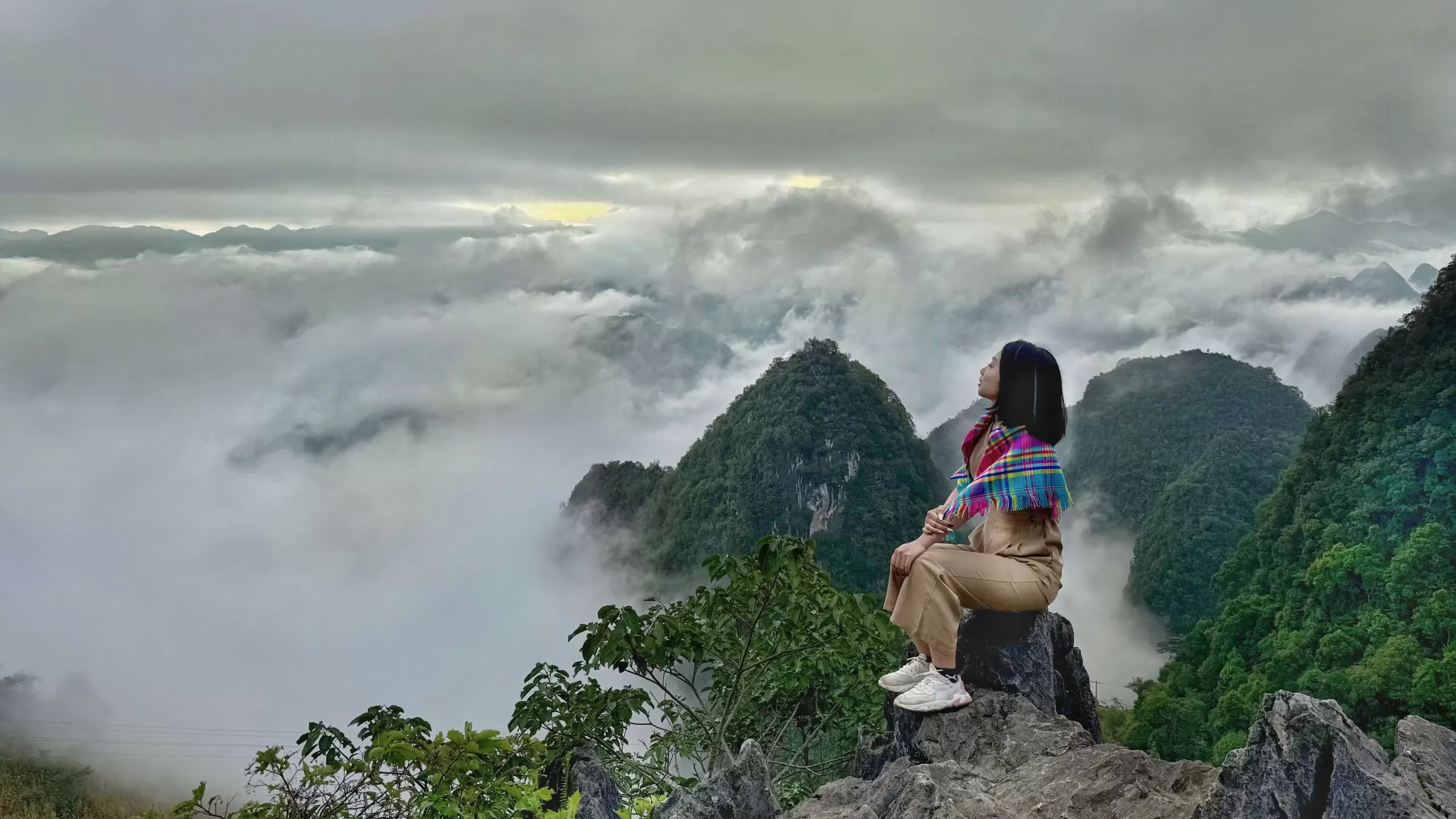
You might wonder: Is the Ha Giang Loop easy to navigate, even for newcomers with no experience in mountainous areas? The short answer is yes, but only with the right preparation and the right choice of tour style. Therefore, in this article, let’s go through the most practical tips for you and any Ha Giang Loop beginner to start enjoying the beauty of nature and gain a thrilling experience with the Ha Giang Loop!
TL;DR – Ha Giang Loop for Beginners
- The Ha Giang Loop is a 300-350 km scenic motorbike circuit in northern Vietnam, taking 3-4 days to complete.
- Beginners can safely do the Ha Giang Loop by choosing an Easy Rider tour (pillion with a local guide) or a guided group tour on a semi-automatic 110cc–125cc motorbike.
- Best seasons: March-May and September–November.
- Key stops include Ma Pi Leng Pass, Dong Van Old Town, and Lung Cu Flag Tower.
- Always carry travel insurance that covers motorbike riding before departing Hanoi.
Is Ha Giang Loop Suitable for Beginners?
The Ha Giang Loop is suitable for beginners, but “beginner” covers two very different situations – and the approach for each is completely different.
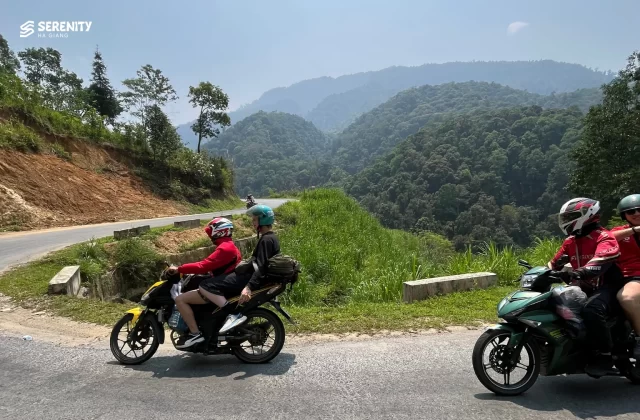
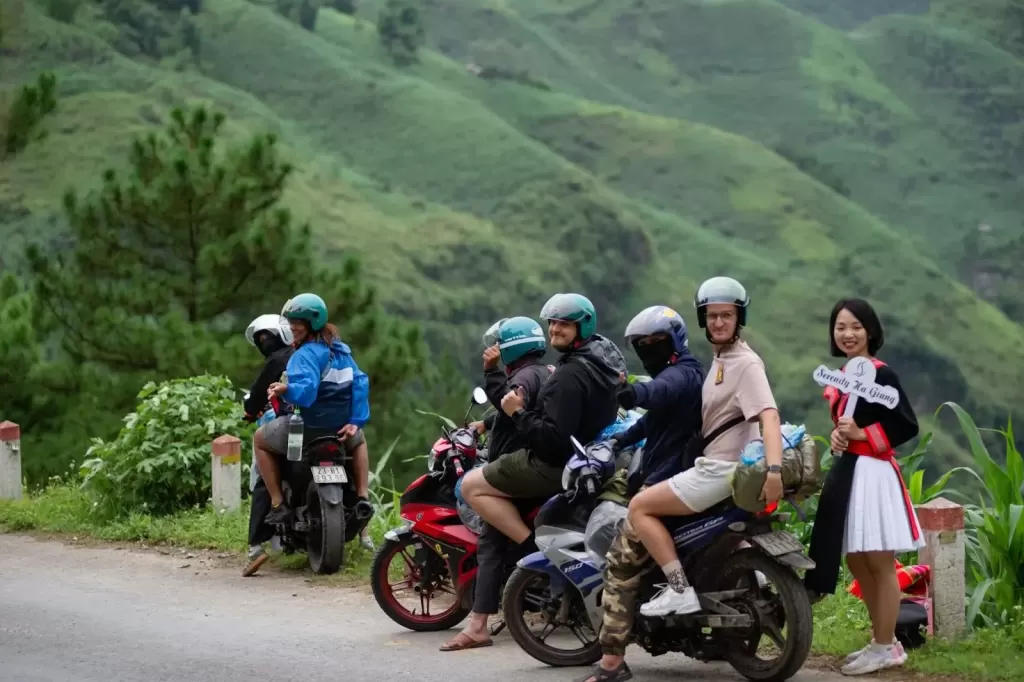
- If you have never ridden a motorbike: The loop’s mountain passes involve steep inclines, sharp hairpin bends, and sudden weather shifts. Riding solo without prior experience would be genuinely dangerous. The right option is an Easy Rider tour, where a licensed, experienced local guide handles all the riding while you enjoy the scenery from the pillion seat. This is the most popular choice for first-time visitors and removes all technical demands entirely.
- If you have basic riding experience (you can handle a scooter confidently in city traffic): The loop is very much achievable. A guided group tour on a semi-automatic 110cc–125cc bike – such as a Honda Blade or Honda Wave – gives you enough control for mountain descents without the complexity of a full clutch system. These bikes are light, reliable, and the most common choice on the loop for a reason.
⚠️Warning: Be honest about your skills and never underestimate the implicit dangers of mountainous roads. Check out this guide for more safety instructions if you plan to ride by yourself!
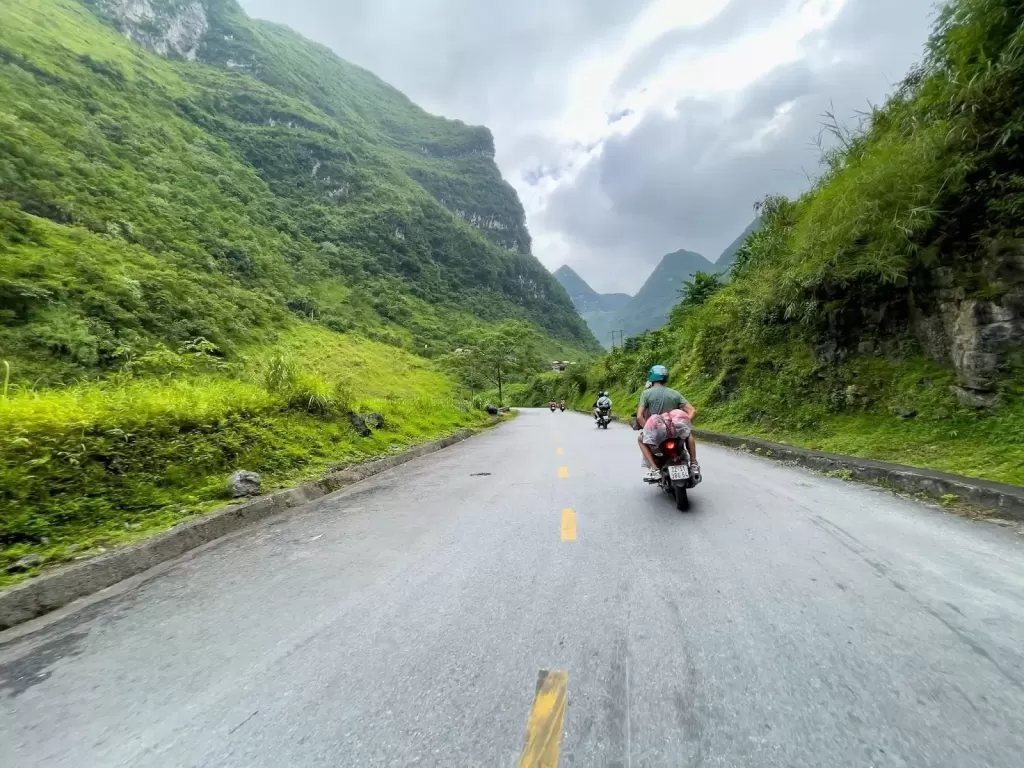
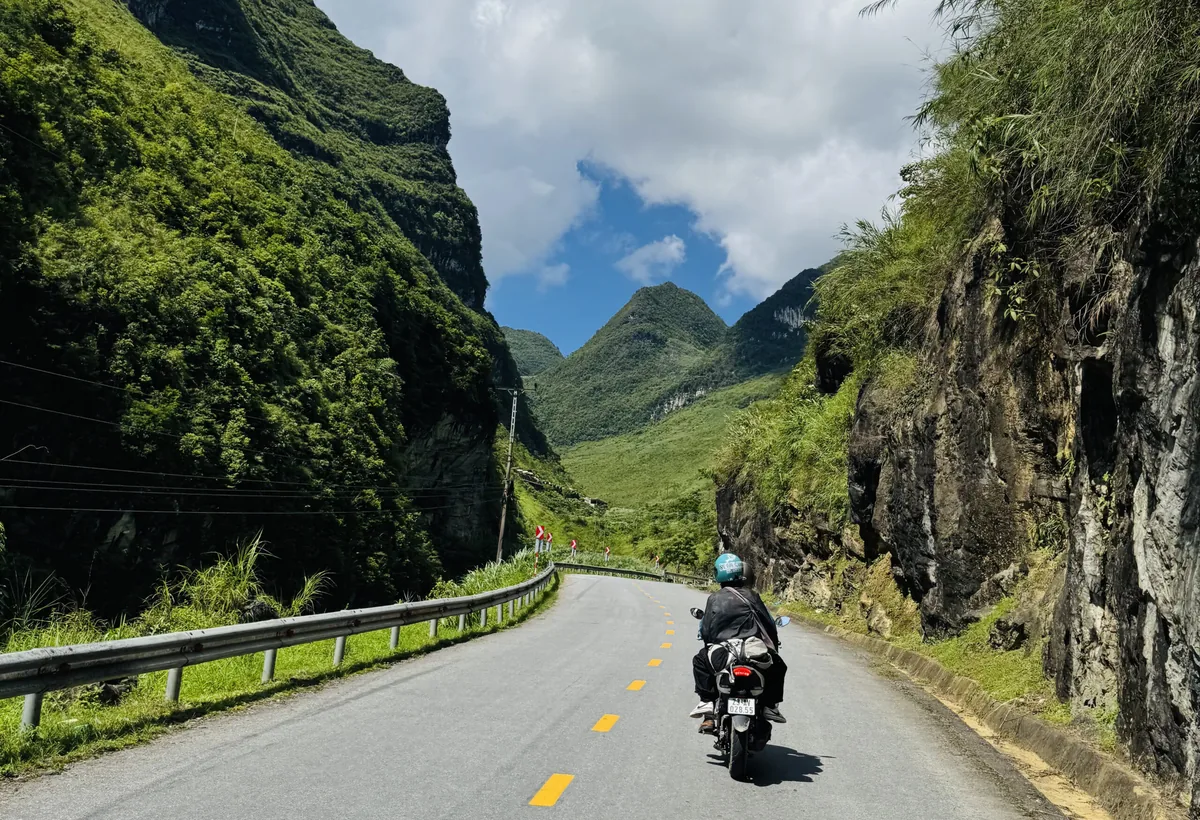
Normally, the roads between Ha Giang City and Quan Ba are relatively gentle and make a natural confidence-builder for new riders. The more demanding sections are the descent into Meo Vac and the Ma Pi Leng Pass, which come later in the route.
With honest self-assessment and the right tour format, the Ha Giang Loop is one of the most rewarding first adventures in Southeast Asia that you should try!
Preparing for Your First Ride
Good preparation makes the difference between a stressful ordeal and an unforgettable trip. Here is what to organise before you leave Hanoi.
| Category | Tips |
| Travel insurance | This is non-negotiable. Purchase a policy that explicitly covers motorbike riding; many standard travel insurance plans exclude it. Check the fine print before you pay. Policies with an adventure sports add-on are widely available from providers like SafetyWing and World Nomads. |
| Getting to Ha Giang City | Take a sleeper bus from My Dinh Bus Station or Ha Noi Old Quarter in Hanoi. The journey takes 6–7 hours, with evening departures arriving early morning. Budget approximately 250,000–350,000 VND for the ticket. Alternatively, a luxury cabin service offers a faster and more comfortable ride for around 420,000-680,000 VND. 💡 View this guide about How to travel to Ha Giang for more transportation options. |
| What to pack | Keep your bag small; it will be strapped to the back of your bike. Essentials include: – Full-face helmet (many tours provide one; confirm in advance) – Long-sleeve base layer and a windproof jacket for the mountain cold – Long trousers – no shorts or sandals on the road – Sturdy closed-toe shoes with ankle coverage – Rain poncho (mountain weather changes fast) – Offline maps downloaded to your phone (signal is unreliable along large sections of the route) – Small first aid kit, sunscreen, and sunglasses – Vietnamese SIM card or international eSIM for backup connectivity Many tour offices in Hanoi offer luggage storage services (without paying extra) before you head to Ha Giang. If you’re traveling one way, you can also leave your bags at a Ha Giang tour office (like Serenity Ha Giang) for easy pickup after the tour. 💡 View this guide about What to pack for the Ha Giang Loop to make sure you don’t forget anything 😉. |
| Physical readiness | Even as a pillion passenger, 4–6 hours of daily riding can be tiring. Core strength and flexibility help. Riders should be comfortable sitting on a bike for extended periods without back strain. |
Tips for safe riding
Safety on the Ha Giang Loop comes down to behaviour as much as skill. These are the most important principles for first-time riders.
- Start early every day: Aim to leave your accommodation by 7:30–8:00 AM. Mountain fog typically rolls in through the afternoon, reducing visibility on narrow passes. Finishing the day’s ride by 4:00 PM also leaves time to settle before dark – night riding on these roads is strongly discouraged.
- Ride at your own pace: The most common mistake beginners make is keeping up with faster riders in their group rather than riding at a comfortable pace. Set your own speed, especially on descents. The mountain roads demand full attention – scenic distractions and speed are a bad combination.
- Use engine braking on descents: On steep downhill sections, shift down a gear and let the engine slow the bike rather than relying entirely on the hand and foot brakes. For passes like Tham Ma or Ma Pi Leng, which are sloped, keep your bike in 1st or 2nd gear. This prevents brake overheating, which can cause brake fade – a serious risk on long descents.
- Stay on your side of the road: Local vehicles, including trucks and buses, use the full road width on blind corners. Always hug the outer edge of your lane (the right side) and slow down before any bend where you cannot see ahead.
- Do not ride in the rain if avoidable: Wet limestone road surfaces become extremely slippery. And then, it becomes extra hard to control the vehicles. If rain starts heavily, pull over and wait it out. Most homestays and guesthouses along the route are happy to accommodate an unexpected stop.
- Check your bike every morning: Before setting off each day, check tyre pressure (by feel), brake responsiveness, lights, and the fuel level. Fuel stations are available in Dong Van and Meo Vac, but gaps between stations can exceed 50 km on some sections.

Choosing the right tour or rental to explore the Ha Giang Loop
Your choice of tour format defines your entire experience. Here are the two main options and the honest case for each.
| Option | Who is it for? | How does it work? |
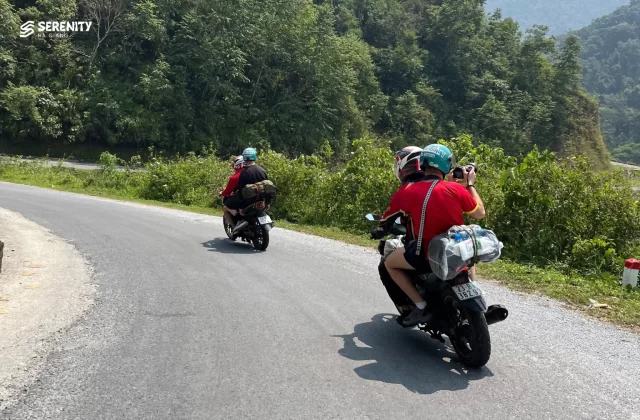
| Easy rider tour | No riding experience travellers | A local guide drives while you ride pillion. You see everything, face none of the riding demands, and get a native expert’s knowledge of every stop. The best guides speak conversational English and can narrate the history, geology, and culture of the route in real time. This is the lowest-stress, highest-comfort introduction to the loop. 👉 Serenity Ha Giang offers Easy Rider tours, with well-maintained semi-automatic bikes, full-face helmets, and accommodation arranged throughout the loop. View tour packages and availability → |
| Self-rental | Very skillful motorbike riders, familiar with steep curves, want to have their own pace of the loop. | Renting a bike independently is possible and popular among experienced motorbike travellers, but it requires confident riding skills, strong route knowledge, and the ability to handle mechanical issues alone. For a first loop, the risks outweigh the savings. 👉 What to rent: Semi-automatic bikes (Honda Blade 110cc, Honda Wave 110cc–125cc) are the correct choice for beginner-to-intermediate riders. They offer gear control for engine braking without the complexity of a clutch. Full automatic scooters are not recommended; they lack the downhill control needed on steep mountain sections. |
What to expect on the Ha Giang Loop
Scenic spots throughout the loop:
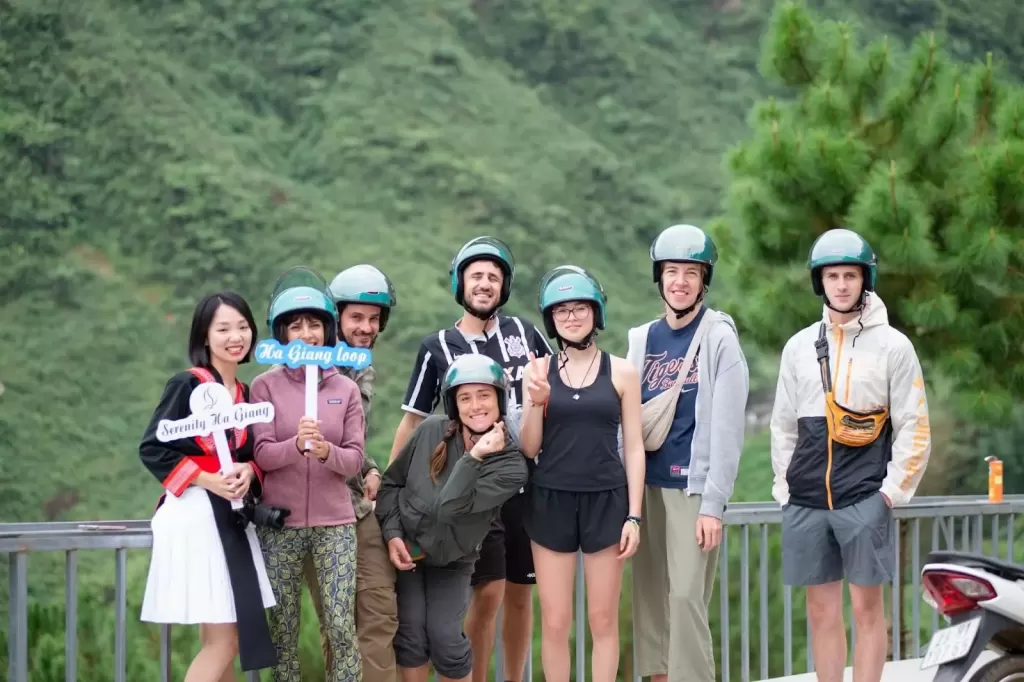
The Ha Giang Loop typically runs in a counterclockwise direction: Ha Giang City → Quan Ba → Yen Minh → Dong Van → Meo Vac → Ha Giang City. Here is a practical breakdown of what each day looks like for a first-time visitor on a 4-day schedule.
| Day | Route | Est. Distance | What can you expect? |
| Day 1 | Ha Giang City → Quan Ba → Yen Minh → Dong Van | 130 km | – The majestic mountain pass Quan Ba Heaven Gate, with the breathtaking panoramic view of the iconic Twin Mountains – The nine iconic S-shaped curves of Tham Ma Pass – A century-old stone fortress Vu Family Mansion |
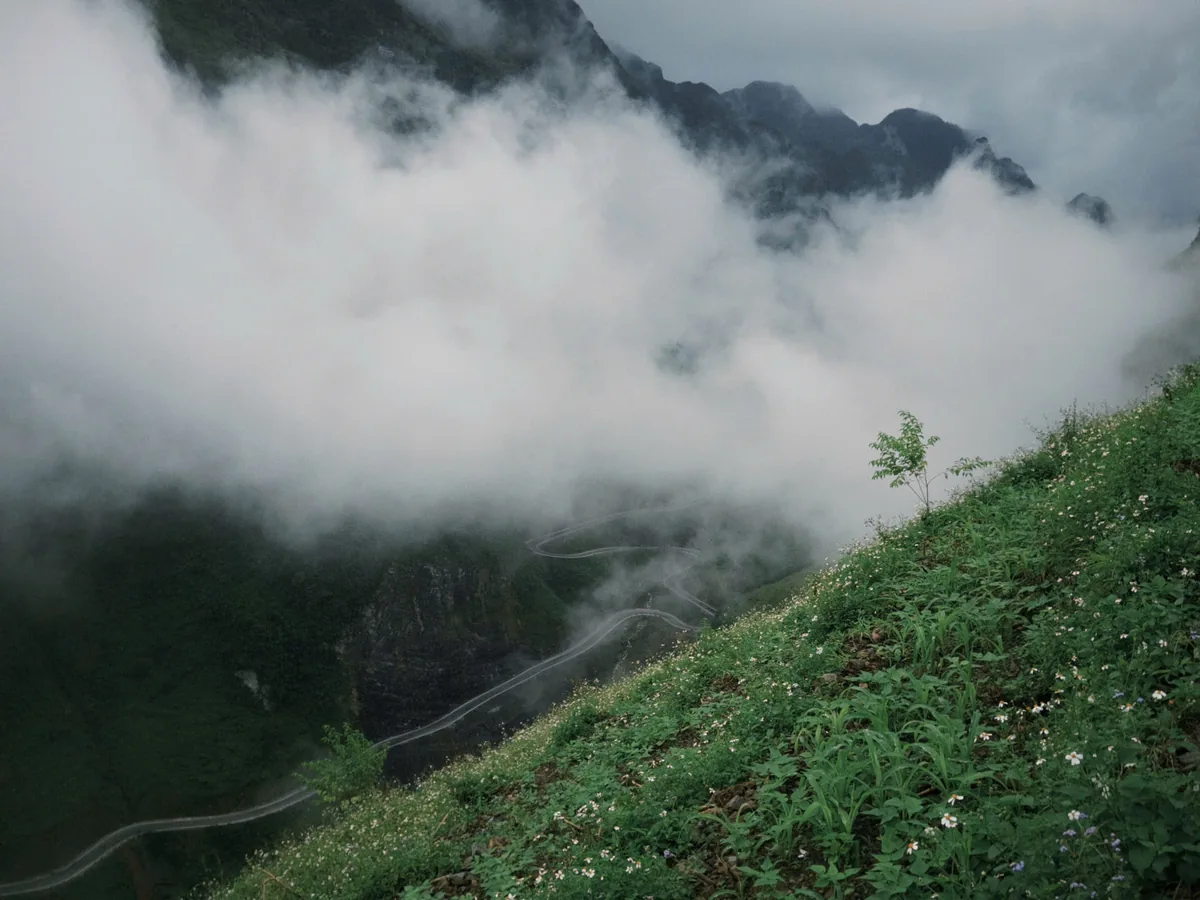
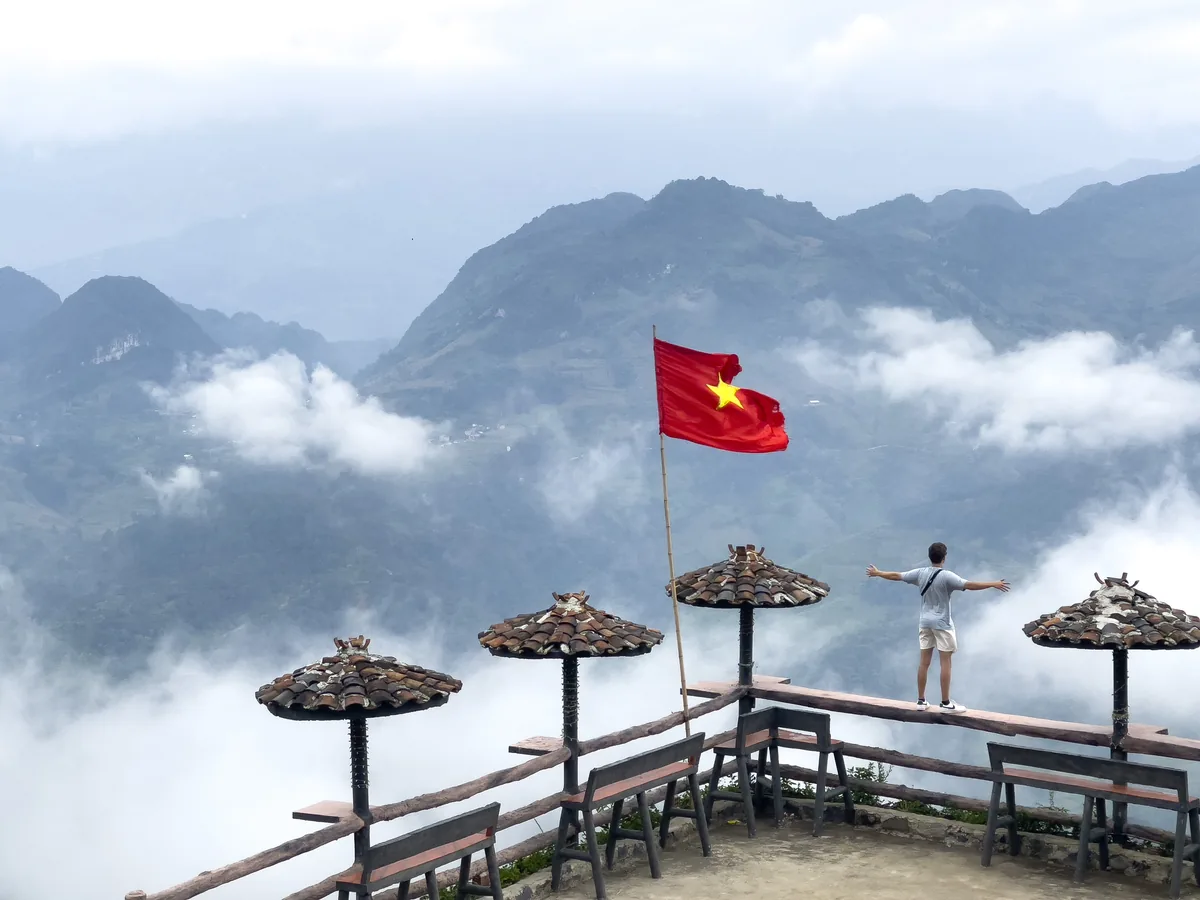
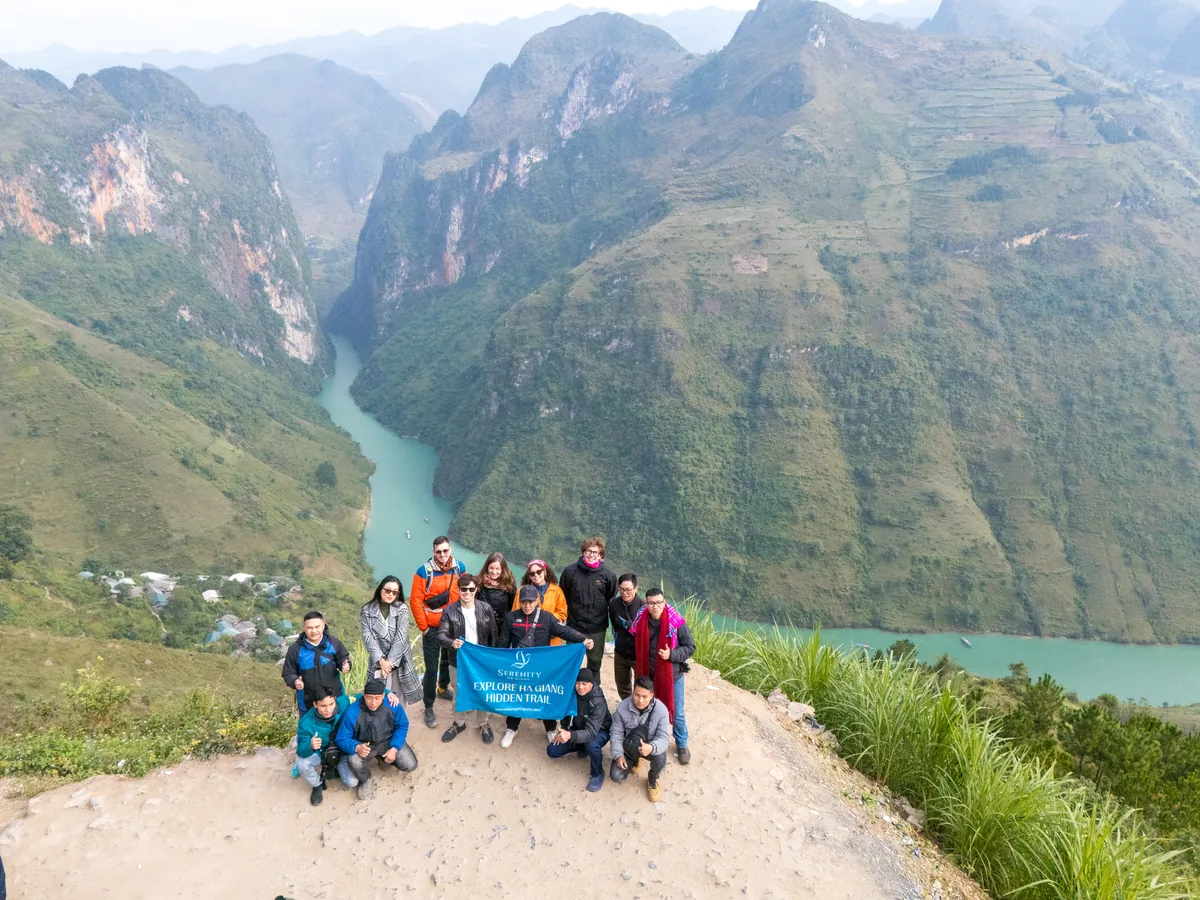
| Day 2 | Dong Van → Ma Pi Leng Pass → Lung Cu | 90 km | – The undisputed “King” of Vietnam’s mountain passes, Ma Pi Leng Pass – A serene journey Tu San Canyon boat ride along the emerald Nho Que River – The monumental symbol Lung Cu Flag Tower – The aesthetic and peaceful Lo Lo Chai Village |
| Day 3 | Dong Van → Meo Vac → Yen Minh | 50 km | – The historic French-built stone Don Cao fortress – The uniquely geometric stretch M-shaped curve |
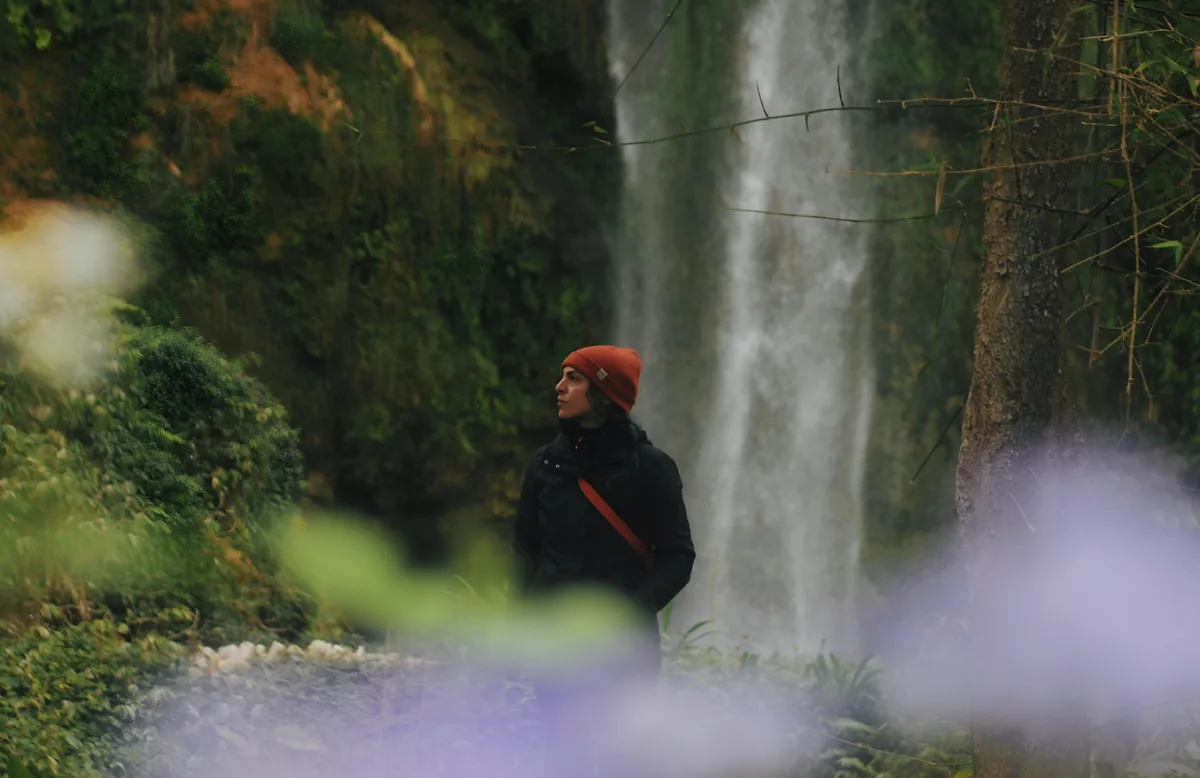
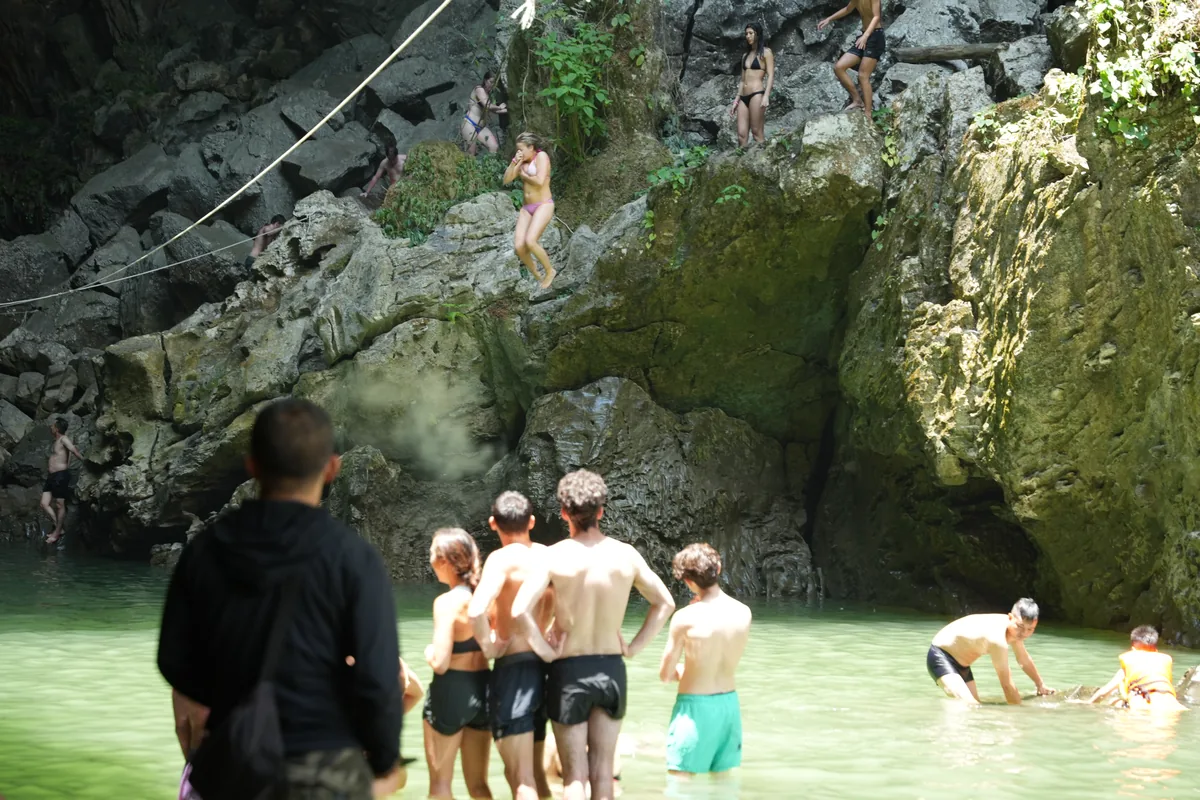
| Day 4 | Yen Minh → Ha Giang City | 95km | – Lung Khuy Cave – a “sleeping giant” hidden within the mountains of Quan Ba. – Lung Tam Linen Village with H’Mong women’s hand-weaving culture. – The refreshing, hidden gem Thai An Waterfall |
💡 If you need a more detailed itinerary with the overall picture of what you will see during the Ha Giang Loop, this Ha Giang Loop itinerary guide is made for you!

Accommodation:
The places to stay along the route range from basic homestays (around $8–15/night) to comfortable guesthouses.
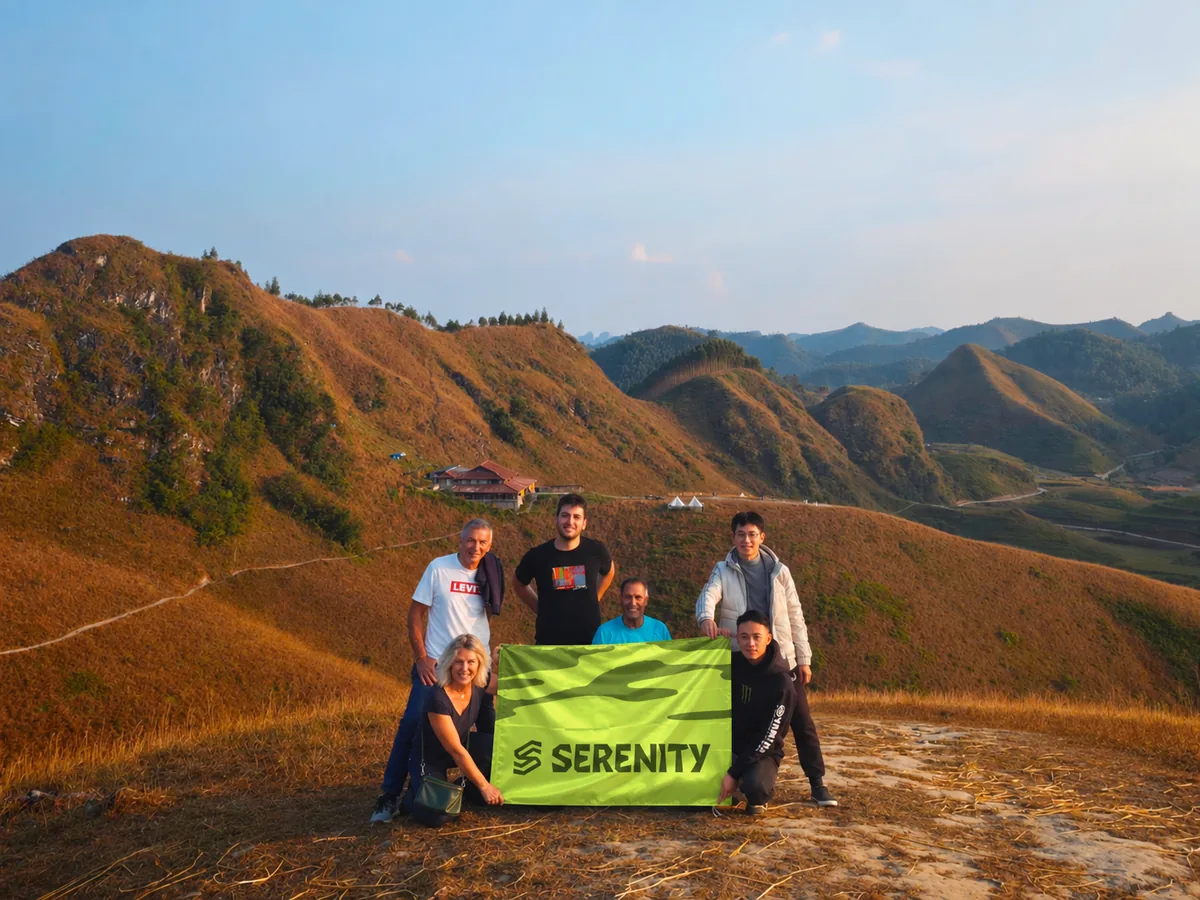
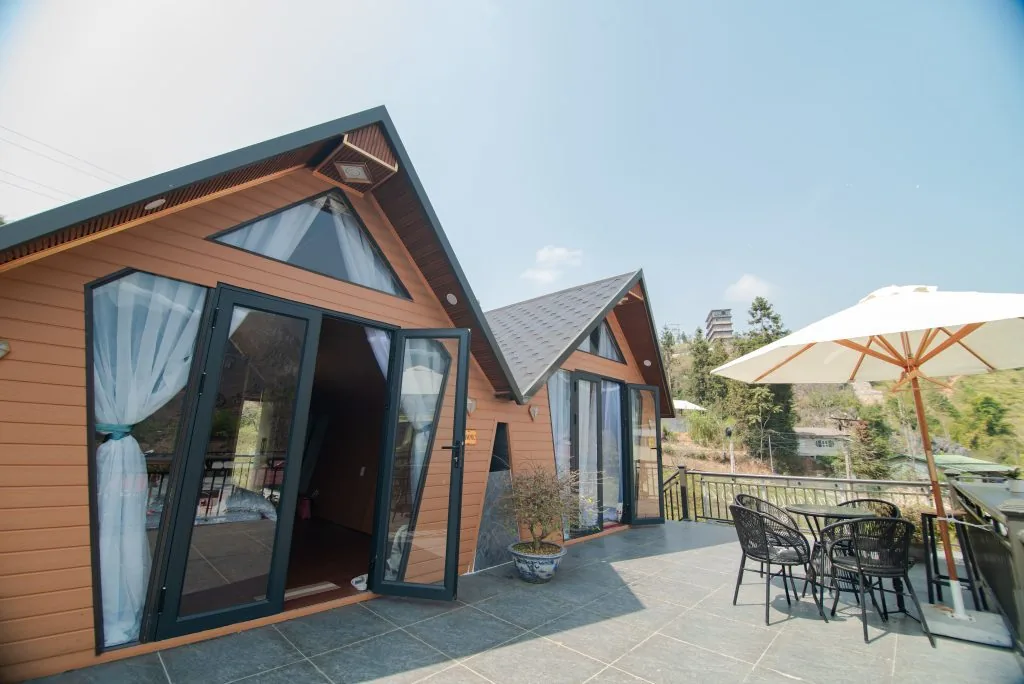
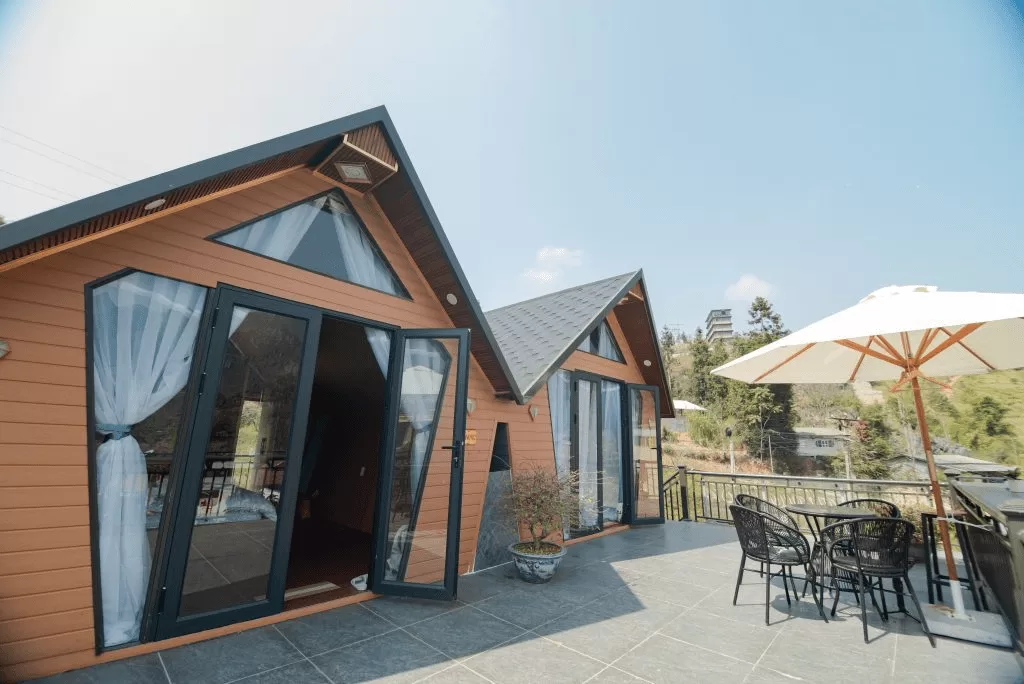
You can also rest at Serenity Bungalow, where you can see the misty mountains and the rhythm of Dong Van’s historic streets. Cozy spaces, convenient amenities, and comfortable beds are everything you can expect when choosing Serenity Ha Giang.
Road conditions:
The roads can change from smooth pavement to bumpy gravel, especially if it has rained or you take a side path. Always fill your gas tank in the main towns before you head out for the day, as stations are hard to find in between.