

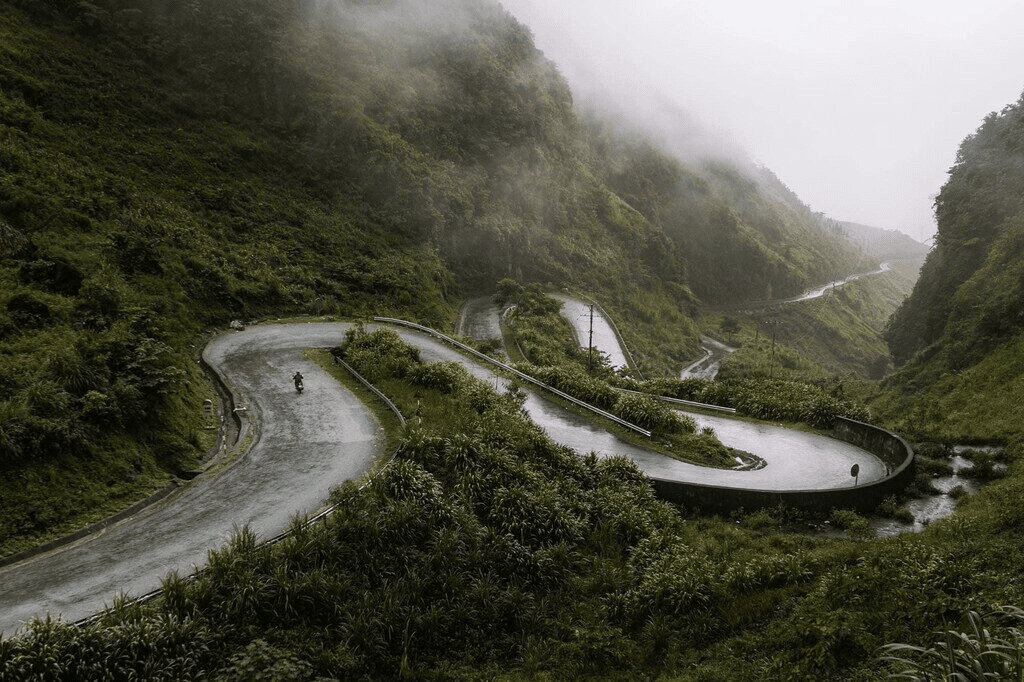
A guide for Ha Giang Rainy season: Should we do the Loop?
You are sitting in your room and feel inspired to start a Ha Giang loop – immediately! But after some searching, you learn that Ha Giang is in the rainy season. What should you do now?
Typically, the Ha Giang rainy season runs from May to September, with June, July, and August bringing the heaviest rainfall and the most demanding road conditions on the Loop.
However, that doesn’t mean travel is impossible. It means travel looks different. Let’s deep dive with Serenity Ha Giang in today’s article to see what changes are in the level of preparation you need for traveling during this season. Arrive with the right gear, a flexible mindset, and an honest assessment of your riding ability, and the wet season can deliver one of the most atmospheric versions of the Ha Giang Loop.
Key Takeaways
- Rainy season window: May to September, with July and August being the wettest and most hazardous months for motorbike riding.
- Morning vs. afternoon: Rain most commonly arrives in the afternoon. Starting rides early – ideally before 8:00 AM – makes a significant difference in safety and visibility.
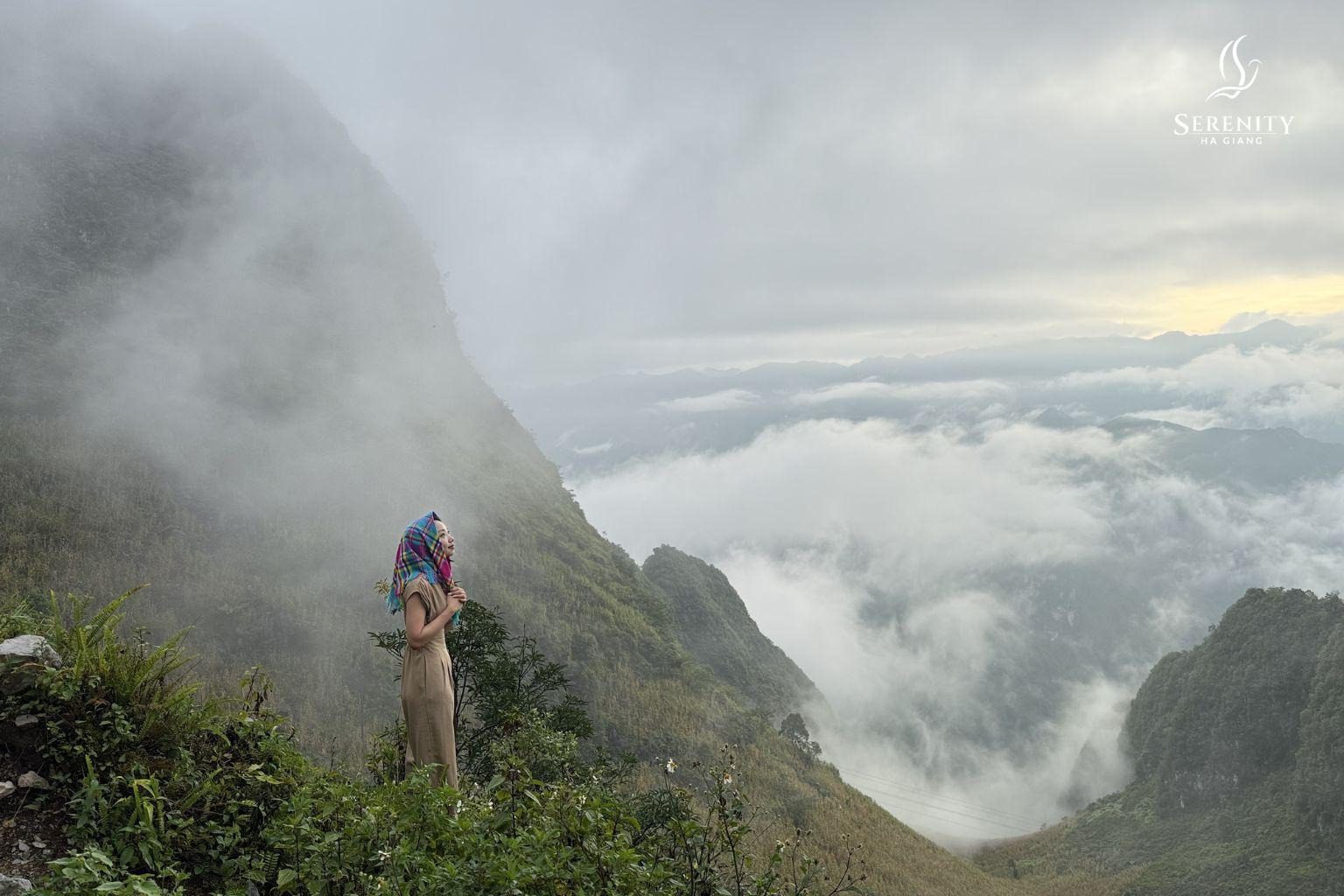
- Landscape upside: The Ha Giang Loop in wet season is visually spectacular. Terraced rice fields at Hoàng Su Phì fill with water, mountains are dense green, and misty passes feel cinematic.
- Pack waterproof everything: A lightweight waterproof jacket and pants, dry bags for electronics, and waterproof boots are non-negotiable for wet-season travel.
- Guided tours outperform self-riding in wet months: Local guides know which roads flood, which sections are prone to landslides, and when to adjust a route – knowledge that no weather app can replicate.
When Does the Ha Giang Loop Rainy Season Occur?
Ha Giang’s rainy season is driven by the southwest monsoon, which pushes moisture into the northern highlands from around June onwards. The season ends gradually in September, when rainfall decreases and the landscape transitions toward harvest.
In short, Ha Giang’s rainy season is from June to September, in which, July & August being the wettest.
The table below breaks down what to expect month by month during the wet season (data from Accuweather and Weathers Spark):
| Month | Avg. Temperature | Rainfall Level | Road Risk | Notes |
| May | 16-32°C(61 – 90°F) | Moderate (4.4”) | ⚠️ Low-Medium | Shoulder month; occasional showers, roads mostly manageable |
| June | 20-33°C(68 – 92°F) | High (6.2″) | 🚨Medium-High | Showers become frequent; humidity peaks |
| July | 20-34°C(68 – 93°F) | Very High (7.4″) | 🚨High | Wettest month; landslide risk elevated on mountain sections |
| August | 20- 34°C(68 – 93°F) | Very High (7.3″) | 🚨High | Conditions similar to July; afternoon storms are common |
| September | 20-32°C(68 – 90°F) | Moderate-High (4.4″) | ⚠️ Medium | Rainfall drops; start of rice harvest; roads gradually improve |
One important note: Ha Giang’s weather changes fast and varies by elevation. Conditions in Ha Giang City at 300 metres can look completely different from conditions on Đồng Văn Plateau at over 1,000 metres. Never use Hanoi’s forecast as a proxy for Ha Giang.
For a full breakdown of what to expect across all twelve months, the Ha Giang Loop’s Weather & Seasons guide covers seasonal timing in more detail.
Impact of Ha Giang Rainy Season on Travel and Activities
The rainy season affects different aspects of the Ha Giang Loop in different ways.
How the Rainy Season Changes the Ha Giang Experience:
- Itinerary Flexibility: Mountain weather doesn’t always follow forecasts. You must build buffer days into your schedule. (If you book with Serenity Ha Giang, our flexible tour packages handle these sudden changes for you).
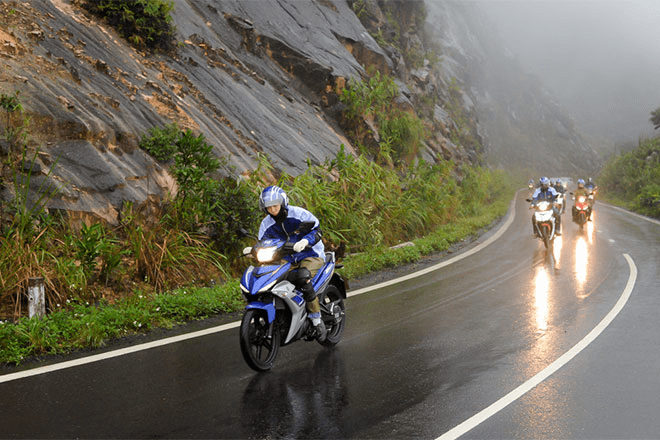
- Road Conditions: Wet limestone and gravel roads reduce traction significantly. Outer bends on clifftop sections retain water and mud. Landslides can occasionally close sections without warning.
- Visibility: Drops quickly when mist rolls in, especially on higher passes from mid-afternoon onward. Low visibility significantly raises the risk for inexperienced riders.
- Cultural access: You can still enjoy the unique activities in cultural spots with no hindrance.
- Photography & Landscape: The upside of the rain! Terraced fields are flooded (water-pouring season), mountains turn dense green, and mist-wrapped peaks produce cinematic, atmospheric images that dry-season riders never see.
- Group Dynamics: Wet-season groups are smaller and more collaborative. The vibe on the loop in July is much quieter and less rushed than in October’s peak season.
Itinerary
Your plan for the places to visit during the Ha Giang Loop might need some flexibility, as the mountain weather doesn’t always follow forecasts. The practical minimum is one buffer day built into the schedule from the start, not treated as a backup but expected as part of the experience.
This is also where tour format matters. A self-planned route puts all weather decisions on you – and you’ll be making them with limited local knowledge and a phone signal that disappears on the higher passes. With Serenity Ha Giang, route adjustments happen in real time, based on what our guides see on the ground. Our tour packages are built with seasonal variation in mind, so the itinerary bends around the weather rather than fighting it.
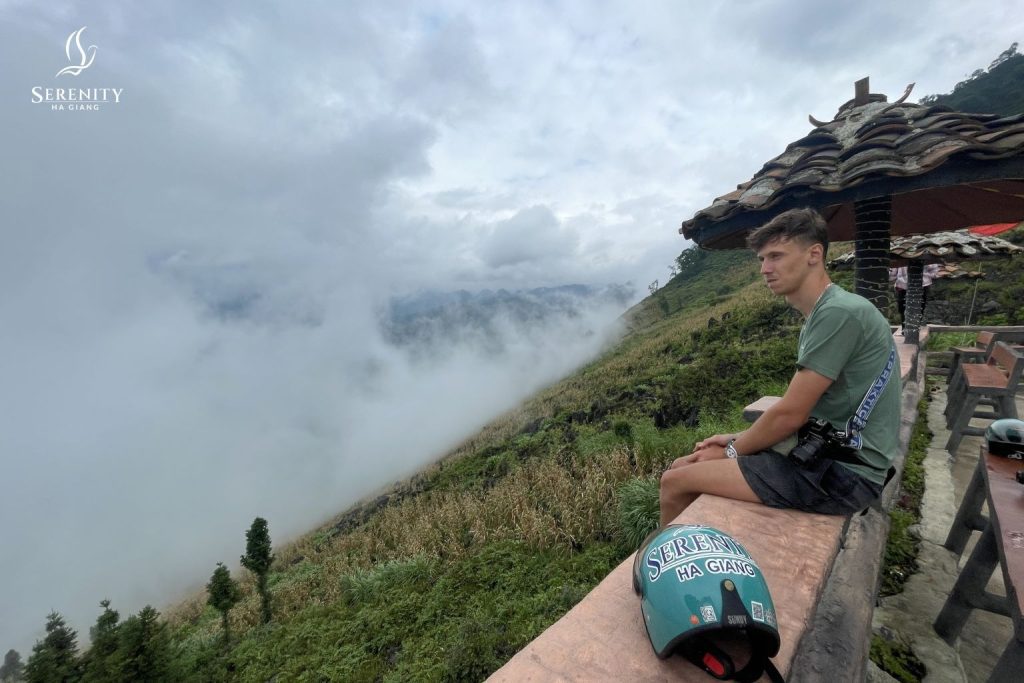
Road conditions
These are the primary concerns for the Ha Giang Loop travellers. Mountain passes, including Ma Pi Leng, Quản Bạ, and Khau Vai, become genuinely hazardous after heavy rain. Wet limestone and gravel roads reduce traction. Outer bends on clifftop sections retain water and debris longer than flat roads. Landslides, while not an everyday occurrence, can close sections of the route without warning.
Visibility
Mountain mist in Ha Giang doesn’t roll in gradually – it arrives in minutes. A clear pass at 10:00 AM can be completely socked in by 1:00 PM after a short rain shower. On sections like Mã Pì Lèng at over 1,600 metres, fog reduces effective visibility to the width of the road ahead, which is far too little margin for riders unfamiliar with the bends.
The practical response is timing, not avoidance. Most experienced guides on the Loop target all serious pass sections before midday, especially from June through August. If your plan has you cresting a major pass at 3:00 PM during the wet season, it needs to be revised.
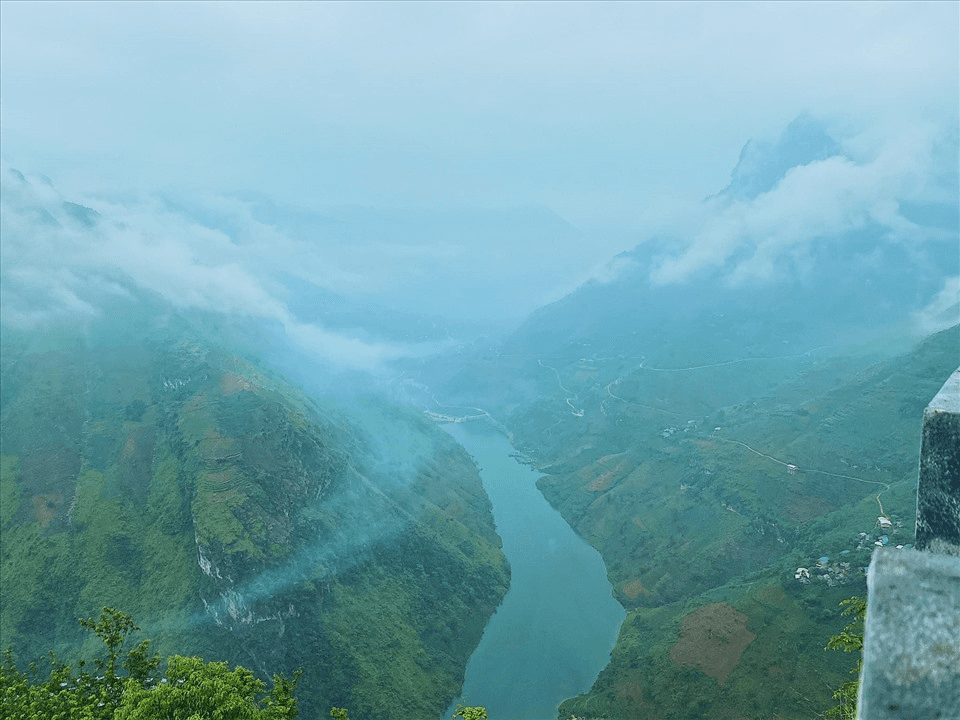
Cultural access
Ha Giang has many unique traditional spots, and these places remain largely unaffected. Villages, markets, and local family life continue through the wet season. In some ways, the rain actually creates more authentic interaction – you spend more time sheltering, eating, and talking with locals rather than rushing between photo stops.
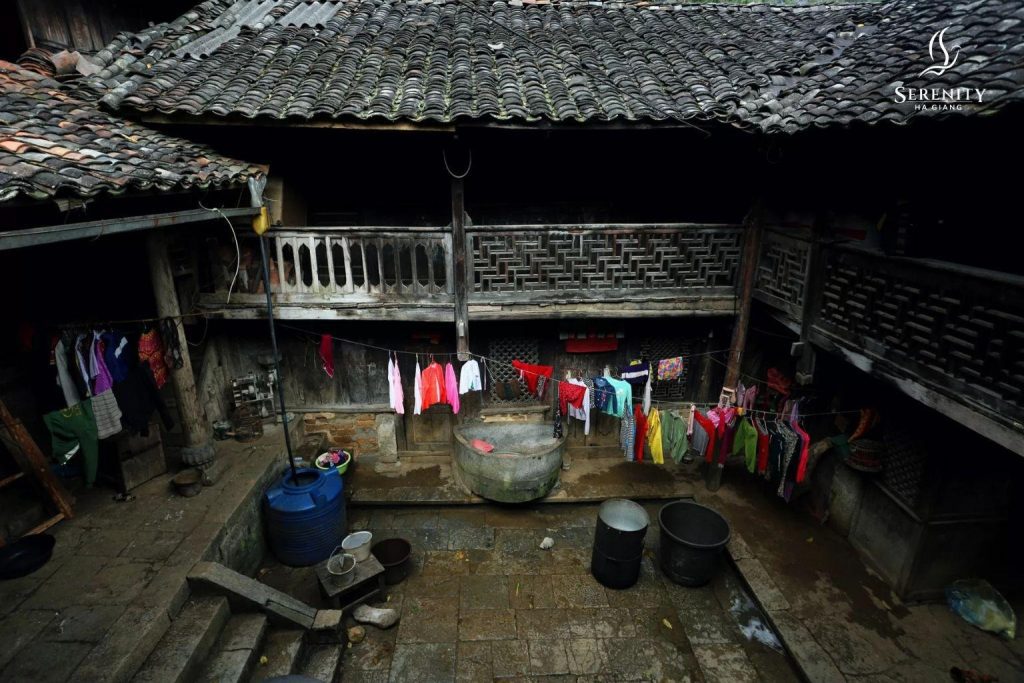
Photography
The dry-season visitor sees Ha Giang clearly – but the wet-season visitor sees it vividly. Due to the rain, photography takes on a different quality. Mist-wrapped peaks, fog-filled valleys, and rain-slicked karst formations produce a more dramatic, atmospheric image than a clear-sky day. Wet-season photography rewards patience and compositional instinct.
Group dynamics
If you go on a curated tour, the number of participants shifts noticeably. Wet-season groups are smaller, more self-selecting, and tend to be more travel-hardened. The vibe on the loop in July is quieter, more collaborative, and less rushed than in October’s peak-season crowds.
Wet-season groups also self-select for a particular kind of traveller: one who planned for conditions, accepted the trade-offs, and came anyway. That tends to make for more interesting company on the road and a more candid group dynamic than the high-season experience offers.
How to Prepare for Ha Giang Loop in Rainy Weather
Preparation for the Ha Giang rainy season falls into two categories: gear and mindset.
Essential gear checklist:
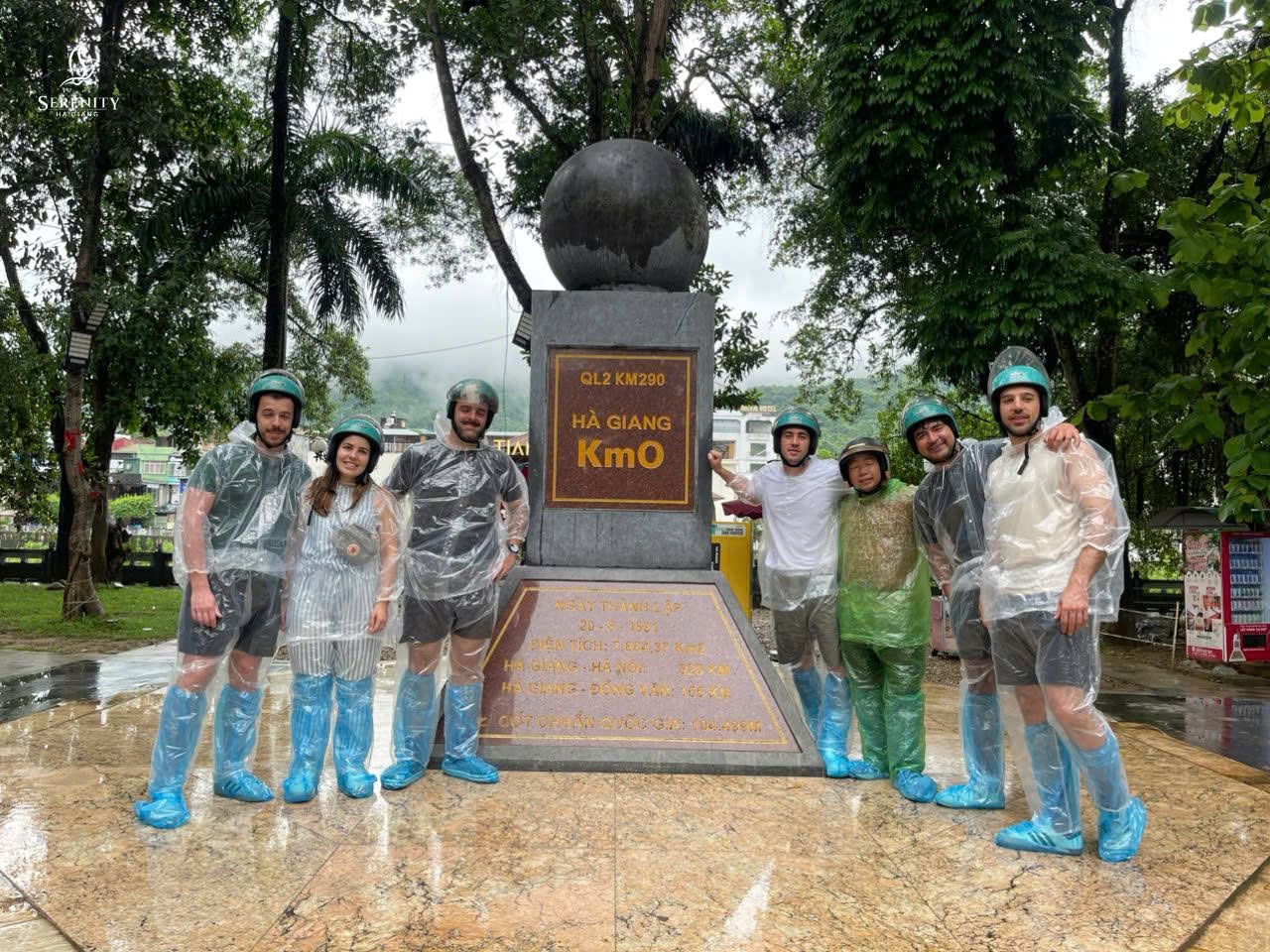
- Waterproof jacket and pants: a packable, breathable rain jacket is more useful than a poncho on a motorbike; waterproof trousers prevent the discomfort of wet denim at altitude
- Waterproof boots or shoes: ankle coverage matters; wet mountain roads and roadside stops involve mud
- Dry bags: for camera, phone, passport, permits, and any electronics; a rain cover for your main bag as backup
- Quick-dry clothing: avoid cotton, which holds moisture and becomes cold fast at elevation; merino wool or synthetic fabrics are far more practical
- Full-face helmet with anti-fog visor: provided by most reputable tour operators, but confirm before you arrive
- Tip for Luggage: Even if you have a rain cover for your backpack, always line the inside of your bag with a heavy-duty trash bag. Rain covers can blow off at 40km/h, but an internal plastic liner guarantees your clothes stay dry.
Riding adjustments that matter:
- Depart early: Mornings in Ha Giang are typically clearer. Most afternoon storms arrive between 1:00 and 4:00 PM – being off the mountain road by then is a sensible rule.
- Reduce speed on wet descents: Use more rear brake than front. Wet limestone provides far less grip than it looks.
- Check tire tread before riding: Any reputable operator like Serenity Ha Giang checks this automatically, but it’s worth confirming: 2-3 mm minimum depth is the standard for wet-road safety.
- Leave schedule flexibility: A day that starts sunny can become impassable by midday. Building a buffer day into your itinerary isn’t pessimism – it’s sound planning.
Alternative Plans in Ha Giang During Rainy Days
A rainy afternoon doesn’t mean sitting in your room watching the weather app. Instead, consider slowing down and experiencing another side of Ha Giang.
Your Rainy Day Backup Plan in Ha Giang:
| Place / Activity | Why it’s perfect for a rainy day | Location |
| Dong Van Old Quarter | The historic stone houses and cafes become incredibly atmospheric and quiet in the rain. Perfect for coffee hopping. | Dong Van Town |
| Vuong Family Palace | A massive, well-preserved 100-year-old fortress. You can explore the intricate architecture while staying completely dry indoors. | Sa Phin Valley |
| Homestay Cooking Class | Local families are home. Learn how to make traditional dishes or drink corn wine by the fire. | Nam Dam, Du Gia, or Lo Lo Chai |
| Embrace Slow Travel | Don’t try to “beat” the weather. Rest, read a book, and wait for the spectacular views when the clouds lift. | Anywhere on the loop |
Must-visit places:
Even when it rains, these attractions should always be on your checklist:
Đồng Văn Old Quarter
The historic streets become quieter after rain, making it a pleasant time to browse cafés, local markets, and traditional stone houses without the usual crowds.
Dinh Thự Vua Mèo (Vuong Palace)
This is a beautifully preserved 100-year-old fortress and mansion located in the Sa Phin Valley of Ha Giang province. Built by the powerful Hmong King Vuong Chinh Duc, the estate is an architectural marvel blending traditional Hmong, Chinese, and French styles.
Activities:
Stay in a village and cook home cuisine
Wet days are often the best days for connection. Local families are home. Cooking is happening. A rainy afternoon at a homestay in Mèo Vạc or Yên Minh often produces the kind of trip memory that clear-sky riding days don’t. You can also visit the communities such as Lo Lo Chai, Nam Dam, and Du Gia, which offer opportunities to experience traditional architecture, handicrafts, and local hospitality. A light drizzle often adds to the peaceful atmosphere rather than detracting from it.
Relax and embrace slower travel
One of the biggest mistakes visitors make is trying to “beat” the weather. Instead, use rainy hours to rest, chat with local hosts, enjoy the scenery from your homestay, or simply wait for conditions to improve. In Ha Giang, patience is often rewarded with spectacular views once the clouds begin to lift.
Is Ha Giang still worth visiting in the rainy season?
Absolutely-provided you arrive with the right expectations.
Ha Giang’s rainy season – May to September – is not the right time for someone wishing for endless sunshine and guaranteed panoramic viewpoints every day. If your priority is predictable road conditions and dry, open views, October to April is the clearer choice. But if you can handle flexibility, pack properly, and travel with a guide who knows the route in every condition, the wet season offers something the peak months can’t: quiet roads, lush landscapes, and the kind of trip that doesn’t look like anyone else’s social media feed. Preparation is the difference between a frustrating experience and an unforgettable one.
At Serenity Ha Giang, our groups are capped at ten people, which means route flexibility is real and not just a talking point. When conditions shift, we adjust – and a slower, rain-day experience often becomes a group favourite by the end of the trip. Explore our loop tour options to see how our itineraries are built to adapt.
FAQ
Q: How do I know if a road is blocked by a landslide ahead?
Weather apps won’t tell you this. You must rely on local knowledge. Ask your homestay host every morning before departing, or check with drivers coming from the opposite direction. If you are on an Easy Rider tour, your local guide communicates with a network of other guides to know exactly which roads are safe and which to avoid.
Q: What should I do if a storm hits while I’m riding?
Stop riding. Pull over at the next village, coffee shop, or covered roadside spot and wait it out. Afternoon thunderstorms in Ha Giang often pass within 30-60 minutes. Continuing to ride in a storm on mountain roads significantly increases your risk – no viewpoint or timeline is worth it.
Q: Are there leeches on the Ha Giang Loop during the rainy season?
If you are just riding the motorbike on paved roads, you won’t encounter leeches. However, if you plan to do jungle trekking (like in Tay Con Linh) or walk through wet grass near waterfalls during July and August, leeches are common. Wear long socks and spray DEET insect repellent on your shoes.
Q: Can buses between Hanoi and Ha Giang be affected by heavy rain?
Long-distance buses generally continue operating during the rainy season, although severe weather may occasionally cause delays. Allowing some buffer time in your itinerary is always a good idea during the wettest months.