

Ha Giang Permits and Travel Regulations
So you’ve decided to ride the Ha Giang Loop. It will be an exciting trip! But before you throw a leg over a motorbike and head north, there’s one question every traveller eventually Googles at 11 PM the night before: Do I actually need a permit?
The short answer: yes. Let’s jump straight into the guide to understand more deeply about the border permit, driving licence requirements, and more. So you will have yourself totally ready for the trip.
Key takeaways
- Permit required: Since June 1, 2026, all foreign visitors entering border districts (Quan Ba, Yen Minh, Dong Van, Meo Vac) need a border travel permit – no exceptions.
- Cost: ~200,000-250,000 VND per person (~$10 USD), paid in cash at the immigration office or through your accommodation.
- Riding licence: A valid national motorbike licence plus an International Driving Permit (1968 Vienna Convention, Category A) is legally required to self-ride. Fines for riding without one can reach up to 7,500,000 VND (~$315 USD).
- Site tickets: Most viewpoints are free. Paid attractions include Lung Cu Flag Tower (~25,000 VND), Vuong Family Palace (~20,000 VND), and Nho Que River boat rides (~100,000-170,000 VND).
- Checkpoints: Carry your permit, passport, bike papers, and licence at all times – inspections are random and increase during public holidays.
Overview of Ha Giang Permits and Regulations
To quickly understand what permits you need for your Ha Giang Loop trip to go smoothly, run through the following questions:
What is the required permit for Ha Giang Loop?
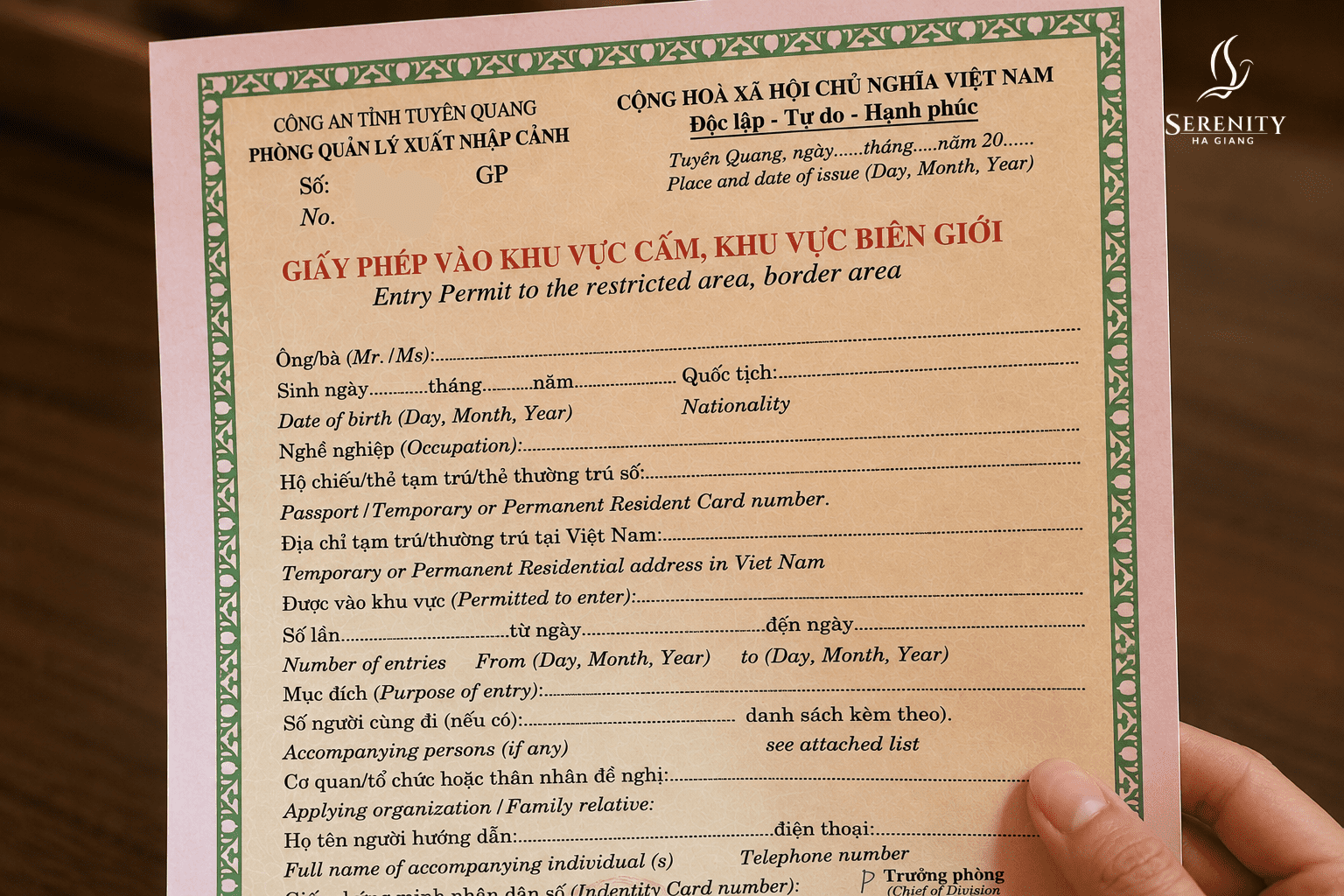
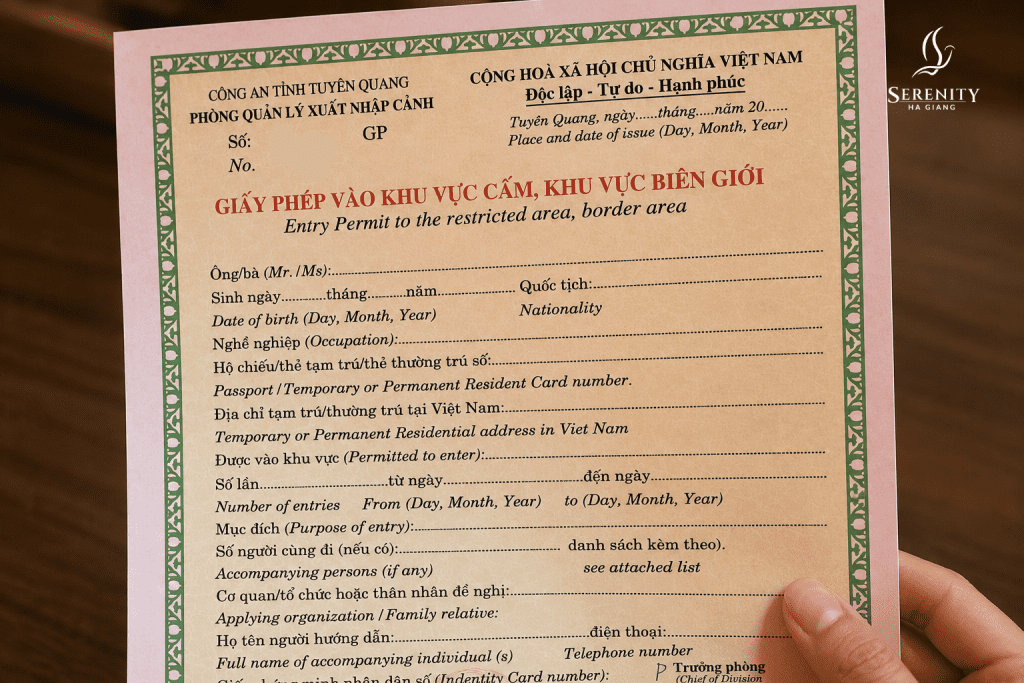
The Ha Giang border permit is an official document issued by the Vietnamese Immigration Department. Its formal name is Giấy phép vào khu vực cấm, khu vực biên giới – a permit authorising foreign nationals to enter the province’s restricted border communes near the China-Vietnam frontier.
When does the law take effect?
Since June 1, 2026, any foreign travelers entering the border areas in Ha Giang need this Border Area Entry Permit, and also have to pay around $10 per person.
Which areas need this permit to visit?
Areas in Ha Giang that are affected by this Border Area Entry Permit include:
- Quan Ba
- Yen Minh
- Dong Van
- Lo Lo Village
- Lung Cu
- Du Gia
- Vi Xuyen
- Minh Tan
The districts it covers – Quan Ba, Yen Minh, Dong Van, and Meo Vac – are the must-have part of the Ha Giang loop. Ma Pi Leng Pass, Lung Cu Flag Tower, Dong Van Old Quarter, and the Nho Que River all fall within these zones. Without the permit, you are not legally allowed to pass through them, and hotels and homestays in these districts can refuse to check you in.
Who needs a permit to travel the borderland in Ha Giang?
Every foreign traveller needs one, regardless of age, mode of transport, or whether they’re on an organised tour. Vietnamese citizens are exempt from this requirement.
How to obtain Ha Giang Permits
There are three ways for you to get this permit and visit Ha Giang comfortably:
Option 1: Apply in person at the Ha Giang Immigration Office
This is the most direct route to get the permit:
- Location: The immigration office is in Ha Giang City, located on Nguyen Trai Street.
- Operation time: The office is reported to operate daily, typically from 8:00 AM to 8:00 PM with a midday break around 12:00 PM -1:30 PM.
- What to bring:
- Your original passport (and visa, if applicable)
- Cash: 200,000-250,000 VND per person (~$10)
- Your motorbike’s registration plate number (if you’ve already rented)
- Processing time: is typically 15-30 minutes once you’re at the desk.

Option 2: Arrange through your accommodation or tour operator
This is a more comfortable and effective way to get the permit. Most hotels, guesthouses, and tour operators in Ha Giang City can arrange the permit on your behalf, often on the same day. This is the path of least resistance for most travellers. If you’re booking a guided tour, ask explicitly whether the permit is included in your package – reputable operators handle this as standard.
At Serenity Ha Giang, border permit arrangements are built into every loop tour so guests can skip the queue and ride from day one. See what’s included in our Ha Giang Loop tour →
Option 3: Apply during the route
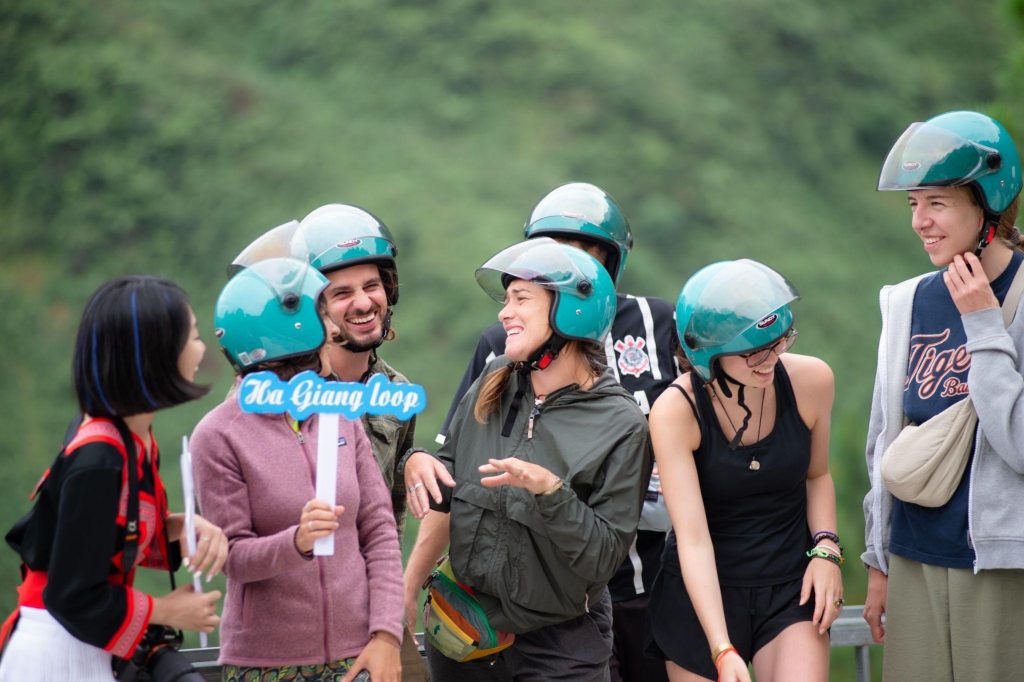
If you’ve already started the loop and realised you forgot the permit, it’s also possible to apply at local police stations in Dong Van. Your accommodation in any border district can direct you to the current desk. That said, arranging it in Ha Giang City before departure saves time and avoids unnecessary uncertainty on the road.
Ticketing for Tourist Sites in Ha Giang
Ticketing in Ha Giang is mostly localized and paid on-site rather than booked via centralized advance platforms.
Dong Van Karst Plateau Geopark Fee:
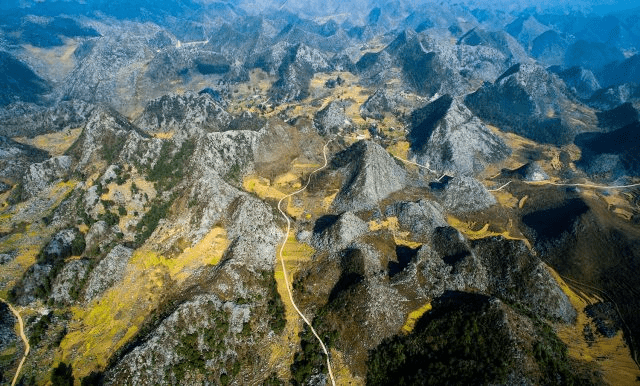
Here’s something that catches many travellers off guard: since 2023, the Dong Van Karst Plateau Geopark – recognised by UNESCO since 2010 – does not have a single entry gate. Instead, a geopark conservation fee of approximately 30,000 VND per person per overnight stay is collected through your accommodation in the four covered districts.
So, to summarize:
- The conservation fee: 30,000 VND (~$1.30 USD) per person/night – for all adult visitors
- Areas covered: Quan Ba, Yen Minh, Dong Van, and Meo Vac districts
- Exceptions: Children (under 6) and adults over 70 are exempt. Veterans and children aged 6 to 15 pay a discounted rate of 15,000 VND per night
Other top attractions ticket prices:
Individual attractions within the geopark have their own fees, charged separately at the gate:
| Attraction | Free to Visit? | Entry Fee (approx.) | Operation time |
| Lung Cu Flag Tower | No | 25,000 VND/person(Electric buggy transfers: additional 15,000 per ride) | 7 AM – 5 PM daily |
| Vuong Family Palace (H’mong King’s Palace) | No | ~20,000 VND/person | 7 AM – 5 PM daily |
| Nho Que River boat ride (Tu San Canyon) | No | ~100,000-170,000 VND (boat + entry combo) | 7 AM – 6.30 PM daily |
| Lung Khuy Cave | No | 50,000 VND/ person | 7 a.m. – 5 p.m daily |
| Ma Pi Leng Pass | Yes | Free | All day |
| Dong Van Old Quarter | Yes | Free (general access) | 7 a.m. – 11.30 p.m daily |
| Quan Ba Heaven Gate | Yes | Free | All day |
| Sung La Valley | Yes | Free | All day |
Prices listed are based on 2025-2026 traveller reports and can change with local policy.
Police Checkpoints and Travel Rules in Ha Giang
Checkpoints on the Ha Giang Loop are not fixed in location or timing, but are quite frequent.
Where are the checkpoints normally located?
They tend to be positioned at the entry points to border districts and around larger towns like Dong Van and Meo Vac. Frequency increases during public holidays, festival weekends (such as Khau Vai Love Market season), and periods when local safety campaigns are active.
What will you be examined in checkpoints?
At a checkpoint, police may ask to see:
- Border travel permit – your paper slip with personal details and authorised zones
- Passport – for identity verification
- National motorbike licence + 1968 Vienna Convention IDP – if you are self-riding
- Motorbike registration (blue card) or rental contract – matching the plate number on your permit
A note on driving licences: Enforcement has tightened significantly in recent years. Vietnam only recognises International Driving Permits issued under the 1968 Vienna Convention (Category A or A1 for motorbikes), and the IDP must be accompanied by your valid national licence. An IDP alone is not sufficient. Riding without valid documentation can result in fines of up to 7,500,000 VND (~$315 USD), vehicle seizure, and voided travel insurance coverage in the event of an accident.
What if you don’t have a license?
If you don’t hold a valid motorbike licence, the most legally sound options are: riding as a passenger with a licensed Easy Rider guide, joining a Jeep tour, or booking a fully guided tour where your operator handles transport. Plus, you can travel stress-free as the local rider is familiar with handling these situations and ensures your visit 100% comply with the regulations.
Check out our Ha Giang Transportation guide for a full breakdown of travel options and what each covers.
Tips for a Smooth Travel Experience
Getting the paperwork right is the unglamorous part of the Ha Giang Loop. Do it once, correctly, and you won’t think about it again for the rest of the ride:
- Sort the permit before you leave Ha Giang City
- Carry originals document, and keep a backup of photos on your phone
- Check your IDP convention before you fly because some countries issue IDPs under the 1949 Geneva Convention – these are not recognised in Vietnam. Verify your IDP says 1968 Vienna Convention before departure.
- Keep small cash on hand for convenience when spending on permit fees, site tickets, and parking.
- Ask your operator what’s included if you’re booking a tour, and get written confirmation that the border permit is covered.
The bottom line
Ha Giang’s permit requirements exist because much of the loop runs through a sensitive international border zone – not to create friction, but to register foreign visitors in a region that Vietnam takes seriously. In practice, the process is fast, affordable, and easy to arrange. The bigger risk is riders who skip the IDP requirement, not the permit itself.
Get the permit before you leave Ha Giang City, carry your original documents at all times, and make sure your licence is compliant. With those boxes ticked, the only thing left to do is ride.
If you are planning to go to Ha Giang and worry about missing some important information or permits, start your trip with Serenity Ha Giang. Not just having everything ready (permit, vehicle, accommodation) for a no-stress trip, you can actually feel the joy and beauty of Ha Giang. Travelling with Serenity Ha Giang means groups of no more than 10 people, so there’s no scrambling to keep track of 15 different permits or waiting for a large group to clear a checkpoint. It’s a small difference that matters more than it sounds on a long border-district riding day.
FAQ
Legally, you do not need an IDP or a motorcycle license to ride a 50cc bike in Vietnam. However, riding a 50cc scooter on the Ha Giang Loop is highly discouraged. They lack the engine power to climb steep hills and lack the engine braking necessary to descend safely, making them extremely dangerous on mountain passes.
Yes. Each individual typically requires their own permit entry. When applying, provide the passport details of every traveller in your group – your operator or the immigration desk will advise on how the permit slip is structured for families or groups.
If you lose your permit while already in the border districts, visit the local police station (there are some near Quan Ba, YenMinh, Dong Van, Meo Vac) or ask your accommodation/ tour operator to direct you to the nearest authority. Replacement is possible but takes time. Keeping a clear photo of the permit on your phone provides some backup while you sort it out and have your passport ready.
[…] Permits become relevant further north in the Dong Van Karst Plateau border areas – check our permits guide before continuing past Yen […]