

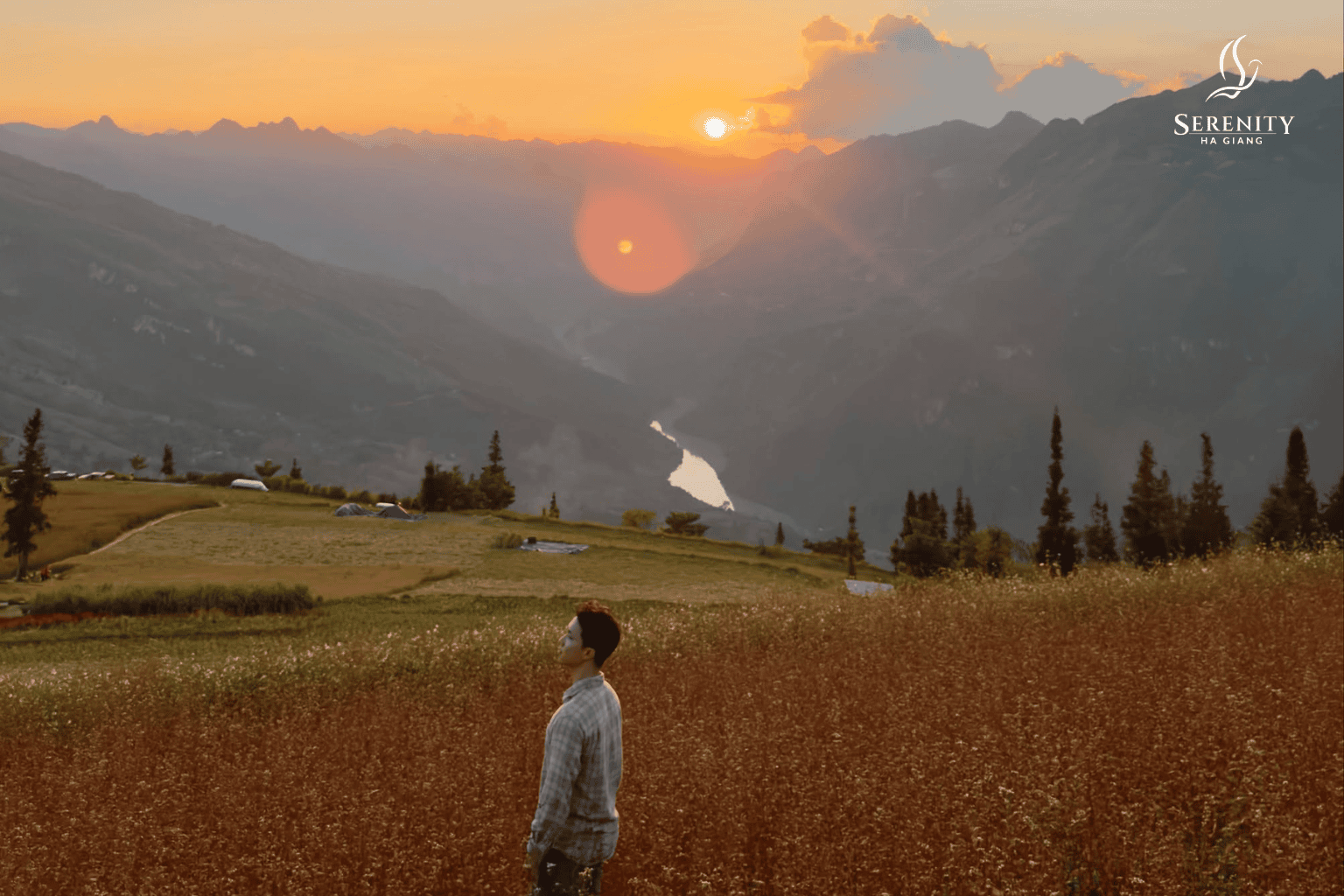
Tam Giac Mach Flowers in Ha Giang – When & Where to See
You browse the internet, seeing pictures of travellers in Ha Giang surrounded by the beautiful pink colors of Tam Giac Mach flowers, wishing to see that scenery in real life with your eyes.
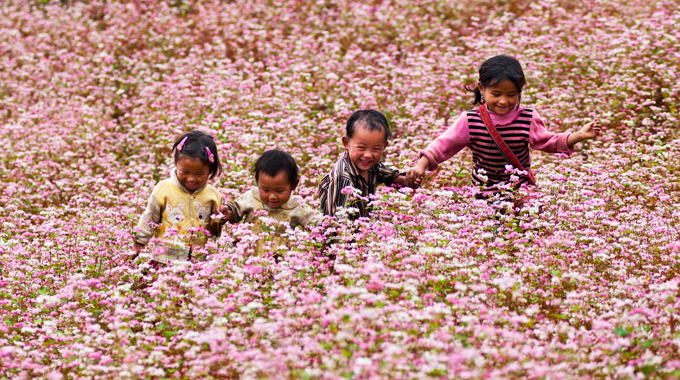
But there is one thing to know: that beautiful scenery is not something you can see all year round. Tam giac mach (buckwheat) flowers bloom across Ha Giang’s karst plateau from late September through early December, with peak color in late October and November.
Therefore, to have a fulfilling trip without the disappointment of getting home without seeing that pretty Tam Giac Mach Ha Giang – let’s explore everything you need to know in this guide – from the best time to visit and where to find the most beautiful fields to the traditions that make this flower season truly special.
Key Takeaways
- Bloom window: Late September to early December, with peak color from late October through the first two weeks of November.
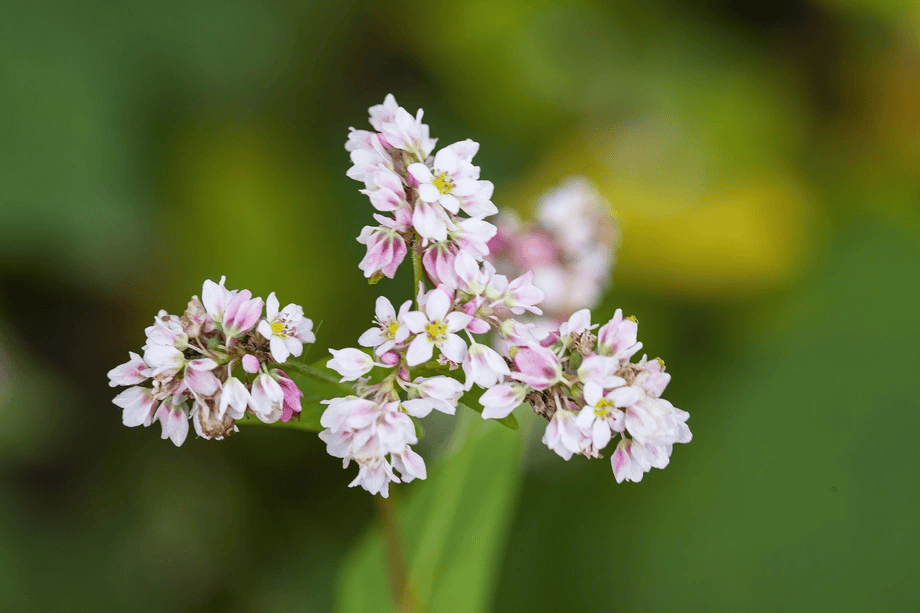
- Color change: Flowers open white, shift to light pink, then deepen to purple and dark red as the season progresses.
- Best fields: Dong Van, Sung La, Pho Cao, Sa Phin, Lung Cu, and Meo Vac district.
- Festival timing: Ha Giang’s Buckwheat Flower Festival runs in Dong Van, typically opening in late November.
- Riding conditions: This overlaps with Ha Giang’s dry season, making it one of the best windows for the loop.
What are Tam Giac Mach Flowers?
Despite their popularity, many visitors are surprised to learn that Tam Giac Mach is not grown purely for its beauty:
- Definition: Tam giac mach translates to “buckwheat”; it is not a true cereal but a pseudocereal whose seeds are edible.
- Purpose: It is originally grown by H’mong and Dao farming communities for its grain, which is ground into flour for noodles, pancakes, and a mildly sweet buckwheat wine sold throughout the plateau.
- Planting: Farmers plant the crop in September, right after the rice harvest clears the terraces.
- Bloom time: Flowers open within about three weeks of sowing.
- Color shift: White → soft pink → purple → dark red, just before the grain harvest in late November or December.
- Why locations shift: These are working crop fields, not decorative gardens – exact location and density change yearly by village. A local guide beats a fixed map pin for finding that week’s best blooms.
Best Time to See the Buckwheat Flowers
Serenity Ha Giang has successfully run more than 3200 joyful trips for many travellers around the world to Ha Giang; therefore, we can witness a similar pattern throughout the year:
| Period | What to expect |
| Mid-to-late September | Fields just planted; little to no bloom yet; might have early blooms in selected fields |
| Early-to-mid October | First blossoms open, mostly white and pale pink |
| Late October–early November | 🌸Peak bloom – deepest color, fullest fields |
| Mid-to-late November | Deep pink flowers with cooler autumn scenery; festival season |
| Early December | Bloom fading; harvest begins |
Note: Since bloom timing depends on when each village plants and how the weather behaves that year, you might not find the exact dates.
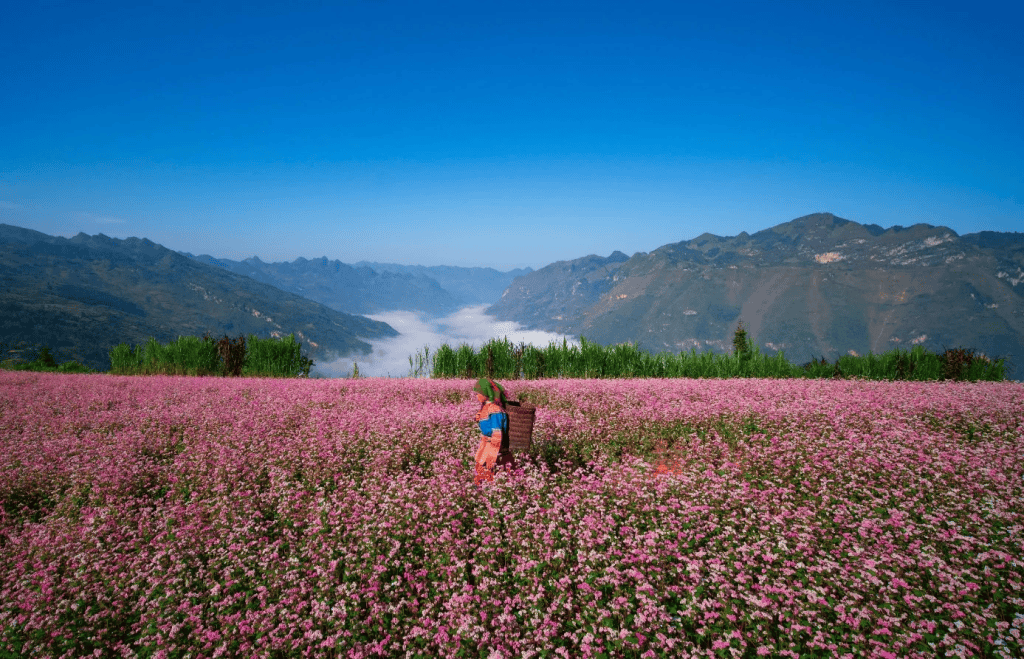
For most travelers, late October through mid-November offers the best combination of:
- Peak flower coverage
- Pleasant weather
- Clear mountain views
- Comfortable temperatures for riding the Ha Giang Loop
This period also coincides with Ha Giang’s dry season, making road conditions much better than during the summer rains.
If you’d like to combine flower viewing with the famous Ha Giang Loop, autumn is widely considered one of the best times of the year. Joining a guided tour with Serenity Ha Giang allows you to visit scenic flower fields while exploring iconic mountain passes, hidden villages, and local communities at a comfortable pace.
Best Locations to see Tam Giac Mach Ha Giang
The Dong Van Karst Plateau holds the largest concentration of buckwheat fields, but a few areas consistently produce the best displays:
- Dong Van town and surrounds: the festival hub, with flower displays planted deliberately around the old quarter, the Dong Van–Lung Cu junction, and the Youth Volunteer Monument.
- Sung La and Pho Cao: smaller villages along the main loop road, known for fields set against traditional H’mong stone-wall houses.
- Sa Phin: home to the H’mong King’s Palace, with buckwheat fields often planted right up to the surrounding hills.
- Lung Cu Flag Tower: Vietnam’s northernmost point, where fields ring the base of the flag tower. Our guide to Lung Cu covers the full visit.
- Ma Le and Lung Cam cultural village: a quieter alternative to Dong Van’s town center, and one of the Ha Giang villages worth building into a slower itinerary.
- Ma Pi Leng Pass: Mountain roads curve past steep, rocky drop-offs, where delicate flowers contrast against the deep valleys below.
- Meo Vac district: fields here catch the light differently against the deeper valley terrain near Ma Pi Leng Pass.
- Suoi Thau grassland, Xin Man: further west and less visited, but locally regarded as one of the province’s most striking buckwheat settings.
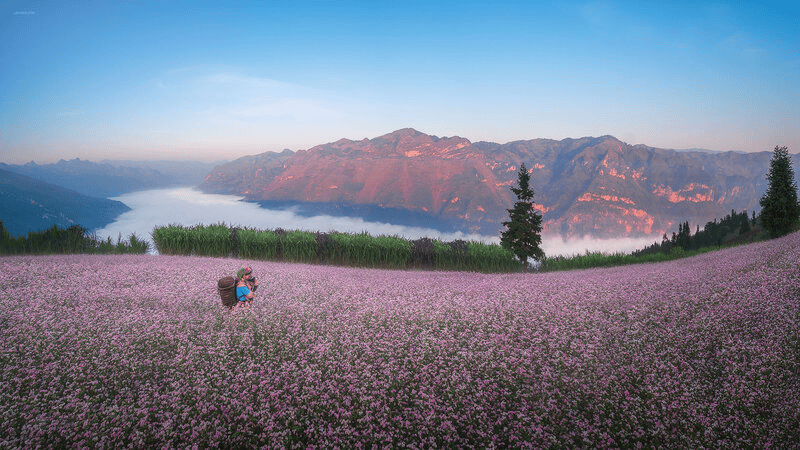
Because these fields sit directly along the standard loop route, you don’t need a separate trip to see them – they’re part of the ride if you’re on the plateau during bloom season.
Photography Tips for Buckwheat Flower Season
Tam Giac Mach flowers have become one of Vietnam’s most photographed seasonal attractions in Ha Giang. Here are a few tips to make the most of your visit:
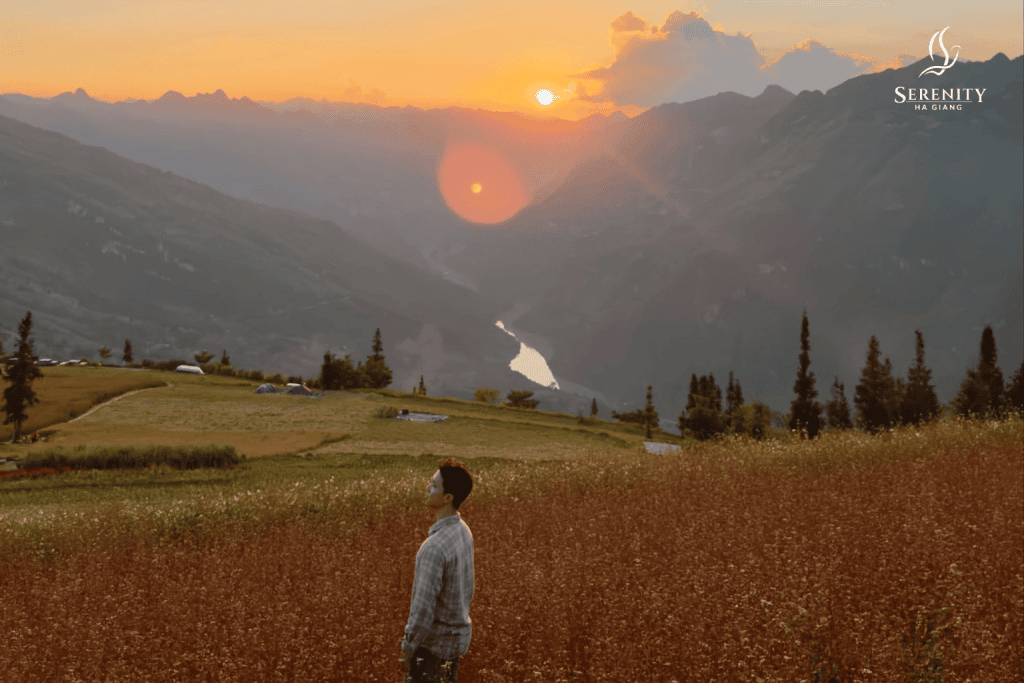
- Shoot early or late: Soft morning and late-afternoon light bring out the pink and purple tones far better than the flat light of midday.
- Get low: Crouching or kneeling at flower height makes the fields feel denser and puts the karst peaks in the background.
- Watch for people scaling: A single figure walking through a field – a farmer, a rider, a friend – gives the frame a sense of size that an empty field doesn’t.
- Ask before entering a field: These are working crops, not public gardens. A quick request to the farmer (or a small tip) is standard courtesy and usually welcomed.
- Respect the local farm: Stay on the designated paths and avoid stepping on the flowers to preserve the natural beauty.
- Bring a wide lens for the passes: Ma Pi Leng and the Dong Van–Lung Cu road offer elevated views where the fields read as color blocks against the plateau.
Local Festivals and Culture
Since 2015, Ha Giang’s provincial government has held an annual Buckwheat Flower Festival. Here is an overview of all the important pieces of information you need to know about the festival:
| Detail | Overview |
| Event | Buckwheat Flower Festival (Lễ hội hoa Tam giác mạch) |
| Location | Dong Van town, Dong Van Karst Plateau |
| Timing | Usually opens late November, runs for several weeks around peak bloom |
| Activities | Night marketsCultural gamesAgricultural showcasesH’mong music and traditional dress performancesFood and wine stalls featuring buckwheat products |
| Cultural roots | Tied to H’mong farming heritage – buckwheat has sustained communities on Ha Giang’s thin, rocky soil for generations |
| Symbolism | Widely regarded as a symbol of romance in Vietnamese culture, a popular backdrop for wedding photography |
| Travel impact | Dong Van gets busier, and accommodation tightens; food stalls and cultural programming improve |
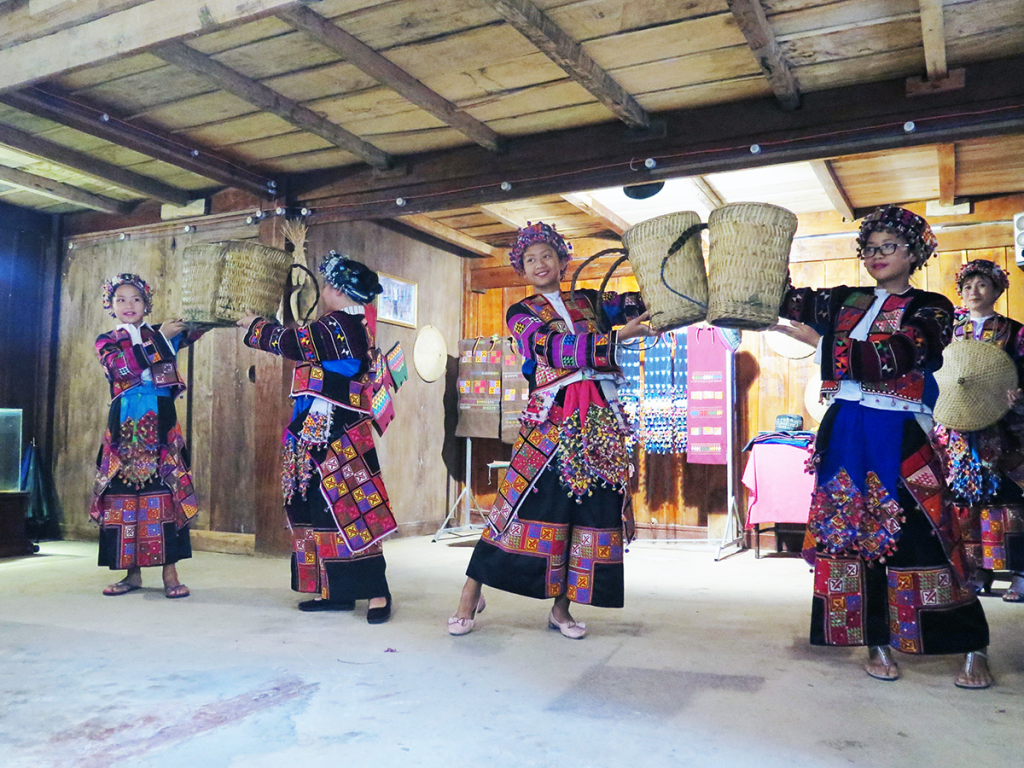
Beyond the festival, autumn is also an excellent time to experience everyday mountain life. As you travel through villages, you’ll see families harvesting crops, drying corn outside wooden homes, weaving traditional textiles, and preparing for the cooler months ahead.
These moments often become the most memorable part of a trip, not because they were planned, but because they offer an authentic glimpse into life on the Dong Van Karst Plateau.
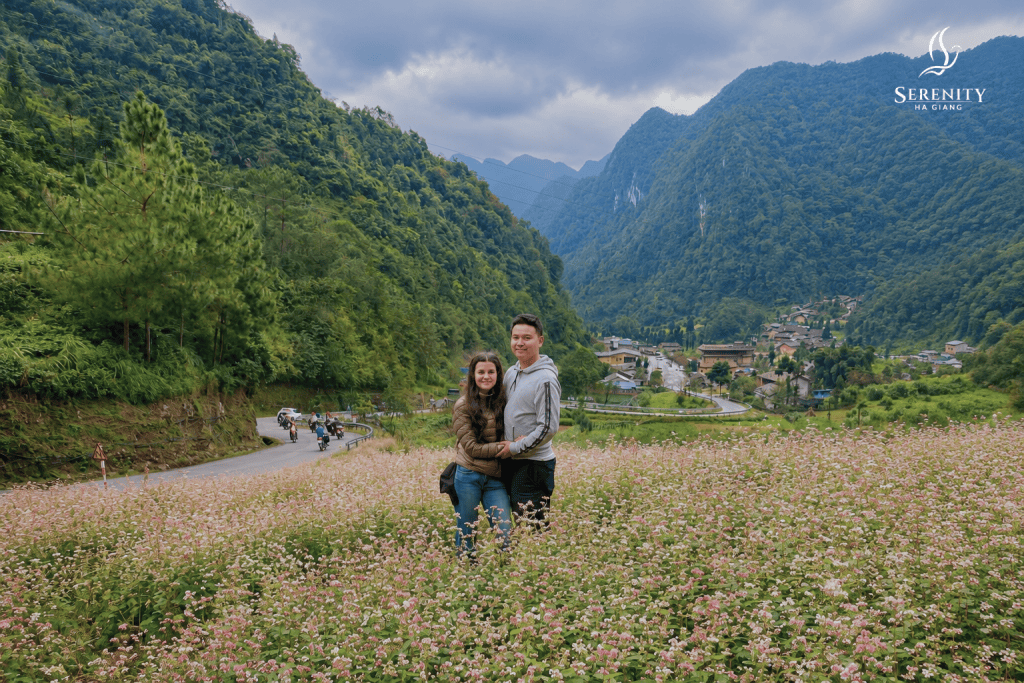
One of the advantages of exploring with Serenity Ha Giang is having local guides who know when to slow down, where to stop, and how to help visitors appreciate the culture beyond the famous viewpoints. Instead of simply photographing the flowers, you’ll better understand the people and traditions that have shaped this remarkable landscape for generations.
Let’s get your Tam Giac Mach Ha Giang picture!
Tam Giac Mach flowers have become one of Ha Giang’s defining symbols, but their beauty goes far beyond their soft pink petals.
They tell the story of a resilient mountain crop, of communities who have adapted to one of Vietnam’s harshest landscapes, and of a season when nature briefly softens the dramatic limestone plateau with gentle shades of white, pink, and purple.
Now you know all the important information to witness the beautiful flowers blooming season in Ha Giang, it’s time to make a real trip! Go with Serenity Ha Giang to experience the significant Ha Giang Loop ride in a small group of 10 or fewer and discover the stunning real-life beauty of the buckwheat flower season.
FAQ
Q: Do I need to pay to enter a buckwheat field in Ha Giang?
Some farmers charge a small fee (a few thousand to around 10,000 to 30,000 VND) for photos taken inside their field, since the crop is their livelihood. It’s not universal, but carrying small notes is a good habit during flower season.
Q: Are there products made from Tam Giac Mach?
Yes. In Ha Giang, you can find buckwheat cakes, tea, wine, noodles, and other local specialties made from the plant’s seeds, offering a unique taste of the region. The grain has a mild, slightly nutty flavor.
Q: Are the Tam Giac Mach flowers native to Ha Giang?
No, buckwheat isn’t native to Vietnam, but it has been cultivated in Ha Giang and neighboring provinces like Lao Cai and Cao Bang for generations, and Ha Giang’s version of the flower fields is the most extensively planted and best known in the country.