

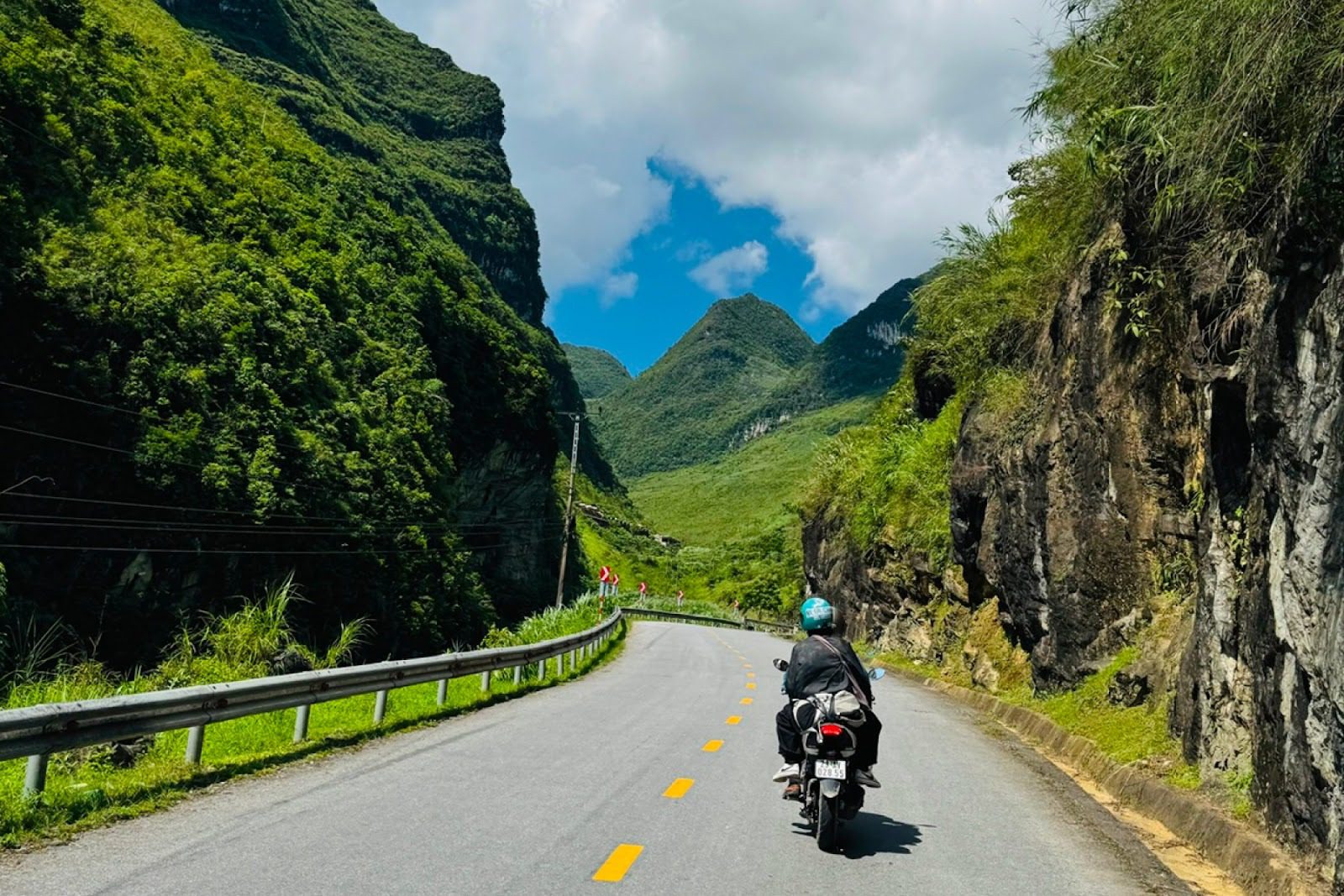
Best Time to Visit Ha Giang Loop: Weather & Seasons
Planning to go to Ha Giang? Good choice! You are going to have a wonderful trip in the northernmost province in Vietnam, which was named Asia’s Leading Regional Cultural Destination 2024 by the prestigious World Travel Awards (WTA), often referred to as the “Oscars” of tourism. Recently, it has become even more famous for its jaw-dropping Ha Giang Loop.
But when is the best time to visit Ha Giang Loop? Timing your trip right can make or break the experience. So let’s explore the weather patterns to help you avoid the worst time to do the Ha Giang loop and plan your adventure perfectly.
TL;DR – Best Time to Visit Ha Giang Loop:
The best time to visit Ha Giang is during the dry season from September to November or March to May. These months offer the most stable weather conditions, clear skies, and comfortable temperatures for navigating the high-altitude mountain passes.
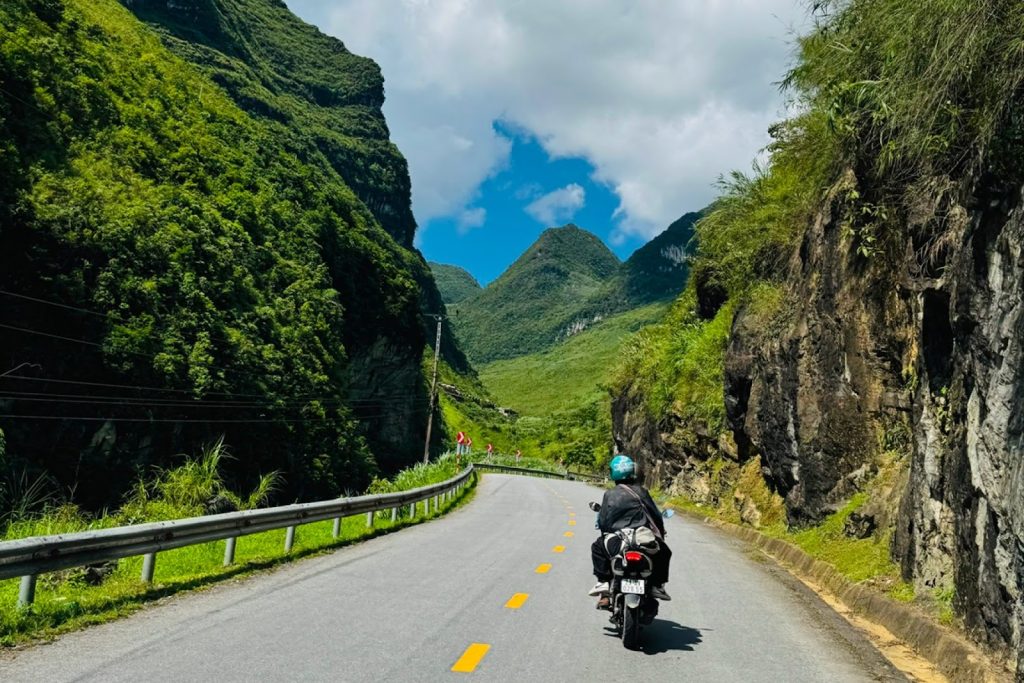
A seasonal guide to the Ha Giang Loop
However, different timings can bring you different experiences, so let’s analyze the pros and cons of each period in the year, ranking from the best to the least favorable ones:
🍂 Autumn (September – November): The best time of year for the Ha Giang Loop
From September to November is the single best time for scenery in your Ha Giang Loop trip.
What can you expect:
- Temperature: ~18-26 °C (64°F – 79°F)
- Atmosphere: Dry air, low rainfall, clear skies, best visibility, and sharp mountain views → most comfortable for motorcycling.
- Landscape: Golden rice terraces in the west route (especially in Hoang Su Phi) in Sep, and the famous pink and white Buckwheat flowers during October to November.
- Festival: You can catch the Buckwheat Flower Festival in late October/November.
What you might face:
- Crowded, obviously, since this is the most popular time. However, the view is the most breathtaking this time and is worth a trade-off.
- Accommodation & bike rental prices may rise, and the best homestays might be fully booked.
🌸 Spring (March – May): One of the best time to visit Ha Giang Loop.
March to May is the second-best time of the year to ride the Ha Giang Loop.
What you can expect:
- Temperature: ~15-25 °C (59-77 °F) → comfortable riding
- Atmosphere: Low rainfall, relatively clear skies, gentle sunshine → good road conditions (dry & stable)
- Landscape: Blooming flowers (peach, plum, and later rice planting) across the Dong Van Karst Plateau, on the mountain slopes and along the roadsides, make the entire rocky plateau seem to be covered in a rare, delicate hue.
- Festival: Khau Vai Love Market, International Tourism and Culinary Culture Festival
What you might face:
- Occasional fog in early mornings. Thick mist might cause delayed starts and temporarily block views at high passes like Ma Pi Leng.
- Increasing tourist numbers toward April
- Unpredictable weather, since late April, can start to see early rains as the change of season.
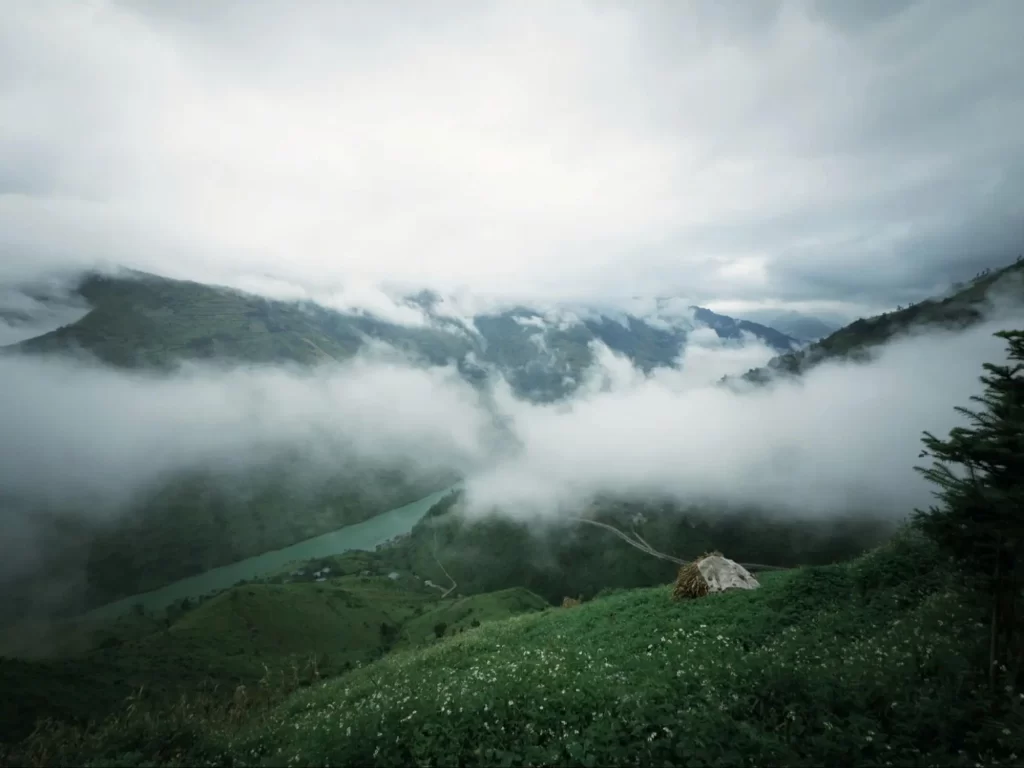
❄️ Winter (December – February): A good time for a distinct experience of Ha Giang Loop
December and February are other good options when you find the best time to visit Ha Giang Loop. This period is quiet but challenging for travelers who don’t mind the cold and want to avoid the tourist trail.
What you can expect:
- Temperature: 5-15 °C ( 41-59 °F -colder in mountain passes) → Dry roads (generally safe from mud)
- Atmosphere: Very little rain, but heavy fog and mist → creates a moody vibe for the photographs.
- Landscape: Cloudy and misty. While the vibrant green rice terraces of summer are gone, they are replaced by ethereal mist, high-contrast mountain “bones,” and iconic seasonal blossoms.
- Festival: Gau Tao Festival, Long Tong Festival.
What you might face:
- Extreme cold mornings and nights. Riding a motorbike in these temperatures requires serious winter gear
- Dense fog reduces visibility, making riding especially dangerous on passes like Ma Pi Leng.
- The dull landscapes of gray and brown mountains after the harvest.
🌿 Summer (Late May – August)
The summer time, from May to August, is the worst time to do the Ha Giang Loop due to the less-than-ideal riding conditions.
What you can expect:
- Temperature: 25-35 °C
- Atmosphere: Highest rainfall and humidity. And there might be frequent afternoon storms.
- Landscape: The “water-pouring season”, the terraces are often flooded with water. Waterfalls at full power. However, the scenery remains dramatic and tropical. (Fewer tourists)
- Festival: Pu Peo Forest God Ceremony, Moon Bridge Festival.
What you might face:
- You face a monsoon season, heavy rain brings slippery roads and mud, making it harder to ride.
- Risk of landslides after rain.
- Poor visibility from mist and rain,
- Riding becomes physically exhausting due to the heat and humidity
Best time to do the Ha Giang Loop: A cheatsheet
| Season | Best For | Main Draw | Biggest Trade-off |
| Autumn (Sep-Nov) | First-timers | Golden rice & clear skies | High crowds/prices |
| Spring (March-May) | Photographers | Peach & plum blossoms | Morning fog delays |
| Winter (Dec-Feb) | Solo travelers | Quiet roads & misty peaks | Freezing temperatures |
| Summer (late May – July) | Adventurers | Lush green & waterfalls | Rain & slippery roads |
Understanding Ha Giang’s Climate
Ha Giang sits in Vietnam’s rugged northwest, influenced by a subtropical highland climate with four distinct seasons:
- Spring offers milder temps around 15-25°C (59-77°F).
- Summer is hot & humid, with heavy rain.
- Autumn offers cool, clear, and often foggy scenes.
- Weather brings cold snaps down to 5°C (41°F).
Note: The “Ha Giang Loop” is not uniform. The temperature varies significantly by altitude. While Ha Giang City may feel warm, districts like Dong Van and Meo Vac can experience temperatures near 0°C during January. Accurate travel planning requires checking the specific Ha Giang weather forecasts for these high-altitude districts rather than the provincial capital alone.
Best Time for Clear Skies
Late September to early December is definitely the best time for clear skies.
Travelers seeking “the best time to” photograph the Ma Pi Leng Pass might be satisfied if they do the Ha Giang Loop during the period from September to December. Early mornings often deliver that ethereal mist over canyons, burning off by noon for perfect loops.
Clear visibility is essential for safely navigating the 22-kilometer pass between Dong Van and Meo Vac. These clear sky windows also coincide with the best time for trekking in the Tu San Canyon.
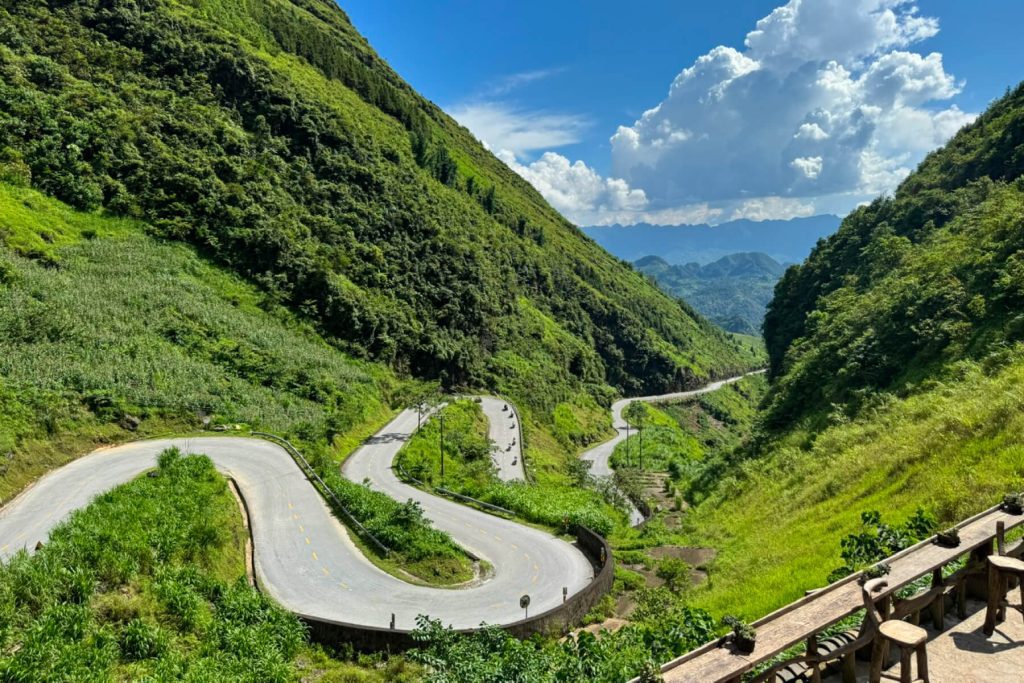
Avoiding the Crowds
To optimize your Ha Giang Loop experience, aim to travel during the “shoulder months” of March or September. National holidays, such as April 30th and May 1st, see a massive influx of domestic tourists, often leading to fully booked homestays in Du Gia and Dong Van.
Strategies for a quieter trip:
- Start the loop on a Monday or Tuesday to avoid weekend “Easy Rider” groups.
- Stay in smaller villages like Lung Tam or Nam Dam instead of the main district towns.
- Explore the loop in early September before the peak harvest crowds arrive.

Festivals and Events
The cultural landscape of Ha Giang is most vibrant during specific annual events.
- Buckwheat Flower Festival (October – November): This is a major attraction where the landscape turns purple and pink with blooming blossoms.
- Khau Vai Love Market (Late April): An annual event held only once a year in Meo Vac, where ethnic minorities gather to meet former lovers, and where people do traditional singing and courtship rituals.
- Lunar New Year – Tet (February): This period features traditional festivals and games across Hmong and Tay communities. But expect crowds and higher costs.
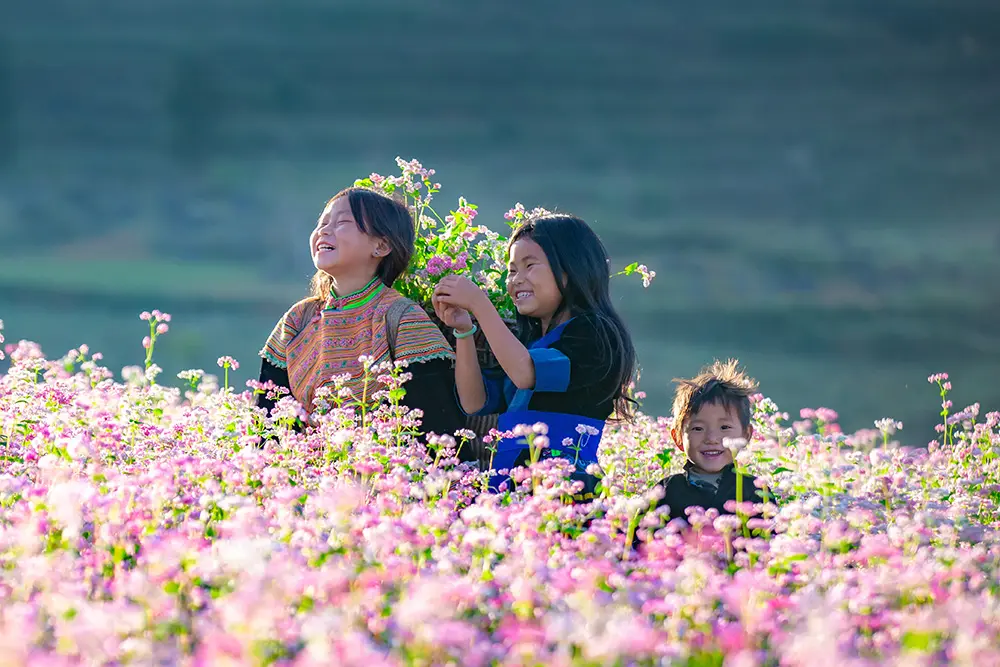
Buckwheat flower season (Image from Du lịch Thành Phố Hồ Chí Minh)
Monthly Breakdown of Weather
The following table provides a technical breakdown of weather patterns to help you decide when to do the loop.
| Month | Weather Condition | Rainfall | Highlights | Recommendation |
| Jan – Feb | Cold, Misty, 5-12°C | Low | Peach & Plum blossom Tet festivals | Dress in layers; fog can limit views. |
| Mar – Apr | Mild, Clear, 18-24°C | Low-Med | Vibrant flowers, clear roads, green hills | Best time to visit for motorbiking. |
| May – Jun | Warm, Occasional rain | High | Water-falling season (terraces) | Good for photography; start of heat.Heavy rain. |
| Jul – Aug | Hot, Heavy rain, 25-30°C | Very High | Lush green mountains, waterfalls at the peak | Worst time to do Ha Giang loop (typhoon might happen) |
| Sep – Oct | Cool, Dry, 15-25°C | Low – Med | Golden rice harvest, perfect loop weather. | Peak Season; book transport and homestay early. |
| Nov – Dec | Cold, Dry, 8-15°C | Low | Buckwheat flower fields | Busy but beautiful; cold nights. |
Tips for Traveling in Different Seasons
Traveling in different seasons requires specific preparation to ensure safety and comfort.
- Dry Season (Oct – Apr): Bring high-quality windbreakers and thermal base layers. The wind chill on mountain passes like Bac Sum can make the perceived temperature much lower than the actual reading.
- Rainy Season (May – Sep): Invest in professional-grade rain gear and ensure your motorbike tires have deep tread. If heavy rain persists for more than two hours, stop and wait in a safe area to avoid potential flash floods or falling rocks.
No matter the season, get your motorbike permit in advance and respect ethnic customs. Plan your trip for the optimal experience. Or simpler, book our trips to enjoy the beauty of Ha Giang without missing any parts and worrying about transportation.
Let’s do the Ha Giang Loop!
Choosing the best time to visit Ha Giang depends on whether you prioritize photography, cultural festivals, or road safety. For the most balanced experience with clear views and manageable temperatures, the months of October and November remain the gold standard.
Ready to explore the northern frontier? Everything is ready for you – explore our tour at Serenity Ha Giang today – Go with a small group (up to 8 pax) in a private bungalow, you can immerse yourself in a balanced trip of party and culture (not too festive, but not too boring like a workshop). So don’t miss the best time to visit Ha Giang Loop!
| Note: Since July 2025, Ha Giang has been merged into one province with Tuyen Quang and has become a part of it. |