

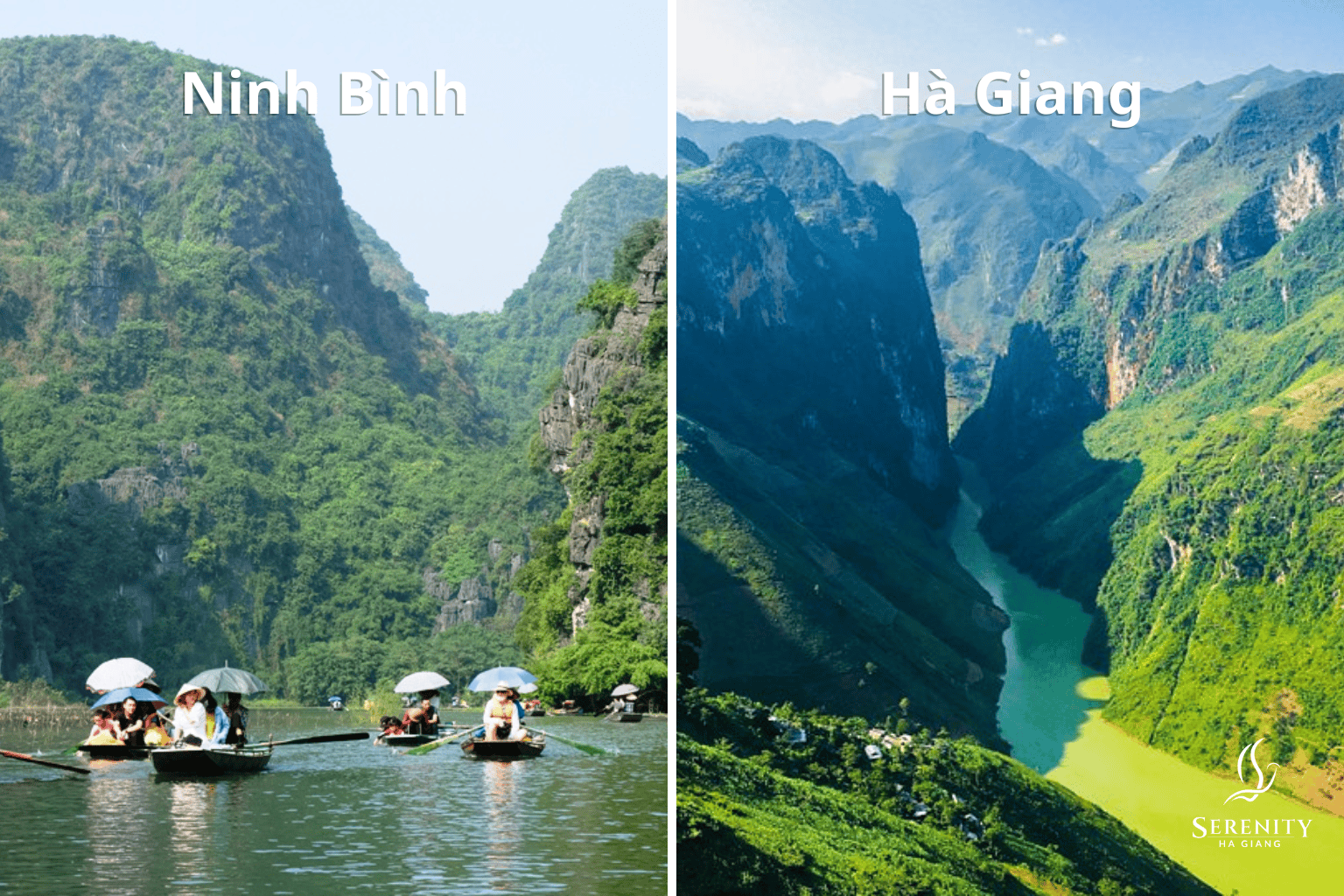
Ninh Binh vs Ha Giang – Compare Northern Vietnam Destinations
A common question that arises for many travellers planning a visit to the northern part of Vietnam is: Ninh Binh vs Ha Giang – which place should I visit?
Ninh Binh and Ha Giang are both beautiful spots that can satisfy any visitors, but each brings a totally different vibe and experience.
Briefly summarize: If you only have a few days, pick Ninh Binh for scenery without the effort. If you want an adventure that changes how you see Vietnam, pick Ha Giang.
But what are the real differences? Let’s find out in today’s article, and then, you can confidently choose the most suitable trip for yourself!
Key Takeaways
- Distance from Hanoi: Ninh Binh is about 90-100 km (roughly 2 hours by car or train); Ha Giang is about 280-300 km (5-8 hours by car or sleeper bus).
- Trip length: Ninh Binh fits into 1-2 days; the Ha Giang Loop needs at least 3-4 days to see properly.
- Who each one suits: Ninh Binh works for travellers who want to admire the beauty of the scenery at a slow pace, in a peaceful way, while Ha Giang suits travellers with a few extra days and an appetite for something more physical.
- How you explore it: Ninh Binh is a boat-and-bicycle destination; Ha Giang is built around motorbike travel, with an Easy Rider option for those who’d rather not drive themselves.
- Best time to visit: Ninh Binh is best January-March or late May-early June; Ha Giang peaks September-November, with March-May a strong second choice.
Overview of Ninh Binh
Ninh Binh sits in the Red River Delta, about 90-100 km south of Hanoi, and is reachable by car, train, or bus in roughly 2 hours. It’s built around the Trang An Scenic Landscape Complex, a UNESCO World Heritage Site where rowboats wind through flooded caves and karst valleys.

What is Ninh Binh:
A UNESCO-listed river-and-karst landscape often nicknamed “Ha Long Bay on land”. This area also holds the ruins of Hoa Lu, which was the ancient capital city of Vietnam over a thousand years ago, during the 10th century.
What to look for in Ninh Binh:
- Trang An’s boat route through cave tunnels
- Tam Coc boat ride passing through the rice fields
- Mua Cave’s viewpoint over the valley
- Bai Dinh Pagoda is one of the largest pagoda complexes in Southeast Asia.
What to expect in Ninh Binh:
The ground here is totally flat, so it’s perfect for riding bicycles or relaxing in a rowboat instead of zooming around on loud motorbikes. The boat tours last between 1.5 and 3 hours, depending on which river you choose. When you stay overnight, it’s best to pick a homestay right in the small villages of Tam Coc or Trang An so you can look at the cool mountains, rather than staying in Ninh Binh City, which lacks the scenery.
Who is Ninh Binh for:
The location is suitable for all types of travellers, since it requires very little to no special physical strength, especially for:
- Travellers having a trip in Hanoi, Sapa, or Ha Giang, and have 1-2 spare days.
- Travellers who want to enjoy the peaceful, slow-paced natural scenery.
- Travellers who have limited time, 2 days should be a decent time for the Ninh Binh trip.
- Travellers who go with families, including older members and children, want a relaxed trip.
👉 In short, Ninh Binh works well as a standalone weekend trip or as a stop on a longer Hanoi-based itinerary. It doesn’t require the multi-day commitment that Ha Giang does.
Overview of Ha Giang
Ha Giang Province sits at Vietnam’s northern border with China, about 280-300 km from Hanoi. The drive takes 5-7 hours by private car or 6-8 hours by sleeper bus, since there’s no train line and no airport serving the province.

What is Ha Giang:
A mountainous border province built around the Ha Giang Loop, a 350-400 km motorbike route through the Dong Van Karst Plateau UNESCO Global Geopark.
What to look for in Ha Giang:
- Ma Pi Leng Pass – often called the “King of Passes”
- The Nho Que River canyon below Ma Pi Leng Pass
- The Lung Cu Flag Tower at Vietnam’s northernmost point
- Sunday markets in towns like Meo Vac and Dong Van, where H’mong, Tay, and Dao communities trade in traditional dress.
What to expect in Ha Giang:
A multi-day motorbike trip, not a day tour, mostly known as the Ha Giang Loop. Most riders take 3-5 days to cover the full loop through Quan Ba, Yen Minh, Dong Van, and Meo Vac. Roads are narrow, steep, and require real riding confidence – this isn’t a bicycle-and-rowboat kind of trip.
Who is Ha Giang for:
Ha Giang is for people with time and adventurous minds, with better stamina:
- Travellers who have at least 3-4 days available
- Travellers who want to have a thrilling, remote, and dynamic experience
- Travellers who are experienced in riding a motorbike and want to challenge themselves with the mountainous roads.
- Travellers who want cultural depth rather than sightseeing only.
👉 In short, Ha Giang makes it appealing with the beautiful scenery on the go, which you have to engage in the Ha Giang Loop to actually feel it. It needs 3-4 days to fully immerse.
Key Differences in Scenery and Culture of Ninh Binh vs Ha Giang
The two destinations don’t just look different – they’re built on entirely different geography, which shapes how you experience each one.
| Aspect | Ninh Binh | Ha Giang |
| Landscape shape | Flat river valleys ringed by karst towers | High mountain plateau with canyons and passes |
| Mode of travel | Rowboat, bicycle, taxi | Motorbike, taxi |
| Cultural focus | Historical Kinh-majority sites, Buddhist pagodas | Living H’mong, Tay, and Dao ethnic minority culture |
| Crowd density | Busy with day-trippers, especially mid-morning | Depending on the seasons, but often quieter due to the remoteness and time commitment |
| Photography style | Water-level, reflective shots | Elevated, sweeping mountain shots |
How much time should you actually set aside to visit Ninh Binh vs Ha Giang?
A Ninh Binh trip compresses well – most of what’s worth seeing (Trang An, Tam Coc, Mua Cave) sits within a 15 km radius, so even a single-day trip from Hanoi covers the highlights. Ha Giang doesn’t compress the same way: the loop’s value comes from the distance itself, so cutting it to 2 days means skipping some iconic spots, such as the Ma Pi Leng Pass stretch or the Lung Cu detour.
However, you can still have a fulfilling experience in Ha Giang by deeply understanding the cultural beauty with just 2 days if you join a well curated 2 day Ha Giang itinerary.
What kind of photos will you actually come home with?
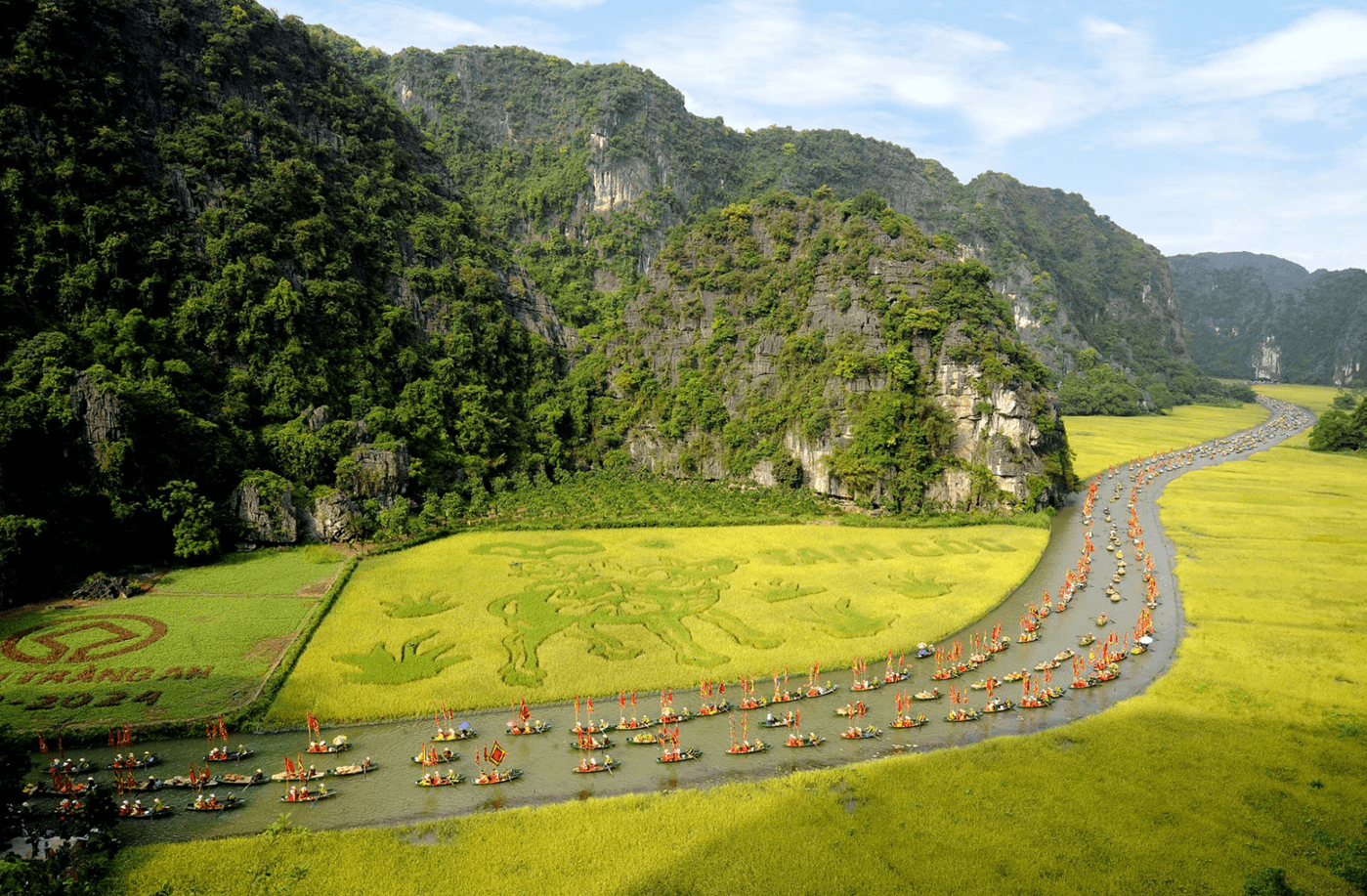
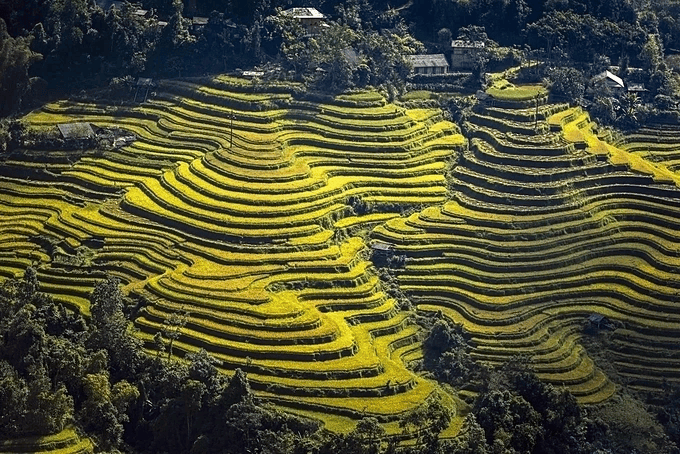
Ninh Binh photos tend to be intimate and reflective – a single boat, still water, karst towers mirrored on the surface. Ha Giang photos tend to be wide and dramatic – switchback roads carved into mountainsides, canyon depth from Ma Pi Leng Pass, and terraces that only read as terraces from an elevated, distant shot.
In Ha Giang, you can also see the woman with a beautiful traditional costume of the near border area of Northern Vietnam, which brings a very unique aesthetic to the picture.

Travel Tips and Best Time to Visit
| Factor | Ninh Binh | Ha Giang |
| Best months | January to March, May to July | September to November, March to May |
| Peak scenery | May to June (golden rice at Tam Coc) | Late September-October (golden rice terraces) |
| Temperature range | Mild year-round, hot and humid June-August | 5-15°C in winter at elevation; 18-25°C in spring |
| Accessibility & getting there | ~90-100 km from Hanoi; car, train, or bus (~2 hours) | ~280-300 km from Hanoi; car or sleeper bus only (5-8 hours); no train or airport |
| Physical effort | Low – rowboats and flat bicycle paths | Medium – multi-day motorbike riding on mountain roads |
| Minimum time needed | 1-2 days | 3-4 days minimum |
| Expanse | Compact – core sites within 10-15 km of each other | Sprawling – 350-400 km loop across multiple districts |
What to do in Ninh Binh and Ha Giang, Month by Month?
Ninh Binh
- Jan-Mar: Bai Dinh Pagoda Spring Festival (rituals, folk games, Cheo/Xam/Ca Tru singing) + Trang An Festival and Co Lau Festival in the third lunar month. Trang An is cool, misty, and quiet.
- Apr: Shoulder month – festival crowds gone, mild weather, easier Mua Cave climb.
- May-Jun: Tam Coc rice harvest – golden paddies, best rowboat photo season. Trang An’s lotus ponds start blooming too.
- Sep-Oct: Cooler, good for cycling out to Van Long Nature Reserve to spot langurs and birdlife.
- Nov-Dec: Winter mist over Trang An – quieter, moodier scenery.
Ha Giang
- Sep-Oct: Golden rice terraces at Ma Pi Leng Pass and Hoang Su Phi; first buckwheat blooms appear up north.
- Nov: Peak buckwheat season + Buckwheat Flower Festival in Dong Van (costume shows, folk games, buckwheat cakes/wine). Good month for a Sunday market stop in Meo Vac or Dong Van.
- Dec-Feb: Cold season – near-freezing at elevation around Dong Van, occasional frost. Quiet roads, but needs real cold-weather gear.
- Mar-Apr: Peach and plum blossoms around Sung La and Meo Vac; dry, stable roads.
- May: Last reliable dry month – terraces are green (rice just planted), not golden, but roads still solid.
- Jun-Aug: Rainy season, highest landslide risk. Serenity Ha Giang recommends avoiding the loop this window unless you’re experienced with wet mountain riding.
How do you actually get to each one (Ha Giang and Ninh Binh)?
Ninh Binh’s short distance means transport is barely a planning decision – book a limousine the morning of, and you’re on a boat by lunch. Ha Giang is farther in distance from Hanoi with no airport, so it normally takes 6-8 hours from Hanoi by bus. This means you’re committing a full travel day before the loop even starts. For a full breakdown of routes, costs, and timing, see Ha Giang Transportation.

How physically demanding is each trip, day to day?
Ninh Binh asks almost nothing of your body – a rower does the work on the boat through Trang An, and cycling between Tam Coc and Mua Cave is flat, shaded, and short. However, if you visit Mua Cave, you might need a bit of endurance to climb the stairs and reach the top view.
On the other side, Ha Giang asks more physical strength than Ninh Binh: full riding days on narrow mountain roads, temperature swings between valley floors and 1,000 m plateau towns, and the mental fatigue of sustained concentration on switchbacks. You can also ride pillion with an Easy Rider to avoid the tiredness of handling a motorbike in mountain terrain.
Suggested Itineraries Combining Both Ninh Binh and Ha Giang
Many transportation and tour operators offer routes that let you enjoy the beauty of both Ninh Binh and Ha Giang in one trip. Plus, combining the two places will be ideal if you have 7-10 days.
7-day itinerary (Ha Giang first):
- Days 1-2: Arrive in Hanoi, explore the Old Quarter
- Days 3-6: Ha Giang Loop (bus or car to Ha Giang City, 3-4 days riding the loop, bus back to Hanoi)
- Day 7: Day trip to Ninh Binh (Trang An or Tam Coc) before flying out
10-day itinerary (Ninh Binh first):
- Days 1-2: Hanoi
- Days 3-4: Ninh Binh (2 nights in Tam Coc or Trang An, covering Trang An, Mua Cave, and Bai Dinh Pagoda)
- Day 5: Return to Hanoi, transfer to Ha Giang
- Days 6-9: Ha Giang Loop (4 days, allowing a rest day for the Ma Pi Leng Pass and Lung Cu detour)
- Day 10: Return to Hanoi
Doing Ha Giang first tends to work better logistically – you’ll want a rest day in Hanoi after the loop before flying out, and Ninh Binh’s flat, easy pace makes a gentler final stop than starting your trip with several days on a motorbike.
Final Thoughts: Ninh Binh, Ha Giang, or Both?
So, have you settled on your next Northern Vietnam trip yet? Ninh Binh, Ha Giang, or both?
If it’s quiet river scenery and an easy 1-2 day trip you’re after, Ninh Binh delivers that without asking much of you. If you want mountain passes, ethnic minority culture, and a multi-day motorbike adventure, Ha Giang is where you belong. And if you’ve got 7-10 days to spare, there’s no real reason to pick just one – pair them into a single Northern Vietnam itinerary and get both experiences on the same trip.
Ready to lock in the Ha Giang side of that decision? Curated Ha Giang Tour Packages: 2D3N, 3D2N & 4D3N run in small groups capped at 10 people, with private bungalow stays and routes covering everything from Ma Pi Leng Pass to the Lung Cu Flag Tower – pick the length that fits your trip, and Serenity Ha Giang handles the rest.
FAQ
Q: Do you need a special permit for Ha Giang that Ninh Binh doesn’t require?
Yes. Ha Giang’s northern districts – Quan Ba, Yen Minh, Dong Van, and Meo Vac – sit inside Vietnam’s regulated border zone with China, so foreign travelers need a Border Area Permit (around 250,000 VND, roughly $10) to enter them. Enforcement has picked back up since June 2026 after a quieter period, and police checkpoints along the route may ask to see it. Most tour operators, including Serenity Ha Giang, arrange this permit as part of the trip. Ninh Binh has no such requirement – there’s no border zone and no permit process to plan around.
Q: Do you need a motorbike license for Ha Giang, and does the same apply to Ninh Binh?
If you plan to self-drive any part of the Ha Giang Loop, Vietnamese law requires a valid motorcycle license from your home country plus an International Driving Permit issued under the 1968 Vienna Convention with a motorcycle endorsement – a car-only IDP doesn’t cover it. Riding without both can void travel insurance and lead to fines at checkpoints. Riding pillion on a guided tour removes this requirement entirely, since the guide holds the documentation. Ninh Binh has no equivalent issue: boats and bicycles don’t require a license.