





Ha Giang Food & Dining
Ha Giang Food Guide: Discover the Flavors of Vietnam’s Northern Highlands
 Tristan Do
Co-founder & Marketing
Tristan Do
Co-founder & Marketing


You can admire the mountain passes, cruise along the Nho Que River, and conquer the Ha Giang Loop, but your trip isn’t complete if you only try the instant noodles at the homestay,
Ha Giang’s cuisine is as distinctive as its landscapes. Influenced by the Hmong, Tay, Dao, Lo Lo, and other ethnic communities, local dishes are simple, seasonal, and deeply rooted in mountain life. Ingredients are often foraged, homegrown, or raised locally, giving the region’s food a freshness that’s difficult to find elsewhere.
Whether you’re curious about hearty stews, handmade corn dishes, or unique local specialties, this guide introduces the must-try Ha Giang food, where to eat it, and how to enjoy it like a local.
Key Takeaways
- Signature dish: Thắng cố is Ha Giang’s most iconic meal – a slow-simmered stew rooted in H’Mong tradition, now also available in beef, buffalo, or pork versions for travelers who skip the horse meat.
- Corn is the backbone: Mèn mén (steamed ground corn) reflects why H’Mong communities built their diet around corn rather than rice. The karst plateau’s thin, rocky soil doesn’t support paddies.
- One dish needs caution: Cháo ấu tẩu (aconite root porridge) uses a root that’s toxic if undercooked, so it’s worth seeking out an established spot like Cháo ấu tẩu Ngân Hà (around 20,000-30,000 VND, roughly $1 a bowl) rather than a random stall.
- Pace the corn wine: Rượu ngô (Corn wine) is stronger than it tastes and flows freely at markets and homestays – go easy on it, especially if you’re riding the Loop the next morning.
- Local food isn’t the only option: Ha Giang City and a few stops along the Loop have cafés serving pizza, burgers, and pasta, so non-adventurous eaters still have a fallback.
What are the traditional dishes of Ha Giang?
Ha Giang’s mountain climate has shaped a cuisine that’s warming, nutritious, and perfect after a long day exploring the Loop.
An overview:
| Dish | English name | Main ingredient | Est. Price | Typical origin | Best paired with |
| Thắng cố | Horse meat stew | Horse, beef, buffalo, or pork | 150,000 VND – 800,000+ VND pet pot (USD 5 to USD 30) | H’Mong | Corn wine |
| Cơm lam | Bamboo-tube rice | Glutinous rice, bamboo | 15,000 VND – 30,000 VND per single tube ($0.60 to $1.20 USD) | Bắc Mê / Tay | Grilled meat |
| Xôi ngũ sắc | Five-color sticky rice | Glutinous rice, plant dyes | 45,000 – 85,000 VND per regular portion($1.90 to $3.60 USD) | Tay, Nùng | Steamed chicken |
| Thịt trâu/ thịt lợn gác bếp | Smoked buffalo/pork | Buffalo or pork | 700,000 VND – 950,000 VND per kg ($27 to $36 USD) | H’Mong, Dao | Rice wine |
| Mèn mén | Steamed minced corn | Ground corn | 30,000 VND – 40,000 VND per kg ($1.20 – $1.60 USD) | H’Mong | Bone broth |
| Rượu ngô | Corn wine | Local corn, traditional yeast, spring water | 50,000 VND – 180,000 VND per 500ml bottle ($2.00 – $7.30 USD) | H’Mong, Dao | Smoked buffalo/pork |
Thắng Cố
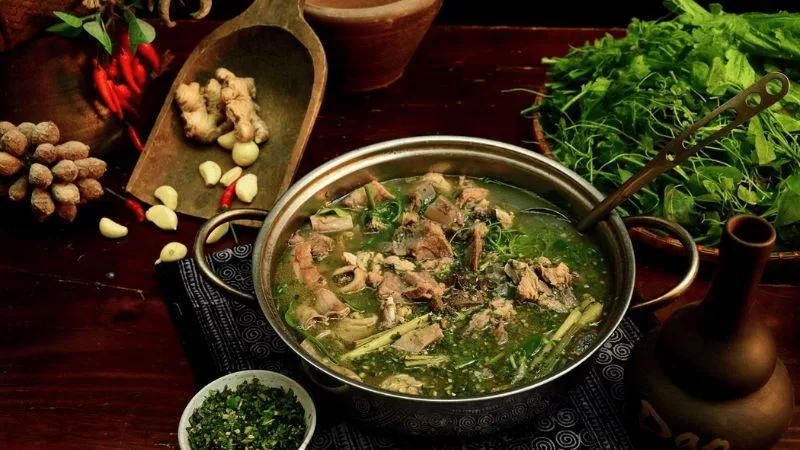
“Thắng cố” is the dish most associated with Ha Giang. It began as an H’Mong recipe using horse meat, slow-cooked for hours with mountain herbs and spices like star anise and cardamom. Altogether creates a rich, aromatic broth.
Many restaurants now offer beef, buffalo, or pork versions for travelers who prefer not to try horse meat. It’s traditionally eaten at weekly markets alongside corn wine.
Cơm lam Bắc Mê
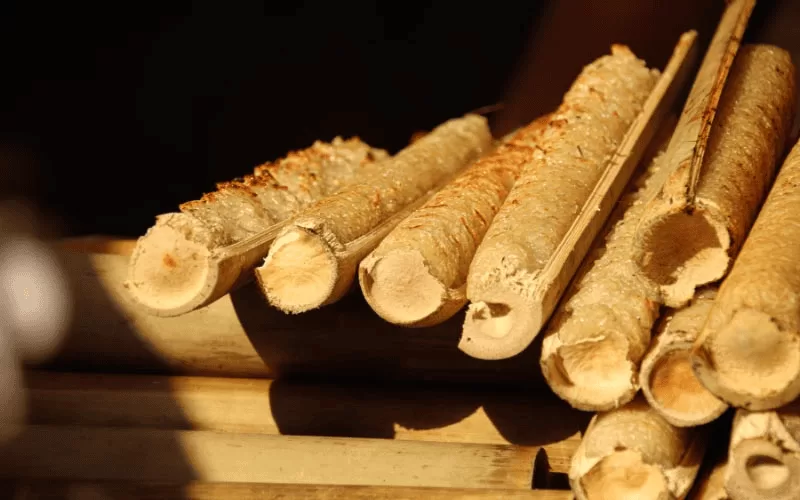
“Cơm lam” (or bamboo-tube rice) is glutinous rice cooked inside fresh bamboo tubes over charcoal, most associated with the Bắc Mê district. The bamboo imparts a subtle smoky-sweet aroma, and the dish is often prepared for festivals and family gatherings as a gesture of hospitality.
Xôi ngũ sắc
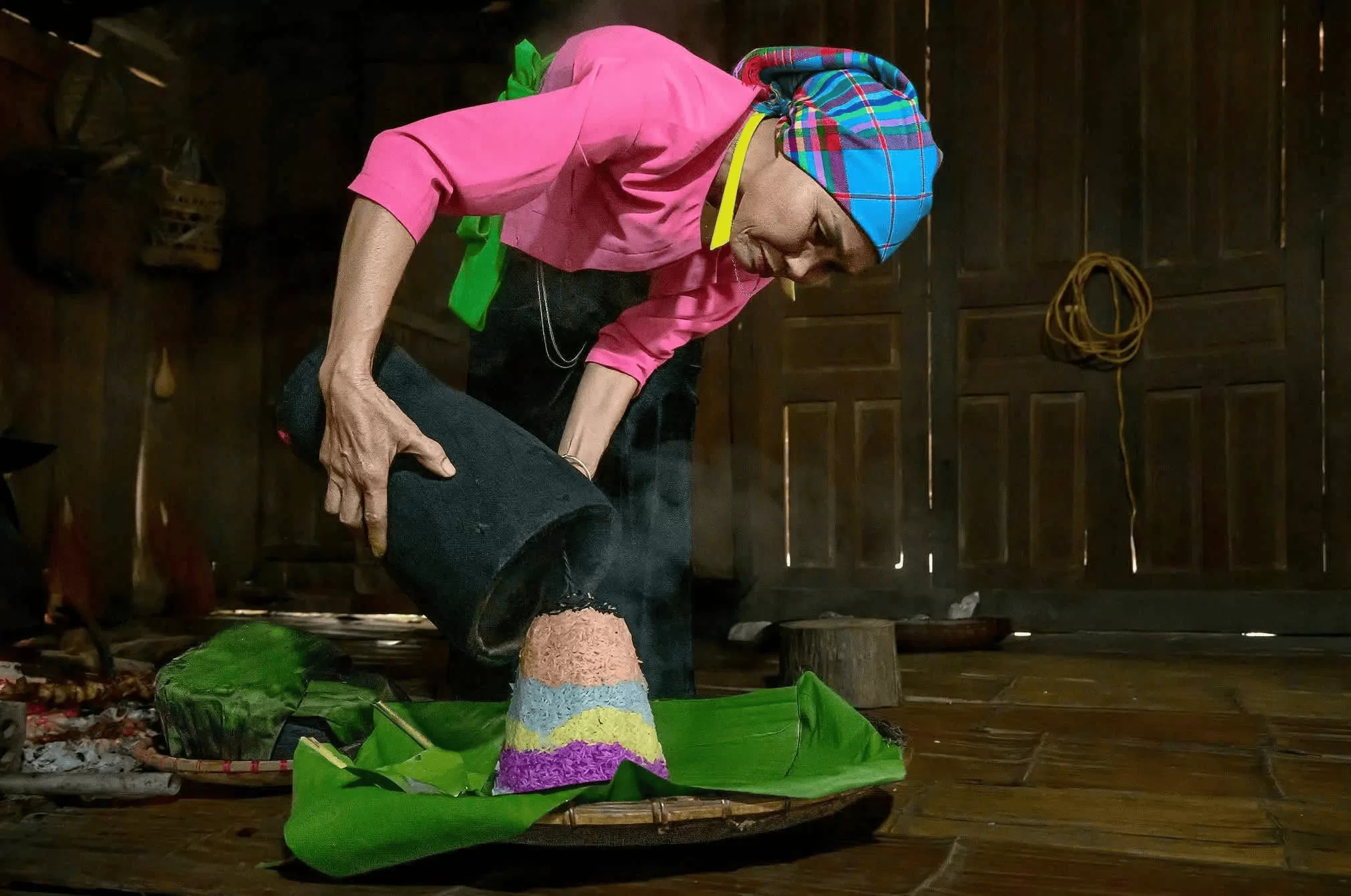
Xôi ngũ sắc (or five-color sticky rice) uses natural plant dyes – turmeric, magenta plant, and forest leaves – to color glutinous rice in five shades, each with symbolic meaning in Tay and Nùng culture.
Thịt trâu, thịt lợn gác bếp
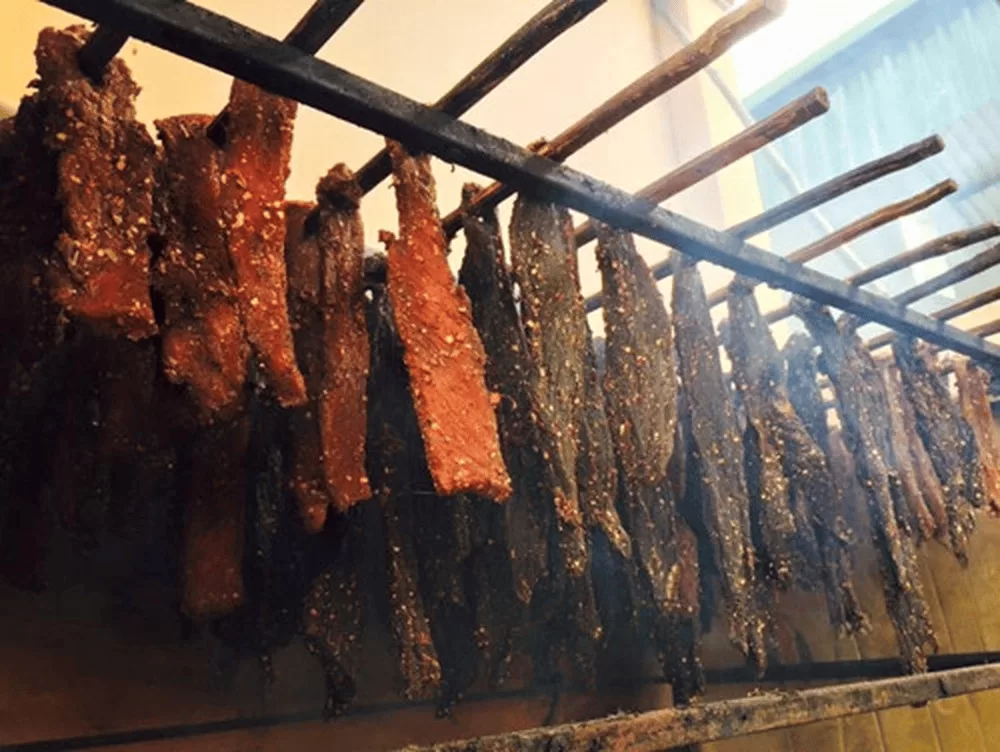
Thịt trâu, thịt lợn gác bếp (or smoked buffalo and pork) is cured and smoked over a wood fire for days, a preservation method developed before refrigeration existed in the highlands. It’s chewy, intensely smoky, and often served as a snack with rice wine.
Mèn mén
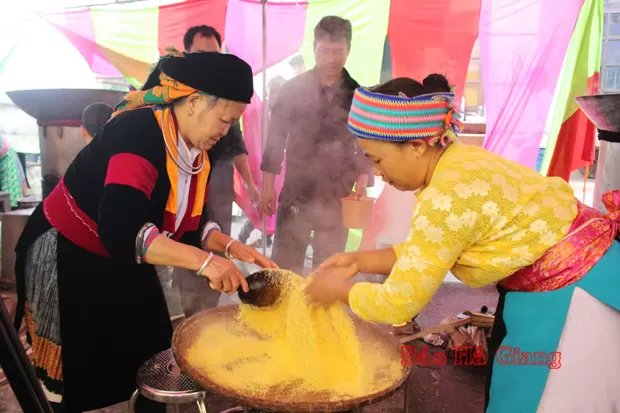
Mèn mén (or steamed minced corn) is steamed, finely ground corn – light, slightly sweet, and traditionally paired with bone broth or thắng cố for extra richness. It’s a H’Mong staple that reflects how central corn farming is to life on the karst plateau, where thin, rocky soil makes rice cultivation difficult.
Rượu ngô
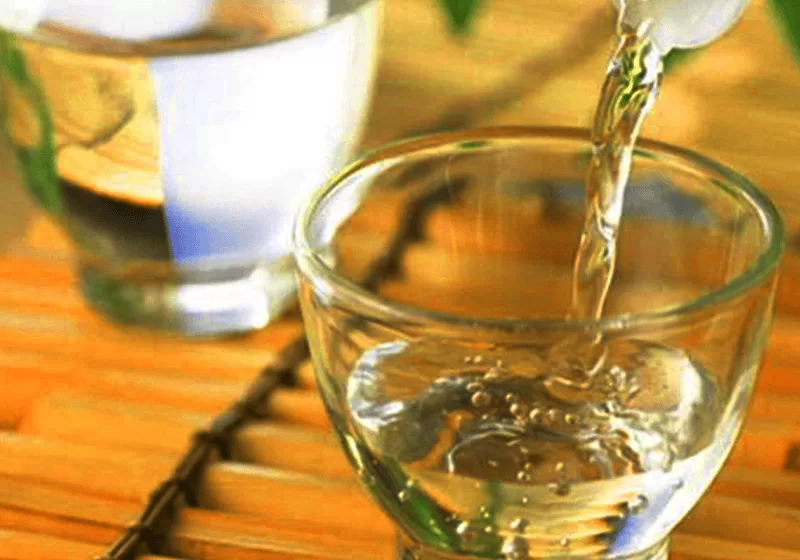
Rượu ngô (or corn wine) is the region’s staple spirit, distilled from corn and central to nearly every celebration, market visit, and guest welcome in Ha Giang.
What Highland Specialties Should You Try in Ha Giang?
Beyond the everyday staples, a handful of dishes are specific enough to the region that you won’t easily find them elsewhere in Vietnam.
An overview:
| Dish | English name | Main ingredient | Est. price | Typical origin | Best paired with |
| Cháo ấu tẩu | Aconite root porridge | Ấu tẩu root, rice, pork, and some additional toppings | 30,000 VND – 55,000 VND per bowl ($1.15 – $2.10 USD) | H’Mong | Raw egg yolk, fresh herbs |
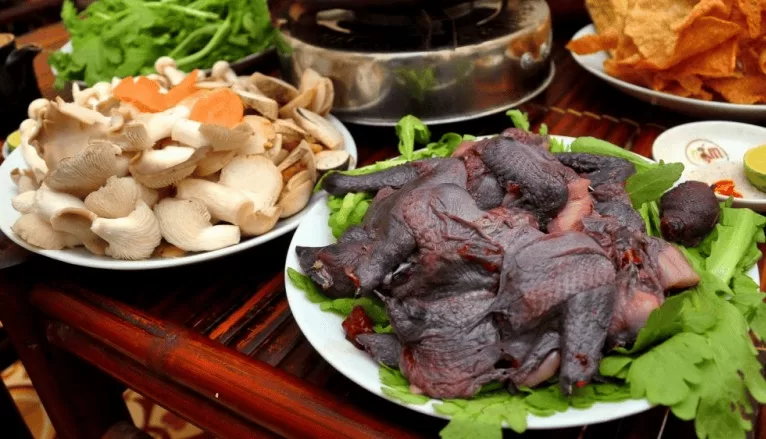
| Lẩu gà đen | Black Chicken Hotpot | Black chicken, with some herbs, mushrooms, and vegetables in the hotpot broth | 250,000 VND – 400,000 VND per small-to-medium pot ($10.00 – $16.00 USD) | H’Mong | A herb called “ngải cứu “ (mugwort) |
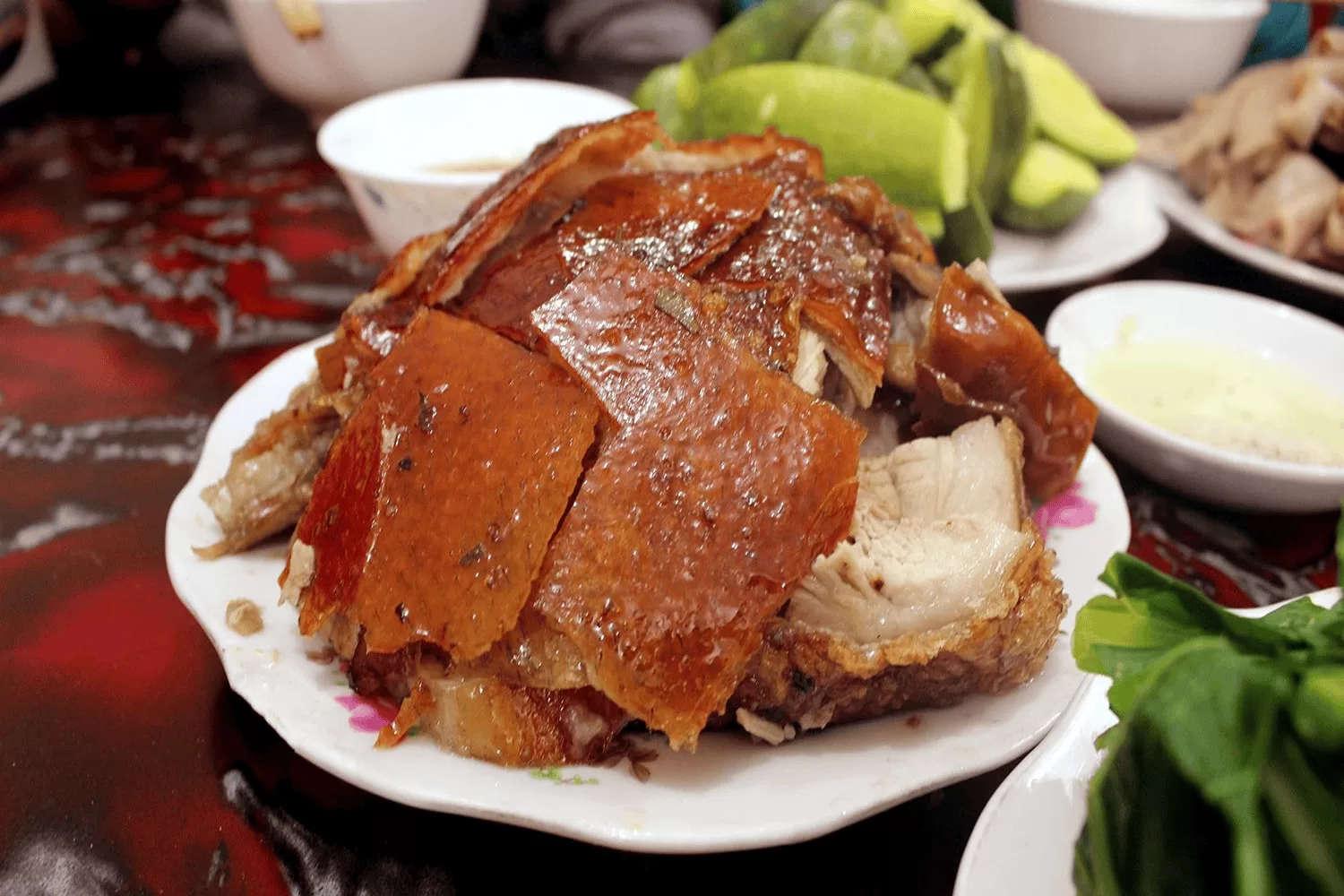
| Thịt lợn cắp nách | No official name, meaning “pig tucked under the arm” | Meat of the small, roaming pigs weighing only 4 to 20kg | 100,000 VND – 400,000 VND per kg ($3.80 – $15.30 USD) | Northwestern highlands of Vietnam | Herbs like fresh mint, basil, or dips in “chẩm chéo” sauce. |
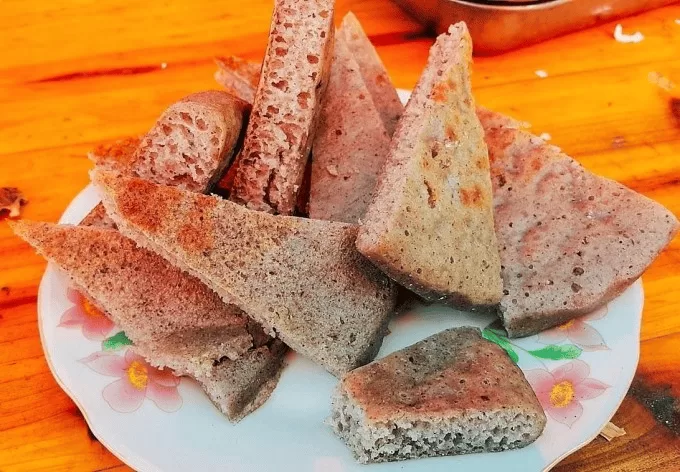
| Bánh tam giác mạch | Buckwheat Cake | Main seed flour, water, and no extra wheat. | 10,000 VND – 15,000 VND per piece ($0.40 – $0.60 USD) | H’Mong | Hot charcoal heat |
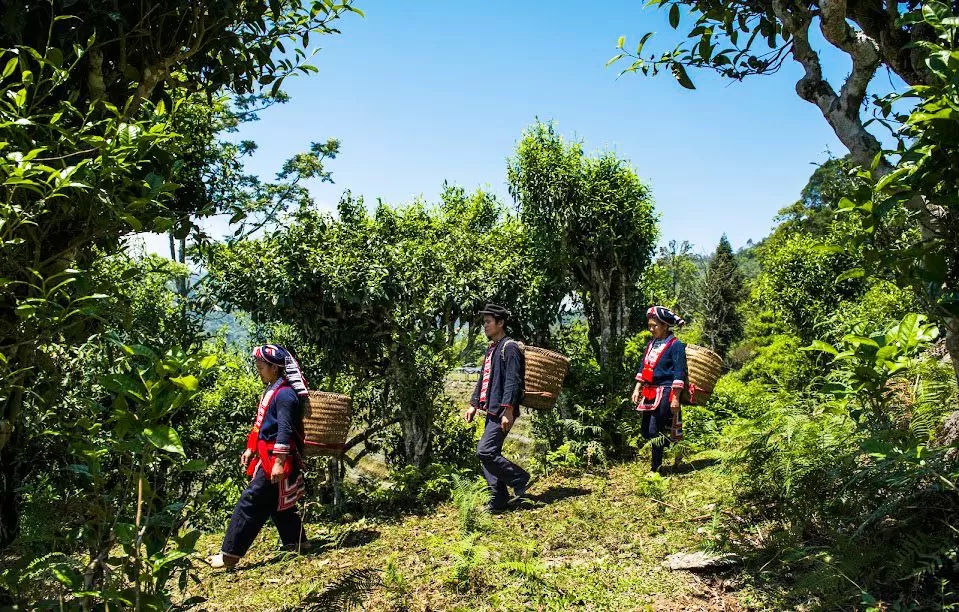
| Trà Shan tuyết | Shan tuyết tea | Leaves of ancient Camellia sinensis snow-shan tea trees | 140,000 VND – 1,400,000 VND per kg ($5.50 – $55.00 USD) | Mist-covered mountain regions – Ha Giang, Yen Bai (Suoi Giang). | Bánh đậu xanh (Vietnamese mung bean cake), Bánh mứt hạt sen (Lotus seed pastries) |
Cháo ấu tẩu
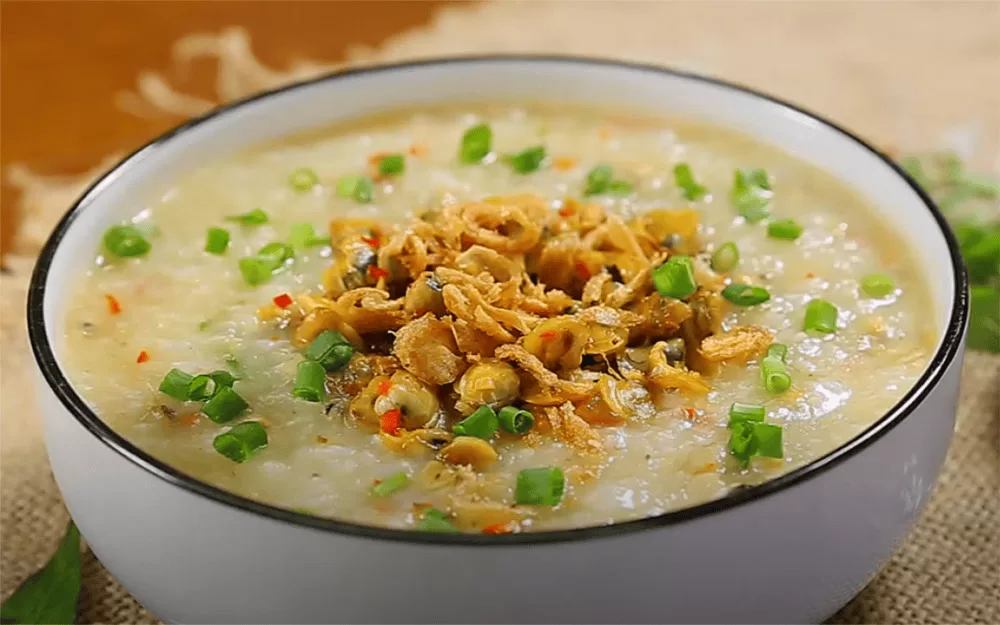
Cháo ấu tẩu (aconite root porridge) is a Ha Giang specialty made with pig’s trotter, rice, and aconite root – a plant that’s toxic in its raw form. Local cooks neutralize the toxicity through a long boiling process before adding it to the porridge, which is why this dish should only be eaten from an established, experienced vendor rather than prepared casually.
⚠️Important note: Made from the highly toxic Aconitum root, the Aconite root porridge contains lethal neurotoxins and cardiotoxins like aconitine, causing severe poisoning, heart failure, and death – if improperly processed. Medical authorities strictly warn against eating it unless prepared by experienced locals.
Lẩu gà đen
Lẩu gà đen (or Black chicken hotpot) uses a locally raised, black-skinned chicken breed simmered with medicinal herbs. It’s a common cold-weather dish in Dong Van and Meo Vac, served bubbling at the center of the table.
Thịt lợn cắp nách
Thịt lợn cắp nách ( meaning “pig tucked under the arm”) refers to a small, free-range pig breed traditionally carried to market under a farmer’s arm. The meat is leaner and firmer than standard farmed pork, usually grilled or steamed whole.
Bánh tam giác mạch
Bánh tam giác mạch ( or buckwheat cake) is made from ground buckwheat seed, dense and lightly sweet – a direct byproduct of the buckwheat fields the region is known for growing on poor soil.
⚠️ Allergy note: Buckwheat is a recognized allergen that can trigger reactions ranging from mild to severe, including anaphylaxis in rare cases. If you have a known grain or buckwheat allergy, ask before trying bánh tam giác mạch or other buckwheat-based snacks – they’re especially common at market stalls and the Buckwheat Flower Festival, where ingredients often aren’t labeled.
Trà Shan tuyết
Trà Shan tuyết (or Shan tuyết tea) comes from centuries-old wild tea trees growing at altitude in districts like Hoàng Su Phì. The leaves have a naturally silvery-white down, giving the tea its name (“snow tea”).
Where are the best places to eat in Ha Giang?
The most authentic Ha Giang food isn’t found in formal restaurants – it’s at weekend markets and small family-run stalls that have served the same dishes for generations.
- Dong Van Old Quarter has food stalls clustered around the market square, especially active during the Sunday morning Dong Van Market, where you can try mèn mén, grilled meats, and bánh cuốn side by side.
- Meo Vac Sunday Market is the largest weekend market in the province. It opens around 6 AM and is busiest between 7 and 8 AM, with an indoor food court serving broths and grilled dishes over open flame alongside the main trading area.
- Bắc Mê district is the best place to try cơm lam at its source – small family-run eateries and the local town market specialize in the bamboo-tube rice.
- Cháo ấu tẩu Ngân Hà is also a popular place to try the “Au Tau porridge” food in Ha Giang. The price is around 20,000 VND to 30,000 VND (around $1) for a bowl.
- Bánh Cuốn Bà Hà is a well-known steamed rice roll restaurant that is a common stop for travelers passing through Ha Giang City for a lighter breakfast before hitting the road.
- Lũng Phìn Market (a “backward market” that rotates on a 6-day cycle rather than a fixed weekly schedule) is smaller and less touristy than Dong Van or Meo Vac, worth a stop if your loop timing lines up with it.
Tips for choosing and enjoying Ha Giang food
- Eat at markets in the morning: Most weekend markets are busiest – and food stalls freshest – between 6 and 9 AM, before the midday heat and crowds set in.
- Find places with many locals: Sometimes, trying new and random things can bring a unique experience. If you see an eatery with many local people enjoying their food, it’s worth a try.
- Start with a small portion of thắng cố: It’s a strong, distinctive flavor. Ordering a small bowl first lets you decide if you want more before committing to a full meal.
- Be selective with cháo ấu tẩu: Because the aconite root requires careful preparation, only order this dish from a vendor with an established reputation – not a random roadside stall.
- Pace yourself with corn wine: Rượu ngô is stronger than it tastes and is often poured generously as a gesture of hospitality at markets and homestays. Plus, be aware of the amount of alcohol consumed to keep you safe on the Ha Giang Loop.
- Ask before ordering horse meat versions of thắng cố if you’d rather try the beef, buffalo, or pork variation – most vendors serving travelers offer a choice.
What food festivals celebrate Ha Giang cuisine?
The Buckwheat Flower Festival, held annually from mid-November through December in Dong Van district, is the main food-focused event on the Ha Giang calendar. Alongside the buckwheat fields in full bloom, the festival features market stalls selling buckwheat cake, buckwheat noodles, corn wine, and thắng cố, plus cooking contests among local ethnic groups. For the full bloom timeline and best viewing spots, see our Buckwheat Flower guide.
Beyond the flower festival, Ha Giang’s weekly ethnic markets function as informal food festivals year-round – Dong Van and Meo Vac both host Sunday markets with the widest spread of local dishes in one place, while smaller “backward markets” like Lũng Phìn rotate through a 6-day cycle across surrounding districts.
It’s time to taste the true flavor of Ha Giang!
Food is more than just fuel for your journey. More than that, it’s one of the best ways to understand Ha Giang’s culture, traditions, and the daily lives of its ethnic communities. From comforting bowls of Au Tau porridge to smoky buffalo meat and handcrafted Shan Tuyet tea, every dish tells a story of the northern highlands.
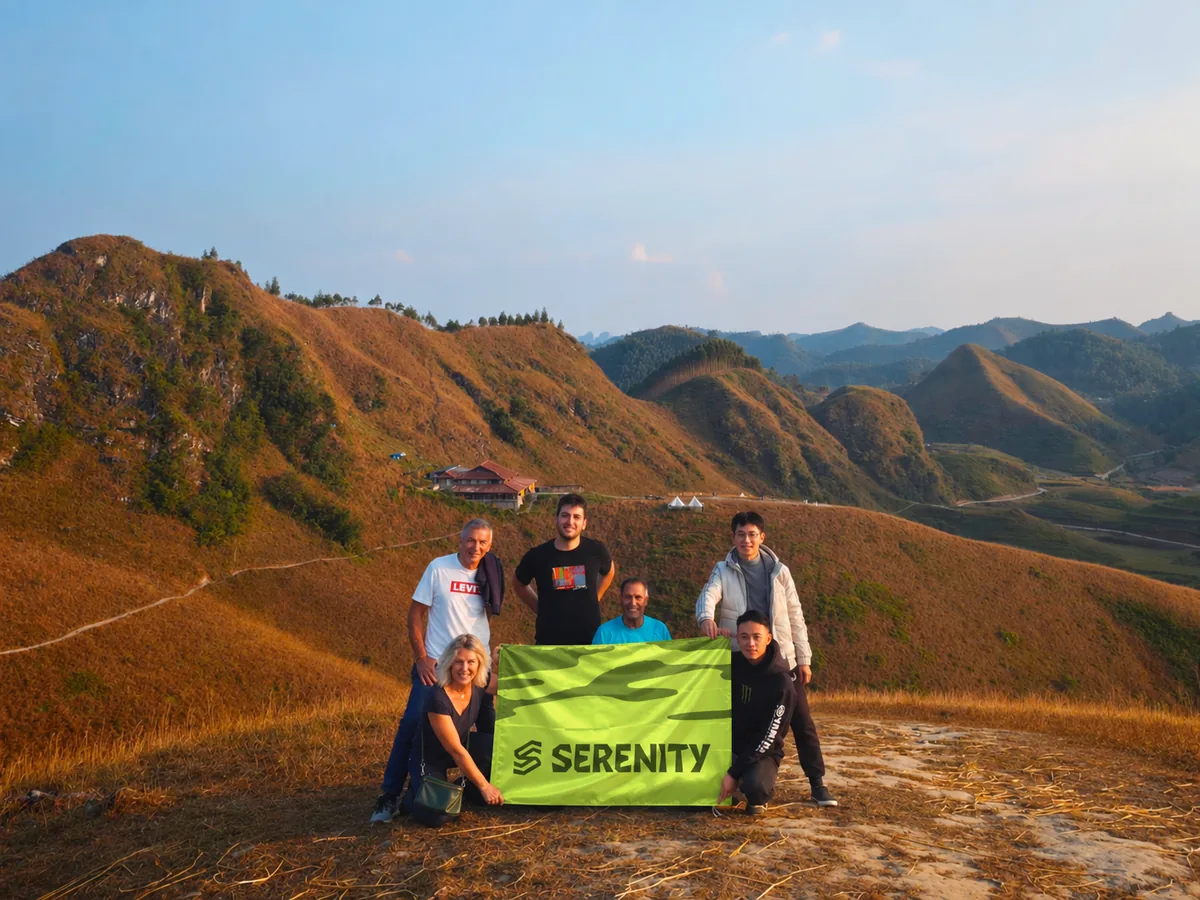
If you’d rather have these stops built into your itinerary instead of hunting them down solo, Serenity Ha Giang’s loop tours route through Dong Van and Meo Vac on market days and include local meals along the way – in small groups of 10 or fewer, so there’s time to actually sit down and eat rather than rush through.
FAQ
Q: Is Ha Giang food very spicy?
Not usually. Most traditional dishes focus on natural flavors and aromatic mountain herbs rather than intense heat. Fresh chili is often served separately so you can adjust the spice level to your taste.
Q: Can vegetarians find food in Ha Giang?
Yes, although it takes more effort than in major Vietnamese cities. Markets sell fresh vegetables, tofu, and rice dishes, but meat-based stews like thắng cố dominate the local menu, so it helps to ask specifically for “không thịt” (no meat) dishes or stick to sticky rice and vegetable stir-fries.
Q: Can I find international food in Ha Giang?
Yes. Ha Giang City and some popular stops along the Ha Giang Loop have cafés and restaurants serving pizza, burgers, pasta, and other international dishes, though local cuisine is still the highlight. You can try some brands like PizzaHere or SAUCE Tacos and Wings, which are recommended by tourists who have tried them before.
Q: Are there any foods in Ha Giang I should be careful with?
Yes. Buckwheat cake (bánh tam giác mạch) and other buckwheat-based snacks are common, especially during the Buckwheat Flower Festival, and buckwheat can trigger a serious allergic reaction in sensitive people. The “chẩm chéo” dipping sauce served with thịt lợn cắp nách may also contain ground peanuts. Separately, cháo ấu tẩu (aconite root porridge) is a toxicity risk rather than an allergy one – only eat it from an established vendor like Cháo ấu tẩu Ngân Hà, since the root is dangerous if undercooked. Market stalls rarely label ingredients, so ask directly if you have any food allergy.