


Ha Giang Loop
Ha Giang Loop by Car: How to Do It Without a Motorbike
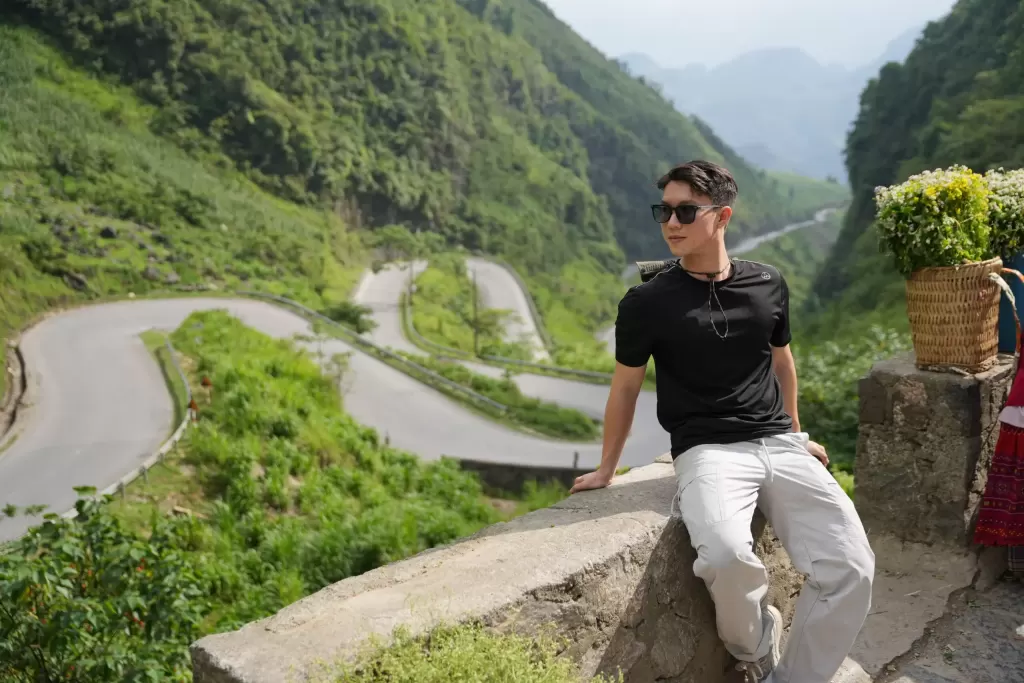 Tristan Do
Co-founder & Marketing


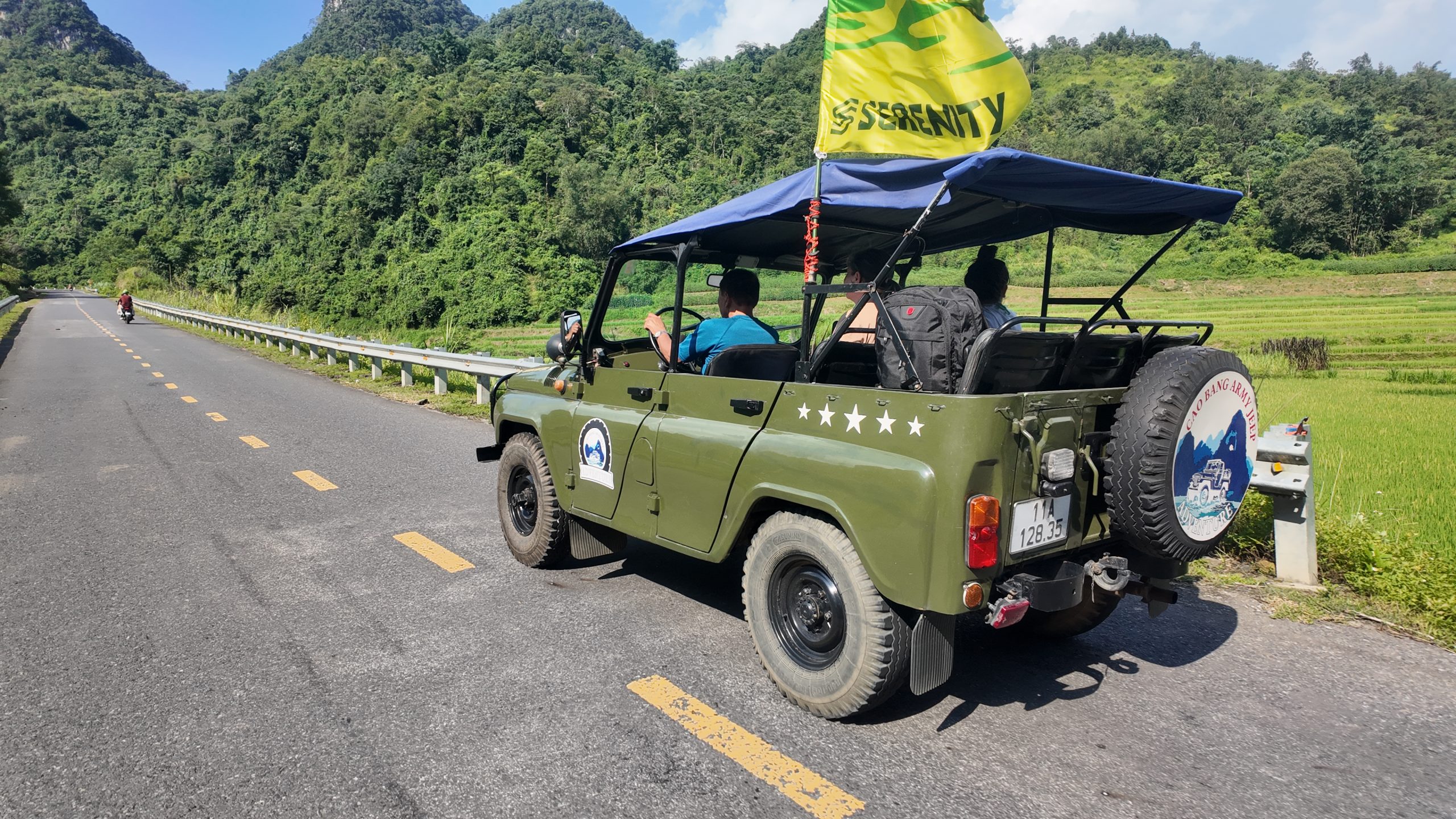
You can do the Ha Giang Loop by car, and the usual way is a private car or jeep with a local driver rather than driving it yourself. The route is the one motorbike riders follow, and a car reaches every major stop on it. What changes is who handles the mountain driving, how much weather you feel, and how the price is quoted.
Doing the Ha Giang Loop by car is a great option if you prefer safety, comfort, weather protection, or are traveling with family. In this guide, we cover the four-wheel formats, route legs with driving times, price ranges, the rules for driving a car yourself, and what to confirm before booking.
One important note is that since 1 July 2025, Ha Giang has been part of Tuyen Quang province, so newer maps may say Tuyen Quang, but the Loop and its name are unchanged.
AI Summary: The Ha Giang Loop by car follows the same QL4C route as the motorbike loop, from Ha Giang City through Quan Ba, Yen Minh, Dong Van and Meo Vac and back, about 350 km over 3 to 4 days. Travelers choose between a private car with a driver, a jeep, a shared group tour by car or minibus, or driving a car themselves. A car removes the balance and weather exposure but not the narrow mountain roads.
Key Takeaways
- Time needed: Plan 3 days for the core route and 4 for a slower pace. Two-day car loops are sold, but they leave little time at Dong Van and Ma Pi Leng Pass.
- Vehicle space: Listed jeeps seat 3 passengers, and the classic model has limited luggage space. Private cars range from 4-seat cars to minibuses, so match the vehicle to your group and bags.
- Price: Normally, a 3- to 4-day itinerary by car costs about $185 to $600+ per person.
- Permit: Foreign visitors should plan on a border-area permit for the loop districts, regardless of the vehicle. Confirm who arranges it.
- Self-driving: Legal only with a home licence for cars plus a 1968 Vienna Convention IDP, and hire is usually offered with a driver.
What are the options for the Ha Giang Loop by car?
Doing the Ha Giang Loop without a motorbike means four wheels and four formats. They differ in who drives, who shares the vehicle, and how the price is quoted. Easy rider tours are not on this list because the passenger still rides a motorbike; compare them in Easy rider vs self-drive Ha Giang Loop.
| Format | Who drives | Suits | What to check |
| Private car with driver | A local driver | Families, couples, older travelers, rain or cold | Seat count and whether the price is per car or per person |
| Jeep with driver | A local driver | Travelers who want open views | Listed jeeps seat 3 passengers, and the classic model has limited luggage space. One operator says military-style jeeps are no longer permitted in Ha Giang, so confirm the exact vehicle |
| Shared group tour by car or minibus | The operator’s driver | Solo travelers and pairs who do not need a private vehicle (more popular to Vietnamese travellers) | Fixed stops, group size and where the tour starts |
| Self-drive car (not recommended) | You | Experienced drivers holding the right documents | Licence category, IDP type, insurance validity and whether any company will rent you a car |
What does the Ha Giang Loop by car look like, leg by leg?
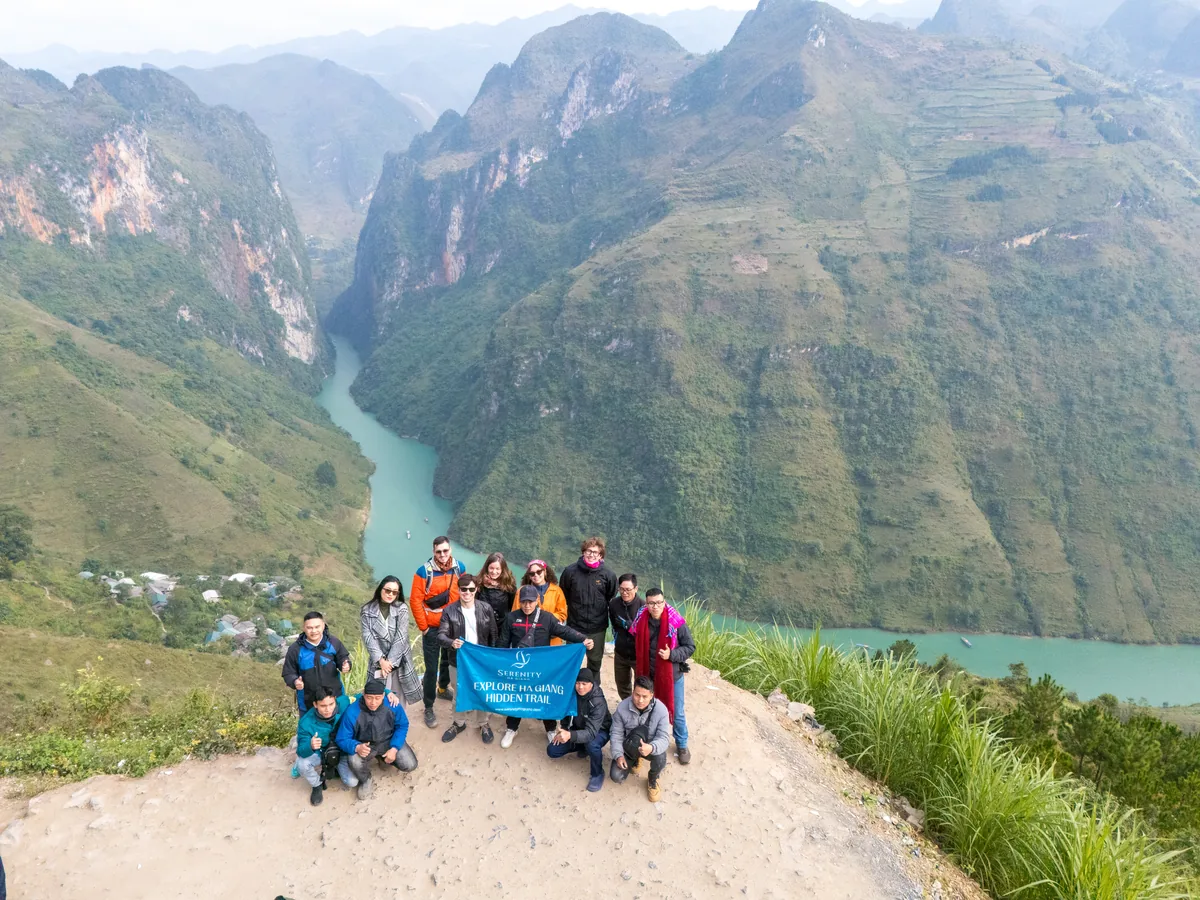
Cars follow the QL4C circuit – Ha Giang City, Quan Ba, Yen Minh, Dong Van and Meo Vac. Most itineraries return through Mau Due and Du Gia, and some come back through Yen Minh and Quan Ba instead.
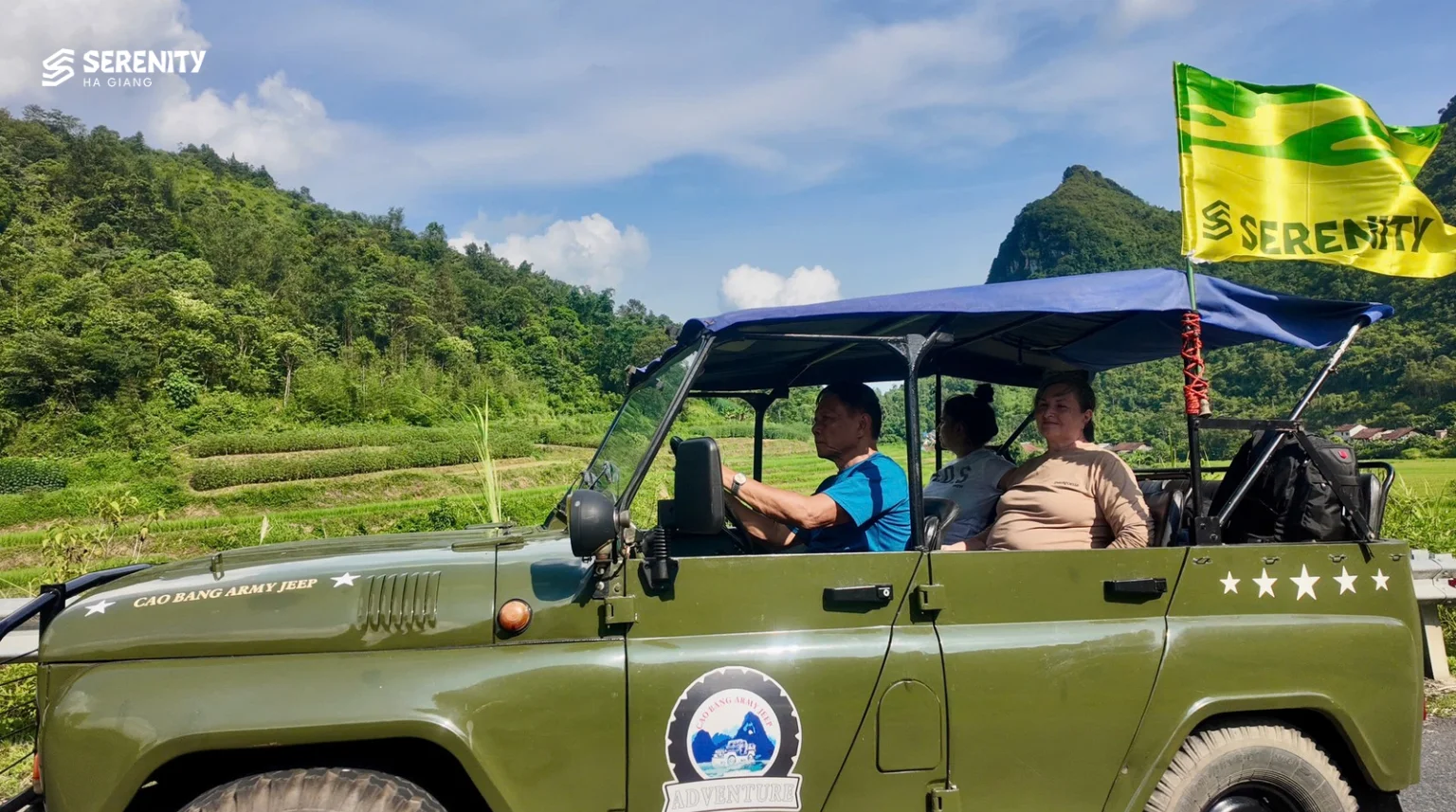
Check the table below to get a grasp of the Ha Giang Loop’s distances and times for each leg when riding in a car.
| Leg | Distance | Driving time (no stops) | Main stops |
| Ha Giang City to Yen Minh via Quan Ba | 95 to 110 km | 3 to 4 hours | Bac Sum Pass, Quan Ba Heaven’s Gate, Twin Mountains |
| Yen Minh to Dong Van via Lung Cu | 87 to 120 km | 3.5 to 5 hours | Tham Ma Pass, Lung Cu Flag Tower, Vuong Family Palace, Dong Van Old Town |
| Dong Van to Meo Vac over Ma Pi Leng Pass | About 22 to 25 km | 1 to 2 hours | Ma Pi Leng Pass, Nho Que River, Tu San Canyon |
| Meo Vac to Ha Giang City via Mau Due and Du Gia | 120 to 140 km | 4 to 5 hours | Du Gia waterfall |
For the full schedule, see the Ha Giang Loop itinerary.
Who suits a car on the Ha Giang Loop, and who suits a motorbike?
Choose a car if:
- You travel with children, older relatives, or anyone who cannot sit on a motorbike for hours.
- You travel in rain or cold, when a closed vehicle stays dry and warm.
- You are nervous about mountain roads or have never ridden a geared motorbike.
- You want to stop for photos without managing a bike.
- You have some physical limitation or back pain.
- You have a lot of luggage, more than a bike can handle, and you don’t want to send it to hotels to keep for you.
- You are not prone to motion sickness, or you are ready to manage it (see below).
Choose a motorbike or easy rider if you want the open-air feel, which a car gives less of, or smaller backroads, which a motorbike handles more easily. Serenity Ha Giang also made a very dedicated guide about Ha Giang Motorbike tours, in which you have all the information about exploring the Ha Giang Loop with a motorbike.
What does a car change on the Ha Giang Loop, and what stays the same?
Traveling the Ha Giang Loop by car instead of a motorbike changes your physical comfort and vehicle access, while keeping the core mountain views and major destinations the same.
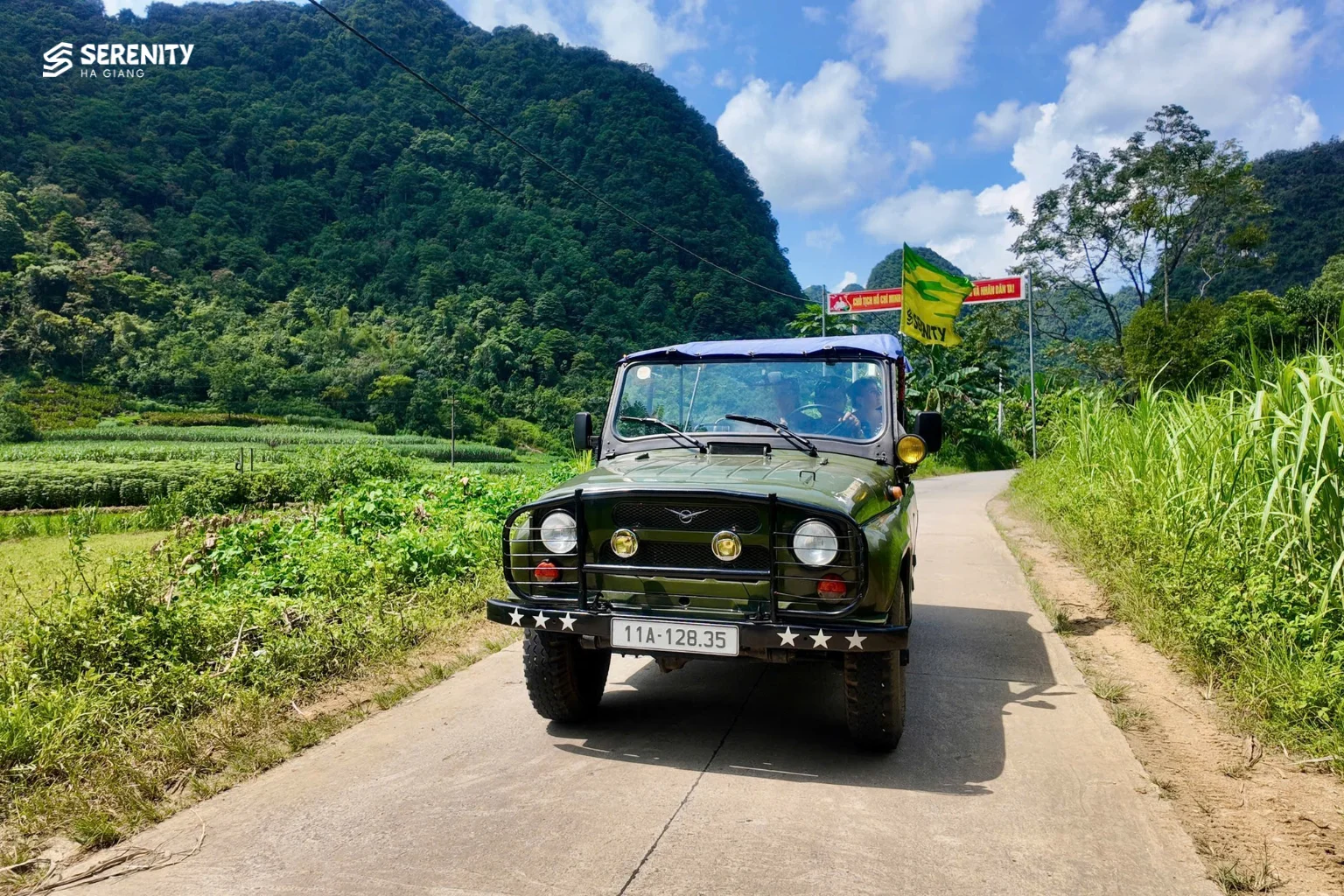
What changes by car
- Comfort and weather protection: You travel in air-conditioned comfort, stay completely dry in the rain, and stay warm when cold fog or wind rolls over the high passes.
- Safety and fatigue: You avoid the high physical risk, road fatigue, and danger of steep drops or loose gravel associated with self-driving or riding pillion on motorbikes.
- Access to narrow side lanes: Cars use the main sealed mountain highways, meaning a few very narrow village paths or tight motorbike-only shortcuts are skipped or bypassed, though the overall itinerary adjusts smoothly around them.
- Family and luggage flexibility: It is ideal for families, young children, or travelers carrying substantial luggage, eliminating the need to pack light or arrange separate baggage transfers.
- Access Limitations at Specific Viewpoints (Nho Que Boat Dock & Village Alleys): While cars easily reach 95% of roadside attractions, certain off-road spurs are physically inaccessible to four-wheeled vehicles
- Nho Que River Boat Dock: The road descending to the boat launch is extremely steep and narrow. Tour cars must park at the upper staging area; travelers must walk or hire a local motorbike taxi (xe ôm, ~100,000–150,000 VND round-trip) or electric buggy to reach the water.
- Ma Pi Leng Skywalk & Cliff Paths: Footpaths along the mountain rim are pedestrian/motorbike only. Cars drop passengers at the trailheads.
What stays the same
- The core route and sights: You travel through the exact same major regional checkpoints, including Ha Giang City, Quan Ba, Yen Minh, Dong Van, the Ma Pi Leng Pass, and Meo Vac.
- Major landmarks: You reach every headline landmark that motorbikes visit, such as Tham Ma Pass, the H’mong King’s Palace, Heaven Gate, and the Nho Que River boat trip.
- The scenery: The sweeping mountain panoramas, towering karst peaks, and deep valleys remain identical, with the added benefit of being able to look at the view safely through a window or from a roadside stop instead of watching the road.
- The paperwork: Plan on a border-area permit for Quan Ba, Yen Minh, Dong Van, and Meo Vac, whichever vehicle you use. Because it is required for foreign visitors, and some hotels in those towns ask to see it. Ask whether your driver or operator arranges it, or read about the Ha Giang border permit.
How do you handle motion sickness on the Ha Giang Loop by car?
The loop is a long run of switchbacks and hairpin bends with steady climbs and descents, and a closed cabin takes away the horizon you would see on a motorbike. If you are prone to motion sickness, plan for it before the first morning.
- Before you leave: Buy motion sickness tablets (thuốc say xe) at a pharmacy in Hanoi or Ha Giang City and ask the pharmacist which one suits you. Many, such as dimenhydrinate, cause drowsiness, and the usual advice is to take them about 30 minutes before setting off each morning. Ask the pharmacist about children’s doses.
- Where you sit: Adults can take the front passenger seat for the clearest view of the road and more airflow. Children should sit in the back, so check the child seat FAQ below.
- During the drive: Watch the road ahead or the distant mountains instead of a phone or a book. Ask the driver for a steady pace and gentle braking, and keep a window slightly open for fresh air.
- Vehicle: An open-sided jeep gives more air and a wider view than a closed sedan, which can ease nausea for some people. Tell the operator when you book so they can plan breaks.
How much does the Ha Giang Loop by car cost?
Doing the Ha Giang Loop by car typically costs between $185 and $600+ total, depending heavily on whether you book an all-inclusive tour, rent a car with a private driver, your group size, and whether you start from Ha Giang City or Hanoi.
All-Inclusive Private Car Tours (Per Person)
If you want a hassle-free experience where the tour company handles everything (vehicle, driver, English-speaking guide, accommodation, meals, and entry permits), the price scales based on your group size:
| Type | Est. range (USD)/person | Est. range (VND) |
| Solo Traveler | $425 – $480 | 10.9 to 12.3 million VND |
| Couples / 2 People | $300 – $425 | 7.7 to 10.9 million VND |
| Groups of 3 to 5 | $240 – $390 | 6.2 to 10.0 million VND |
| Groups of 6+ | $185 – $280 | 4.7 to 7.2 million VND |
Note: The packages’ duration for the above pricing is for 3-4-day itineraries.
Private Car + Driver Rental Only (Flat Vehicle Fee)
If you prefer to book your own homestays and meals independently, you can rent just the vehicle and driver. Prices cover the driver’s expenses, fuel, tolls, and parking:
| Starting Point & Duration | Car Type | Est. range (USD) | Est. range (VND) |
| From Ha Giang City (3 Days / 2 Nights) | 4-Seater Sedan / SUV | ~$290 | ~7.6 million VND |
| From Hanoi to Loop & Back (4 Days / 3 Nights) | 4-Seater Sedan | ~$495 | ~13.0 million VND |
| From Hanoi to Loop & Back (4 Days / 3 Nights) | 7-Seater SUV | ~$530 | ~13.9 million VND |
| From Hanoi to Loop & Back (4 Days / 3 Nights) | 16-Seater Van | ~$695 | ~18.3 million VND |
🚨Note: Make sure to ask the operator/vendor to clearly verify what is included to avoid hidden fees after paying.
Can you drive the Ha Giang Loop by car yourself?
In law, yes, with conditions. A foreign visitor can drive a car in Vietnam with a valid home licence for that vehicle category plus an International Driving Permit issued under the 1968 Vienna Convention, carried together. IDPs issued under the earlier 1949 convention are not accepted. Treat the decision as three separate checks:
- Legal: a home licence that covers cars, plus a 1968-convention IDP.
- Insured: insurance is usually valid only if you drive legally, so a missing IDP can void your cover.
- Skilled: the mountain sections call for confident switchback and cliff-edge driving, and the legs above run 3 to 5 hours of it.
Availability is the harder part. Because of the treacherous mountain terrain, self-driving a rental car is not permitted or recommended for tourists. Therefore, rental companies here mostly hire cars out with a driver.
What should you confirm before booking a car for Ha Giang Loop?
- Vehicle: the exact type and seat count and, for a jeep, whether the sides are open and how much luggage fits.
- Inclusions: whether the price covers fuel, hotels, meals, entry fees, and the border-area permit.
- Pace: the planned driving hours for each leg and where you will stop, compared with the leg table above.
- Weather plan: how the operator handles heavy rain, and what is refunded or rescheduled.
- Payment terms: Check the required deposit (usually 30%–50% to confirm) and whether the remaining balance is paid in cash (VND) at the end of the trip. Keep all receipts or digital confirmation messages.
The final words
The Ha Giang Loop by car is the lowest-effort way to see the route: the QL4C road and major stops match the motorbike loop, a driver handles the mountain roads, and 3 to 4 days covers it. The trade-offs are less open-air immersion, a price you must compare per person or per car, and permit and insurance rules that still apply. Driving a car yourself is legal only with a matching licence and a 1968 IDP.
You are now ready to make your Ha Giang Loop by car trip! And if you prefer an easy, no-stress way and want to leave behind all the bothersome paperwork, logistics, and accommodations, start your loop with Serenity Ha Giang! Our diverse and curated Ha Giang Loop tours have provided the most fulfilling experience for more than 3000 tourists on the loop, and you can surely have the same wholesome experience – a promise from us!
FAQ
Can I continue to Cao Bang by car instead of returning to Ha Giang City?
Yes. After Meo Vac, you can head toward Cao Bang instead of looping back, which saves more than a full day of travel compared with finishing the loop first. The road from Meo Vac enters the remote western part of Cao Bang. Ask your operator whether the same car and driver can end the trip in Cao Bang.
Does a Ha Giang Loop car tour start from Hanoi?
Most car-loop itineraries start in Ha Giang City, and the trip from Hanoi is a separate road leg of about 300 km that takes roughly 5.5 to 7 hours. An overnight sleeper bus reaches Ha Giang between about 4:00 and 5:30 AM, so you can start the loop that morning. A daytime limousine van arrives in the afternoon, which usually pushes the start to the next day.
Do children need a car seat on a Ha Giang Loop car tour?
Vietnam’s child-restraint rule took effect on 1 July 2026, with warnings for drivers from 15 August 2026. It covers children under 10 years old and shorter than 1.35 m, who must also stay out of the driver’s row. The rule does not apply to commercial passenger transport, which should include a tour car with a driver, and most operators do not supply seats unless you ask. A self-drive private car is covered, so request a seat in advance or bring your own.
Is the driver also a guide on a Ha Giang Loop car tour?
It depends on the package. Some tour operators include a driver-guide, while others list only a car with a private driver, so check carefully. If you want commentary at the stops, ask which languages the guide speaks before you book.
Is doing the Ha Giang Loop by car better than hiring an Easy Rider motorbike guide?
It depends on your physical comfort versus desired immersion:
Choose a Car if: You travel with young children, seniors, have back pain, carry heavy luggage, or visit during freezing winter mists (December–February). It provides complete physical safety, heating, and weather protection.
Choose an Easy Rider if: You want 360-degree unobstructed photography, the exhilarating feeling of mountain breeze, access to narrow village dirt trails, and a more intimate cultural adventure.
How bad is motion sickness on a Ha Giang car tour, and how can I prevent it?
Motion sickness is very common due to hundreds of continuous tight switchbacks across mountain passes. To minimize nausea: (1) Sit in the front passenger seat, (2) Take motion sickness pills (thuốc chống say xe) 30 minutes before leaving each morning, (3) Request that your private driver drive at a moderate, steady pace and avoid aggressive braking, and (4) Keep the car windows cracked for fresh highland air rather than relying solely on recycled air conditioning.