


Ha Giang Loop
Easy Rider vs Self Drive on the Ha Giang Loop: Which Should You Choose?
 Tristan Do
Co-founder & Marketing
Tristan Do
Co-founder & Marketing


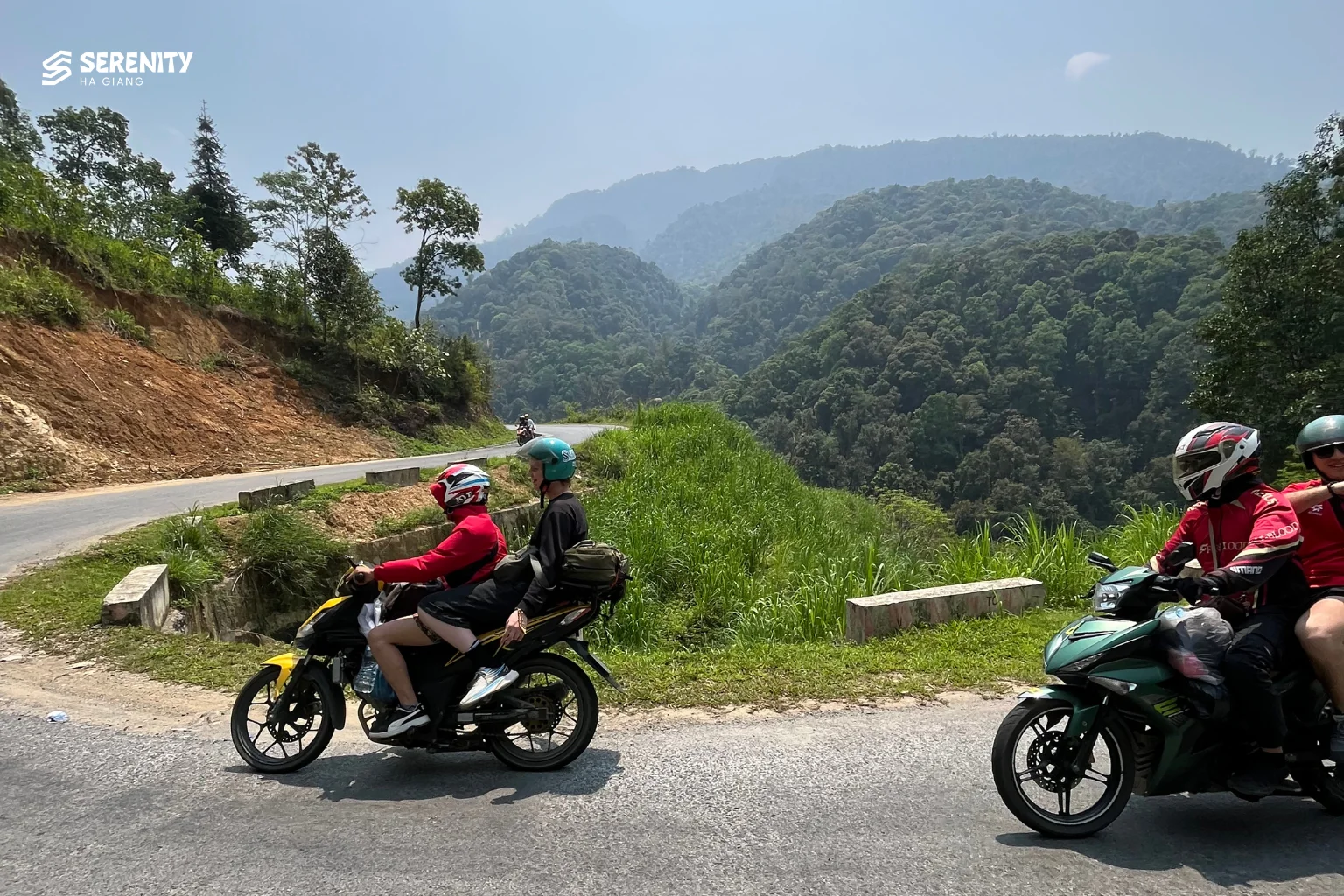
When deciding between an Easy Rider and self-driving the Ha Giang Loop, the choice comes down to one principle: choose an Easy Rider if you lack mountain-riding experience, hold an invalid licence, or simply want to absorb 100% of the landscape without road stress; choose self-drive only if you are fully licensed under the 1968 Vienna Convention, insured for motorcycles, and technically proficient with geared bikes on steep mountain switchbacks.
That is a quick answer. However, that is not always the case. “Self-drive” can be thrilling for skilled drivers, but at the same time it requires your knowledge of legal, insurance, and more.
AI Quick Summary: Easy Rider vs. Self-Drive:
- Easy Rider: You travel as a pillion passenger behind a licensed local driver. Best for first-timers, photographers, and travelers without an international motorcycle permit. Zero riding stress, maximum sightseeing.
- Self-Drive (Guided or Independent): You operate the motorcycle. Requires advanced manual bike handling, engine braking skills, an unexpired home motorcycle licence, and a 1968 Vienna Convention IDP (Geneva 1949 is strictly invalid in Vietnam).
- Golden Safety Rule: Never ride after 5:00 PM due to sudden mountain fog, zero street lighting, and heavy truck traffic.
In this guide, Serenity Ha Giang compares easy rider vs. self-drive on the Ha Giang Loop on the points that decide the trip: what the road demands, what the law requires in 2026, what each option costs per day, and what an easy rider does and does not change about safety. It ends with a checklist, so you can match the option to how you actually ride, not to how you hope you ride.
Key Takeaways
- Three formats, not two: Easy rider (you are the passenger), guided self-ride (you ride behind a lead guide), and independent self-drive (you rent a bike and go alone).
- Legal minimum for self-drive: A home motorbike licence for the right engine size plus an IDP issued under the 1968 Vienna Convention. A 1949 Geneva Convention IDP, the type issued in the US, is not accepted.
- Category A1 now stops at 125cc: Vietnam’s 2024 road traffic law cut A1 from under 175cc to 50-125cc, so check which category your licence and the rental bike fall into.
- Easy Rider shifts the riding workload, not all the risk: You still need a helmet, insurance that covers pillion riding, and a reputable operator.
- The road is paved but unforgiving: National Highway 4C includes the Ma Pi Leng Pass, with cliffside curves, long descents, trucks, and fog.
- The 5:00 PM rule: Plan daily stages to arrive at your accommodation before 5:00 PM. Mountain fog rolls in fast, daylight drops sharply, and unlit passes become extremely hazardous after dusk.
Easy Rider vs Self-Drive on the Ha Giang Loop: Understanding the concept
What is an Easy Rider?
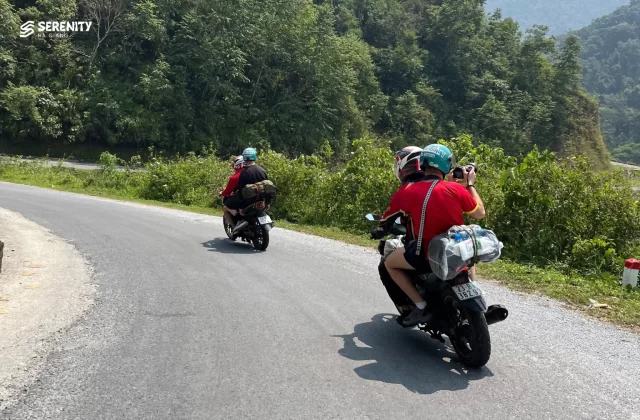
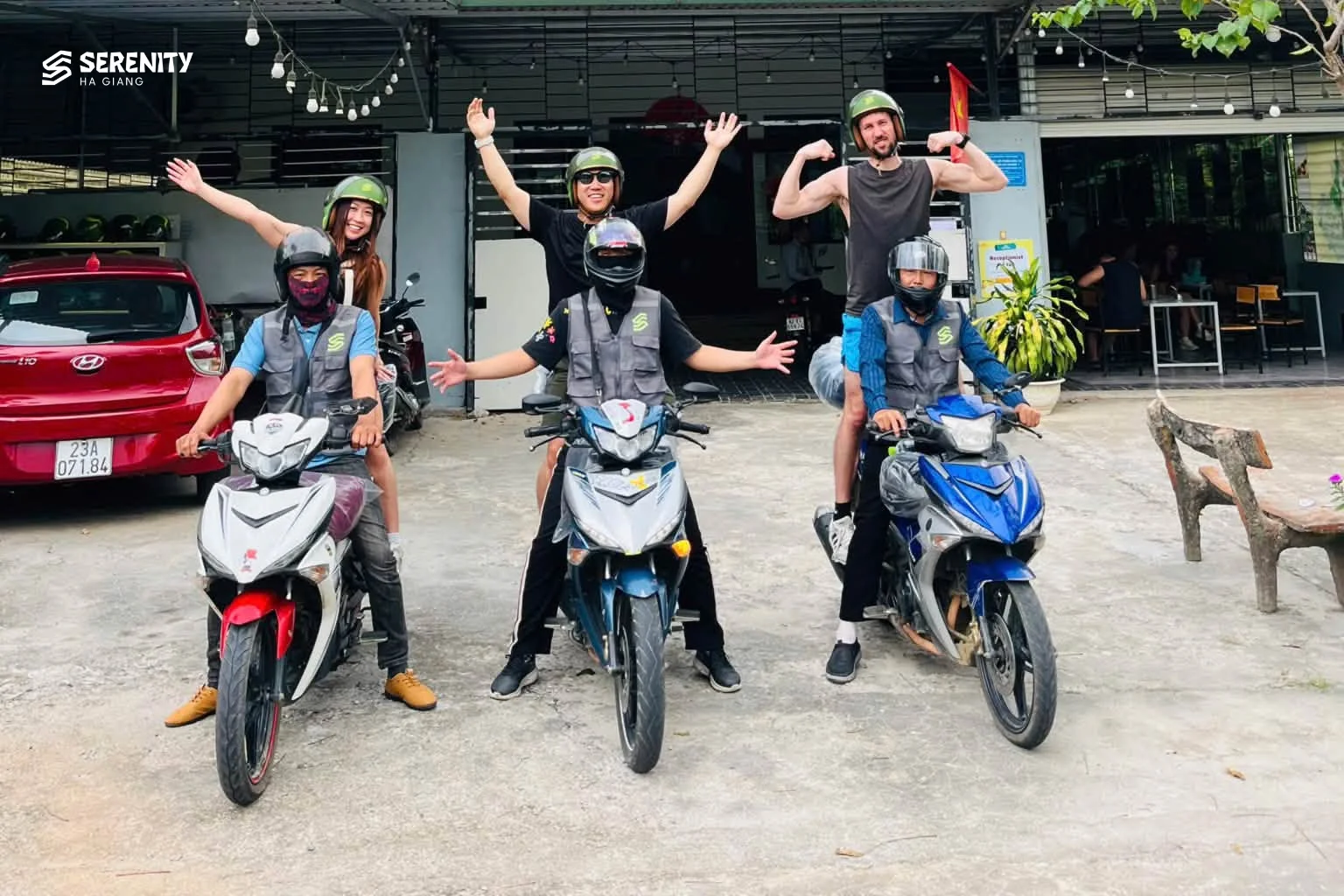
An easy rider is a local driver who operates the motorbike while you ride as a pillion. The easy rider handles navigation, traffic, gear changes on descents, and the decision of when to stop. Your job is to sit well, lean with the bike, and look around.
What does Self-Drive on Ha Giang Loop mean?
Self-drive means you operate the motorbike yourself. On the Ha Giang Loop, self-drive comes in two forms that most comparisons blur together:
- Guided self-ride: You ride your own bike inside an organised tour, behind a lead rider who sets the pace and route. A support person or mechanic often follows. The route is decided by the guide, but it gives you the freedom by removing the navigation and logistics load.
- Independent self-drive: You rent a bike in Ha Giang City and plan the route, stops, fuel, and accommodation yourself.
Ha Giang Easy Rider Comparison: A summary table of three formats
| Comparison factor | Easy rider | Guided self-ride | Independent self-drive |
| Who rides the bike | Local driver | You | You |
| Riding skill needed | None (pillion only) | Confident on a geared bike in mountains | Confident on a geared bike in mountains |
| Licence and IDP needed | No (you are a passenger) | Yes | Yes |
| Safety level | High (experienced driver controls the ride) | Moderate (you have a group of support, but cannot guarantee if you lack mountain-riding experience) | Moderate-to-high (you need to handle the terrain, weather, traffic, etc. yourself) |
| Navigation and logistics | Handled by others | Handled by others | All yours |
| Attention to scenery | High | Split with the road | Split with the road, map, and fuel |
| Flexibility | Depends on the group schedule | Depends on the group schedule | Full control |
| Typical cost | Highest | Middle | Lowest (bike rental plus your own costs) |
| Best for | First-timers, scooter-only riders, no valid IDP | Skilled riders who want support | Skilled, self-reliant riders with time |
What does the Ha Giang Loop demand from a rider?
To find out if you can handle the Ha Giang Loop on your own, first let’s get a quick grasp of what you might need to handle on the loop:
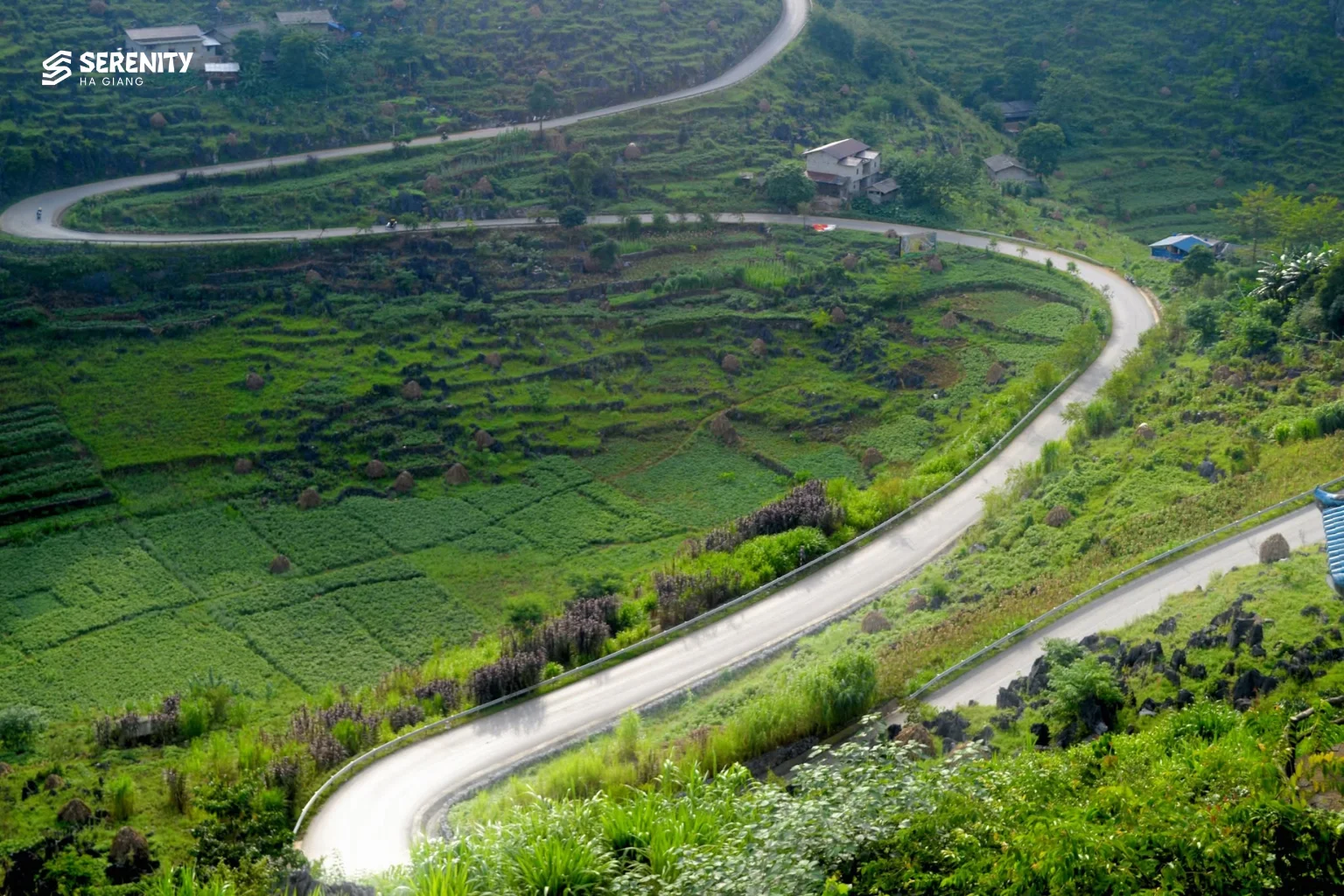
- The route: The Ha Giang Loop is roughly 350 km, typically ridden over 3-4 days from Ha Giang City through Quan Ba, Yen Minh, Dong Van and Meo Vac. A Ha Giang Loop itinerary shows how that distance splits across the days. About 184 km of the route follows National Highway 4C, the “Happiness Road” built in the 1960s across the Dong Van Karst Plateau.
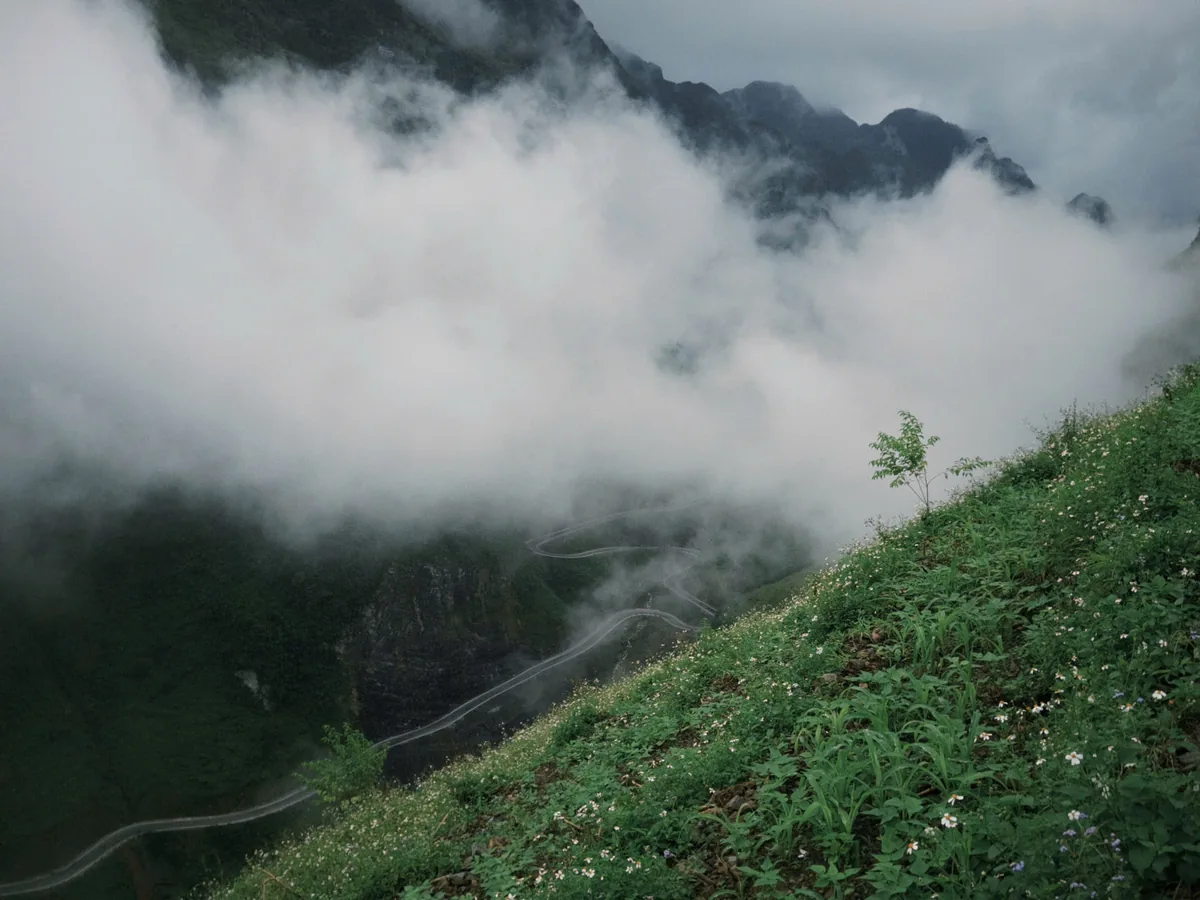
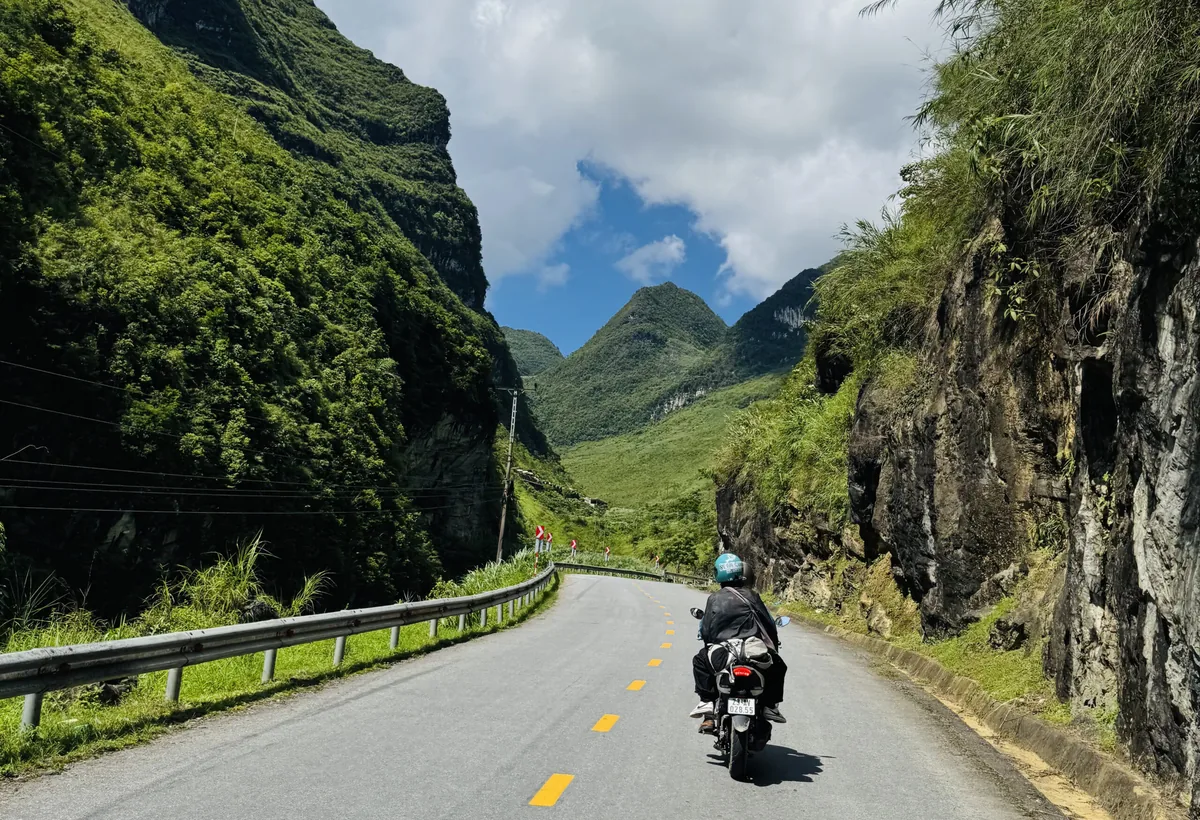
- The road condition: Most of the road is paved. The difficulty is its shape: steep climbs, long descents, tight hairpins, and narrow cliffside sections, especially on the Ma Pi Leng Pass above the Nho Que River. Trucks, buses, livestock, and other tourist riders share the same narrow lane.
- The 5PM rule: Riders should arrive at your accommodation before 5:00 PM since the mountain fog gets thicker and the daylight quickly fades after this time, making the route extra dangerous to ride.
- The weather: Weather adds another layer to the difficulties. Rain in the summer wet season makes surfaces slick and can bring landslide debris, while fog on the passes can cut visibility sharply.
All of that means a rider on the Ha Giang Loop needs more skills than just knowing how to ride a bike. So what skills should a rider need to confidently conquer the Ha Giang Loop?
A quick skill self-test for self-drive. Answer honestly before choosing self-drive:
| Question | Yes | No |
|---|---|---|
| Have you ridden a manual or semi-automatic motorbike (not only an automatic scooter) for many hours? | ☐ | ☐ |
| Can you use engine braking to control a long, steep descent without riding the brakes the whole way? | ☐ | ☐ |
| Can you take an uphill hairpin from a slow speed without stalling or swinging wide? | ☐ | ☐ |
| Have you ridden on wet roads and loose gravel? | ☐ | ☐ |
| Are you comfortable being overtaken by trucks on a narrow mountain road? | ☐ | ☐ |
If you answered “no” to two or more, an easy rider or more practice elsewhere is the safer choice. Automatic scooters offer little engine braking, so riders on long descents rely almost entirely on their brakes, which is one reason many local operators steer self-riders toward semi-automatic or manual bikes.
Ha Giang Self-Drive Rules in 2026: Licence, IDP and Permit
If you are confident enough in your skills to go self-drive, it’s time for the next important step: the local legal knowledge.
- Licence and IDP: Vietnam recognises International Driving Permits from countries that signed the 1968 Vienna Convention on Road Traffic, and only when you also carry your national licence for the matching vehicle category. The government states this two-document rule and notes fines plus up to 7 days of vehicle impoundment for riding without the required licence.
- Engine size. Under Vietnam’s Law on Road Traffic Order and Safety 2024 (in force from 1 January 2025), category A1 covers motorbikes from 50cc to 125cc; it previously covered bikes under 175cc. A rental bike above 125cc needs a full motorcycle category.
- Alcohol: Vietnam applies a zero alcohol limit to drivers and riders.
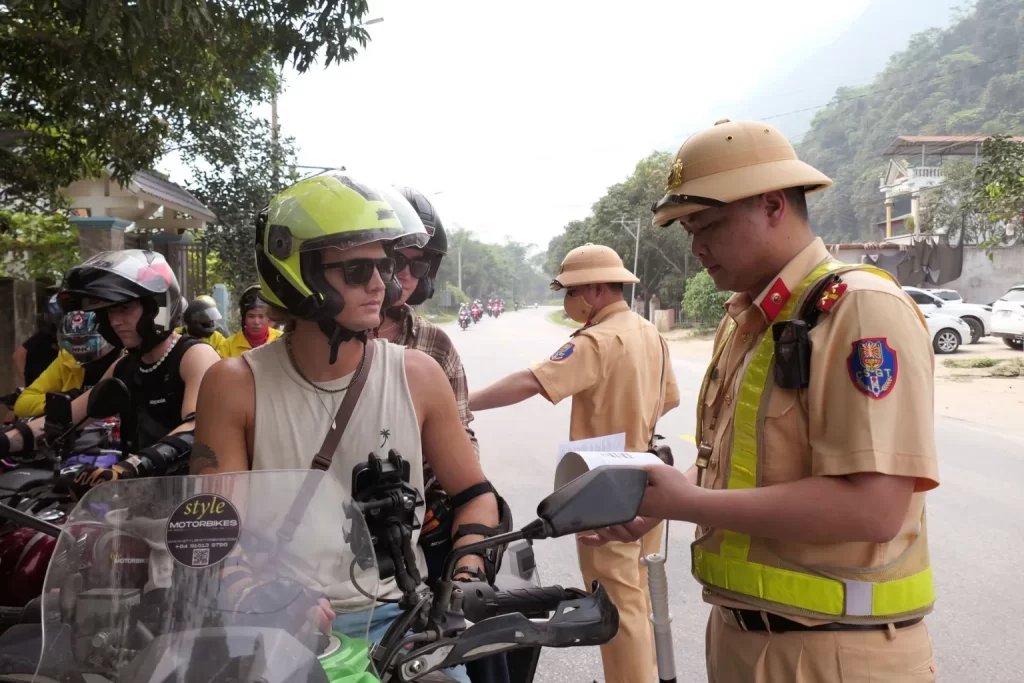
- Border-area permit: Since mid-2026, police are again checking foreigner permits in the border areas around Quan Ba, Yen Minh, Dong Van, and Meo Vac, costing around 250,000 VND. You can learn more through our Ha Giang Permits and Travel Regulation guide.
Note: Ha Giang province merged into Tuyen Quang province on 1 July 2025. The route is still called the Ha Giang Loop.
Safety: What does an Easy Rider change and what doesn’t?
An easy rider changes who carries the riding workload. A local driver who rides the route regularly knows where the road narrows, where gravel collects, and how traffic behaves on each pass.
An easy rider does not make the loop risk-free. You are still on a motorbike on mountain roads. Wear a properly fastened helmet, ask about the operator’s driver experience and bike maintenance, and speak up if the pace feels too fast.
Road hazards, insurance, and emergency steps are covered in more depth in our guide to Ha Giang Loop safety.
How much does an Easy Rider cost?
Easy riders cost more than self-drive, but the gap per day is smaller than many travelers expect.
If you choose to go with an Easy Rider or guided self-drive, take a look at Serenity Ha Giang’s tour packages, starting from $99 per person; you can easily discover the beauty of Ha Giang with no worries about the logistics, navigation, accommodations, and more.
If you think Independent Self Drive is the right choice, you should check out this detailed guide about Motorbike Rental in Ha Giang, where we cover everything from the types of bikes, the costs, and the reputable rental shops. Then, you can prepare yourself carefully before starting the wonderful Ha Giang Loop!
A detailed expense breakdown of all three Easy Rider Formats:
What are the differences in pricing of Easy Rider tour and Self-drive trips for the Ha Giang Loop? Read this table for a comprehensive understanding:
| Cost item | Independent self-drive | Guided self-drive tour | Easy Rider tour |
| Bike rental & driver | $6–15 (≈160k–390k VND). No driver | Included. Shared tour guide/leader; you ride your own bike | Included. Personal local driver; you ride pillion. Roughly +$7–13/day over guided self-drive |
| Fuel & oil | ~$3–5 (≈70k–130k VND) | Included | Included |
| Accommodation & meals | $16–40 (homestay $8–25 + 3 meals $8–15) | Included (homestays, meals, water) | Included |
| Permits & admissions | ~$4–7 (permit ≈230k VND one-off, spread over 3–4 days, + entrance fees $2–4) | Entrance fees included. Permit usually handled by operator | Included |
| Not included / extras | Gear, insurance, bus from Hanoi | Alcohol, soft drinks, tips, travel insurance | Same as guided, plus tip for your driver |
Decision Checklist: Easy Rider or Self-Drive on Ha Giang Loop
Choose an easy rider if:
You have only ridden automatic scooters, or not at all.
Your IDP is a 1949 Geneva Convention permit, or you have no motorbike licence.
You want your attention on the landscape and villages, not the road.
Your travel insurance does not clearly cover you as a rider.
You have limited time (2-3 days); a set itinerary saves you time from finding navigation and fuel stops.
Choose self-drive if:
You hold a motorbike licence for the right category plus a 1968 Vienna Convention IDP.
You passed the five-question skill self-test above.
Your insurance covers motorbike riding at the bike’s engine size.
You accept responsibility for the bike, the route and your own pace.
Conclusion: matching the option to your riding reality
The easy rider vs self-drive choice on the Ha Giang Loop comes down to three checks: legal, insured, and skilled. If you pass all three, self-drive, guided or independent, gives you control and the satisfaction of riding the passes yourself. If you miss any one of them, an easy rider gives you the same route and views, without carrying the riding workload.
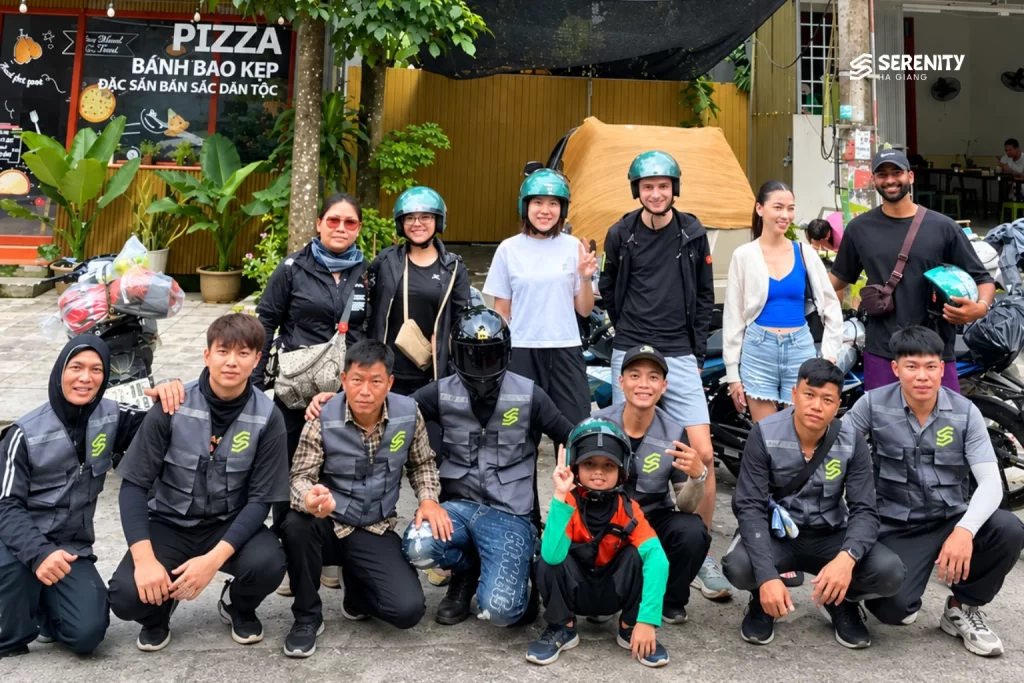
Whichever you choose, ride in daylight and watch the weather. If you prefer a guided format, Serenity Ha Giang’s Ha Giang Loop tour caps groups at 10 people, which keeps the pace manageable on the narrow passes.
FAQ
Q: Can I switch from self-drive to an easy rider partway through the loop?
It depends on the operator and on whether a spare easy rider is free that day. Some tours can arrange a switch once the group is on the road, but it is not guaranteed. If you are unsure about your riding, ask before booking whether a mid-loop switch is possible and what it costs.
Q: Do people tip easy riders on the Ha Giang Loop, and how much?
Tipping is optional but common. Ha Giang operators commonly suggest around 300,000-500,000 VND per easy rider for the full loop, paid in Vietnamese dong at the end of the tour. Base the amount on how the trip went and what you can comfortably afford.
Q: How does luggage capacity differ between an Easy Rider and self-driving?
On an Easy Rider tour, luggage space is restricted because you share the motorbike with the driver. You are typically limited to one 20–25L daypack or small soft bag strapped to the rear rack; large suitcases must be left in free storage at your tour base in Ha Giang City. When self-driving, you have the entire rear seat and rack to strap a larger backpack (40–50L), though carrying heavy luggage raises the bike’s center of gravity and makes cornering on mountain passes significantly harder.
Q: What happens if you get a flat tire or mechanical breakdown on the loop?
With an Easy Rider, roadside breakdowns are handled entirely by the driver and accompanying tour mechanics without delaying your trip. If you are independent self-driving, you are responsible for contacting your rental shop, locating local roadside repair shops (tiệm sửa xe máy), or finding transport. Save emergency contacts (115 for medical, 113 for police) and use a Viettel SIM card, which provides the most consistent mountain cellular coverage.
Q: Will an Easy Rider stop whenever I want to take photos?
Yes, reputable Easy Riders are accustomed to stopping for photography, coffee breaks, and viewpoint rests whenever requested, provided the roadside spot is safe to pull over. However, on group tours (6–10 bikes), individual stops are coordinated with the group schedule, whereas independent self-driving grants 100% individual control over your pacing.
Q: Is an Easy Rider safer than self-driving during bad weather and heavy rain?
Significantly safer. Highland rain turns limestone switchbacks slick and triggers sudden valley fog. Experienced Easy Riders understand wet-weather engine braking, know which road segments retain gravel debris, and can read oncoming truck behavior far better than a foreign rider navigating the passes for the first time.