


Cao Bang
Cao Bang Best Time to Visit: A Month-by-Month Guide
 Tristan Do
Co-founder & Marketing


The funny thing about planning Cao Bang is that hardly anyone gets to pick the season. Read the questions about Cao Bang in any Vietnam travel group, and you’ll see that most people already have their dates: early December, mid-November, or March with parents in their seventies. So what they want to know isn’t when is best, but whether their dates will work.
The good news is that there’s no bad month here, only a trade-off. Ban Gioc Waterfall is at its loudest in the wettest months, and the hillsides are at their most colourful in the coldest, driest ones. If you want a bit of both, aim for late September to early October.
We’re a local team based right here in Cao Bang, and we ride its roads in every season. This guide answers:
- When is Ban Gioc Waterfall at its fullest?
- Which months are driest?
- When do the rice fields and flowers peak?
- When should you avoid the crowds?
AI Quick Summary: Cao Bang Best Time to Visit
Cao Bang has a hot, wet summer and a cool, dry winter. The waterfall is fullest from June to September, the driest months run from November to February, and late September to early October offers the best balance of water, weather, and golden rice.
Key takeaways:
- Best balance: Late September to early October.
- Fullest waterfall: June to September, which is also the wettest stretch.
- Driest: November to February. December averages just 20 mm of rain.
- Avoid: Tet and the 2 September holiday at Ban Gioc, when crowds peak.
Cao Bang’s seasons at a glance
Cao Bang has two main seasons: a hot, wet summer from about May to September, and a cool, dry winter from about November to February, with short, mild months in between. Here are the monthly averages for Cao Bang City:
| Month | High/low | Rain | Rainy days |
| Jan | 18 / 10°C | 22 mm | 10 |
| Feb | 19 / 12°C | 26 mm | 10 |
| Mar | 23 / 16°C | 39 mm | 12 |
| Apr | 27 / 19°C | 91 mm | 14 |
| May | 31 / 23°C | 174 mm | 15 |
| Jun | 32 / 24°C | 229 mm | 17 |
| Jul | 32 / 24°C | 224 mm | 18 |
| Aug | 32 / 24°C | 249 mm | 19 |
| Sep | 31 / 22°C | 150 mm | 14 |
| Oct | 27 / 19°C | 91 mm | 12 |
| Nov | 24 / 15°C | 44 mm | 9 |
| Dec | 20 / 11°C | 20 mm | 8 |
Put simply, August brings about 249 mm of rain over 19 days, while December gets just 20 mm over 8 days. A “rainy day” here means a day with some rain, not a day with rain all day.
The big trade-off: more water means more rain
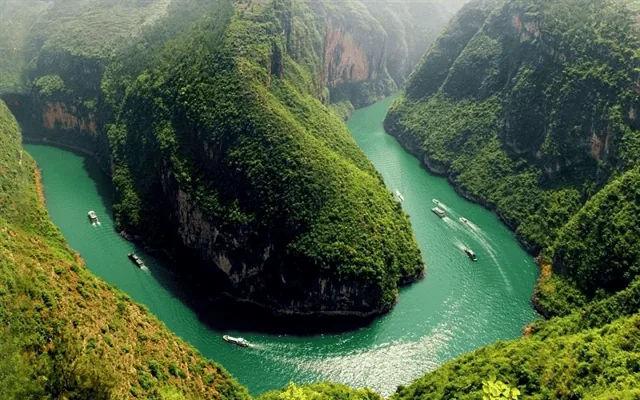
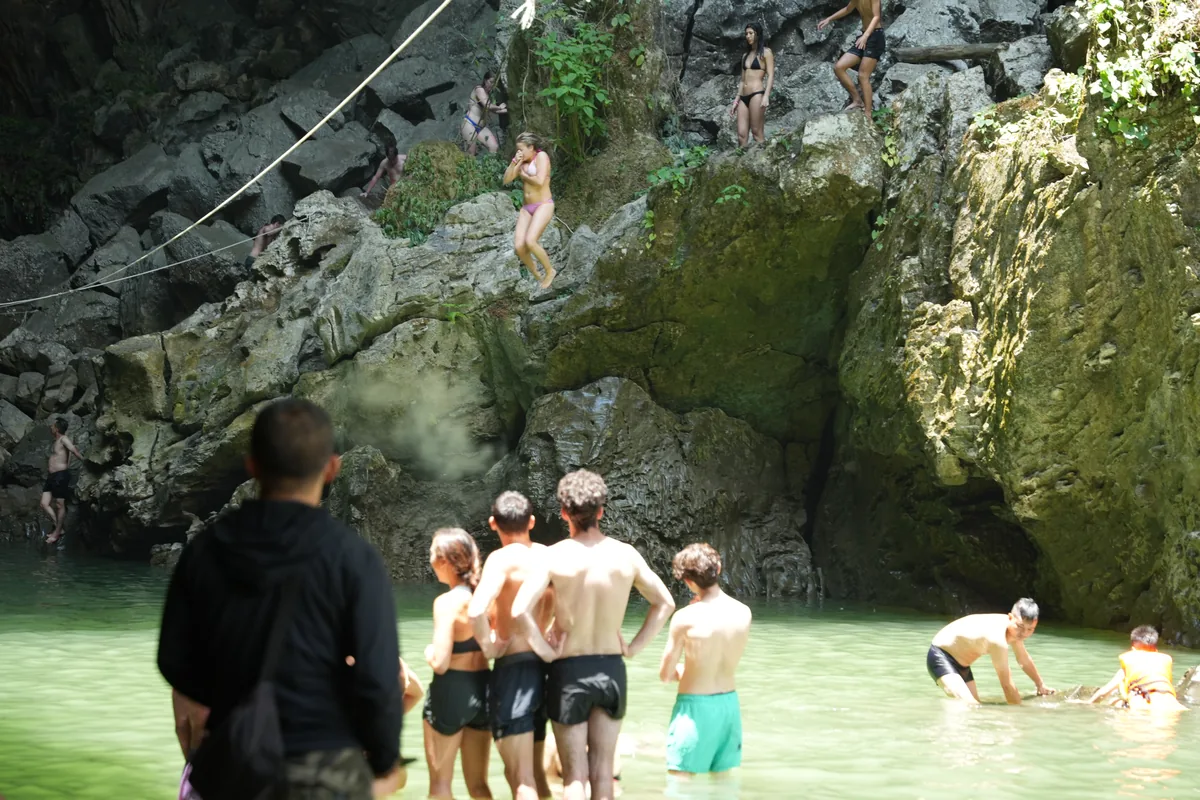
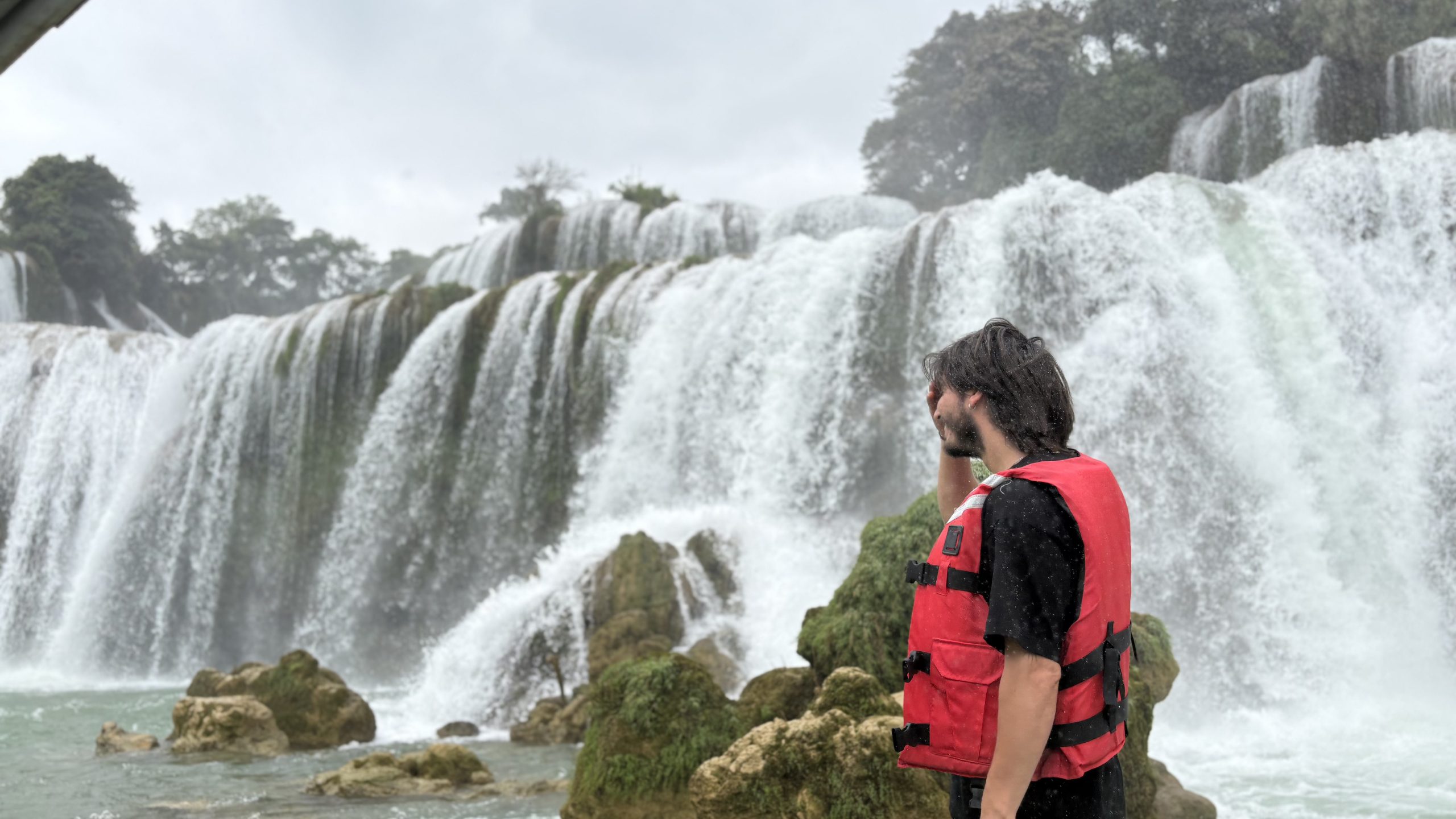
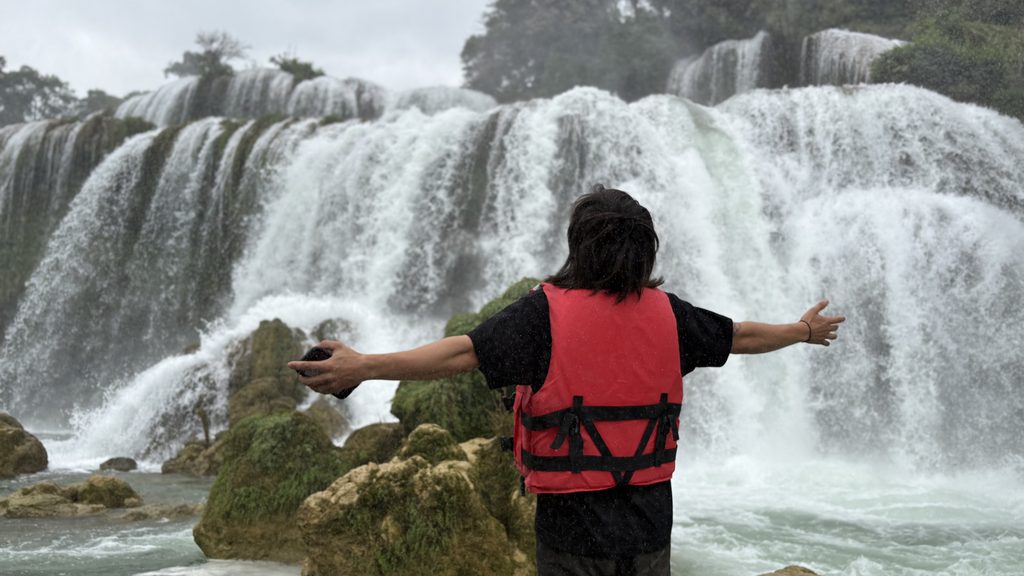
Ban Gioc Waterfall is at its fullest from June to September, and that’s exactly when Cao Bang gets most of its rain. We’ve stood at the falls through every one of those months, and that’s when the water “tuôn trào”, or pours out in full force.
Water Volume vs. Water Clarity: The Visual Reality of Ban Gioc
Travellers often assume more water means a better view. It doesn’t always:
- Summer (June – August): Huge volume, muddy water. Heavy rain upstream swells the Quay Son River, and the falls become a loud, wide wall of water. The catch is the silt: runoff often turns the river brown or yellow-red, so you lose the green you see in photos.
- Autumn (mid-September – October): The turquoise window. Once the rains ease off, the silt settles, and the water clears to turquoise green, with plenty of it still coming over the edge. By November the colour holds, but the flow is noticeably lighter.
So you’re choosing between two very different trips. Come in summer if the waterfall is the main reason you’re going, and pack for rain and slippery roads. Come in winter if you’d rather ride dry roads under clear skies, and accept that the falls will be calmer.
Cao Bang month by month
Here’s what each part of the year looks like on the ground, and who it suits. As we like to sum it up: green in summer, golden in autumn, misty in winter, blooming in spring.
December to February: cold, dry and quiet
Days are cool and clear, with highs of 18 to 20°C, but nights drop to around 10 to 12°C in the city, and it gets colder up in the hills. These are the driest months of the year, with only 20 to 26 mm of rain each. Up on Phia Oac mountain, frost and ice are common from November to January, so bring a proper warm jacket rather than a light fleece. The waterfall is at its calmest. Watch out for Tet, which falls in late January or February and brings big crowds to Ban Gioc.
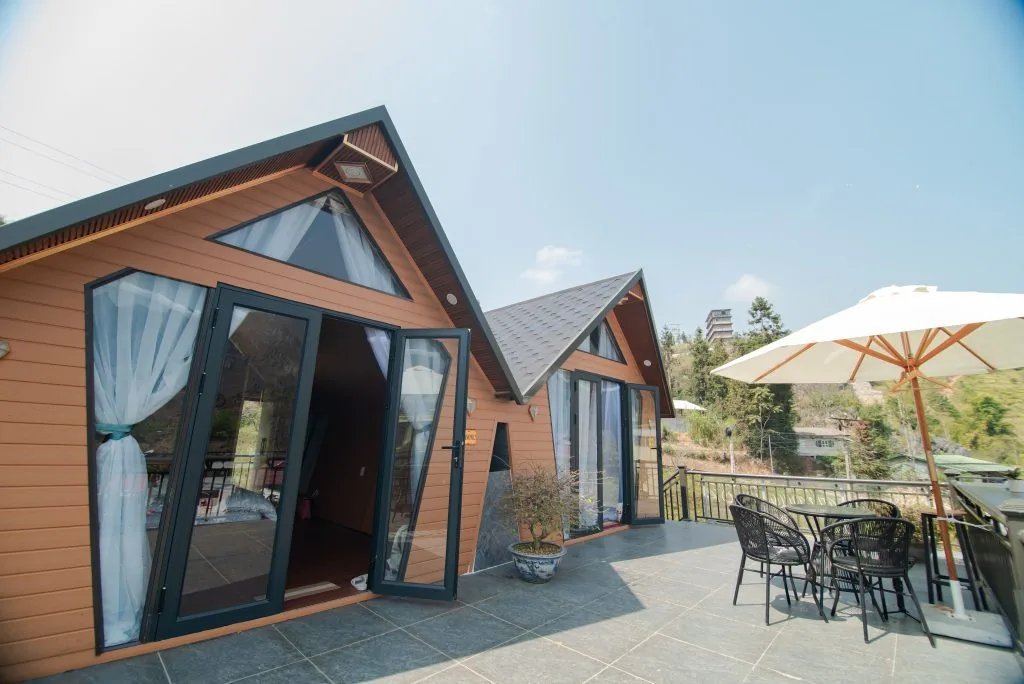
Good for: quiet roads, cosy homestays, and travellers looking for somewhere dry.
March and April: mild and green
Spring warms up fast. March averages 23°C by day with just 39 mm of rain, and in March the pear trees blossom in the Xuan Truong valley. By April, highs reach 27°C, and the rain starts to pick up. It’s a gentle time to walk and explore at your own pace.
Good for: walking, photography, and travelling with older parents.

May to August: hot, wet and at full power
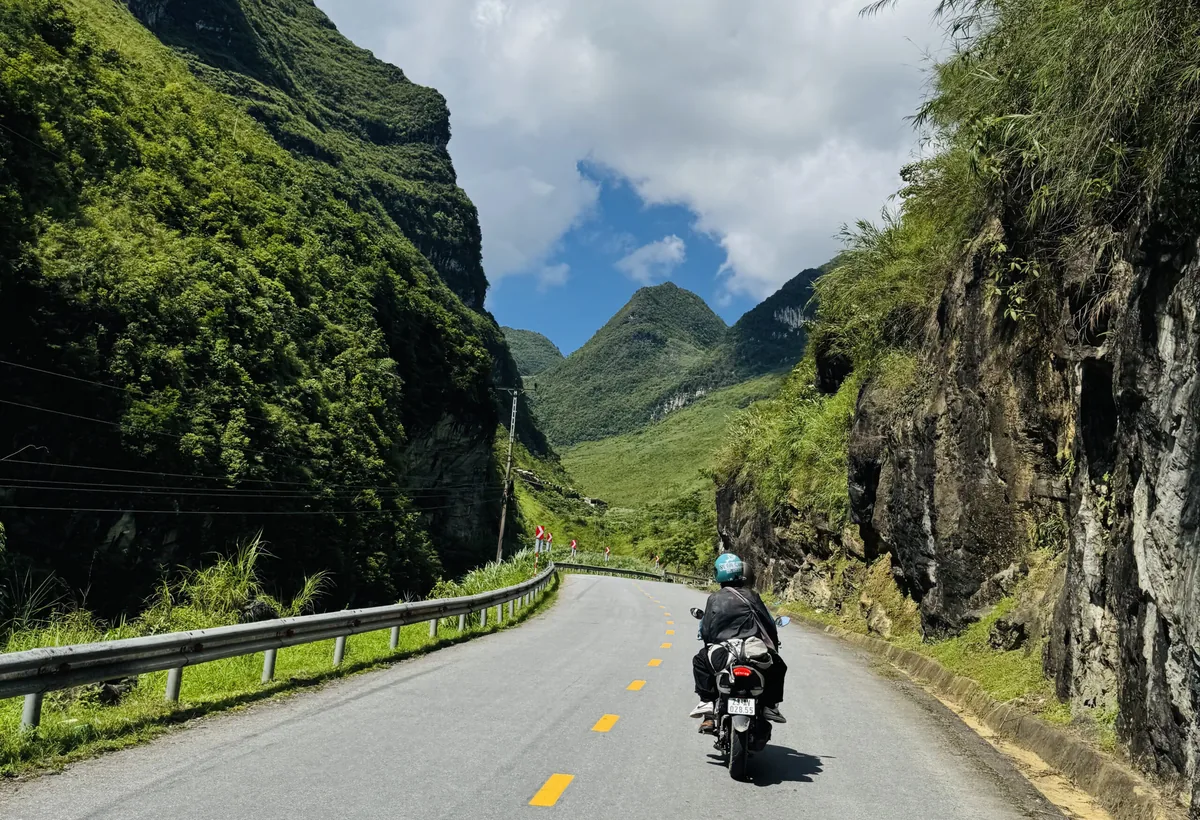
This is Cao Bang at its greenest and wettest. Highs sit at 31 to 32°C, and monthly rain climbs from 174 mm in May to 249 mm in August. The waterfall is at full power, but showers roll in fast, roads get slippery, and landslides can close a stretch for a while. Leave a spare half-day in your plan. On our tours, the guide checks the weather every morning and, if it turns rainy, swaps in a different stop or moves one to the next day.
Summer also pulls off our favourite trick in Cao Bang. Angel Eye Mountain (Mat Than) has a hole punched clean through its peak, and when the rains come, water wells up from underground and turns the valley below into a lake. Get out on a paddleboard, and you’ll be gliding across still water with the giant eye staring down at you from the cliff. Come back in October, and it’s gone, sometimes drained within hours, leaving a green meadow with horses grazing where you paddled. It’s the same mountain, but you’d hardly recognise it.
Good for: waterfall lovers who don’t mind getting wet.
September and October: the sweet spot
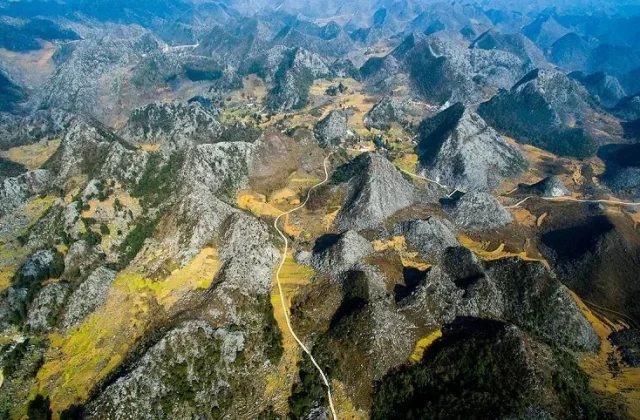
Rain eases from 150 mm in September to 91 mm in October, while the falls are still full from summer. On top of that, the rice in the Phong Nam valley ripens from late September to early October, turning the valley gold. From October, chestnuts are harvested around Trung Khanh, near Ban Gioc. Just keep an eye on the 2 September holiday. If you’re here in early October, you might catch the Ban Gioc Waterfall Festival. Locals carry water from the falls in a ceremony to pray for good weather and a good harvest, and Tay and Nung singers perform hat then, a folk style sung to a long-necked gourd lute. It’s a great time to see local culture up close, but it also brings big crowds, and the dates move each year, so check before you book.
Good for: first-time visits and photos.
October to May: camping at Angel Eye Mountain
Once the rains stop in October, the lake under Angel Eye Mountain drains away underground, and the valley floor stays one big soft meadow right through to May. That’s when we’d pitch a tent there. You’ll probably share the valley with a few grazing horses and buffalo, and not much else.
Good for: camping and quiet nights under the stars.
When to avoid the crowds
The busiest days at Ban Gioc come with Vietnamese public holidays, not with a particular season. Over the 2 September National Day holiday in 2023, the falls welcomed nearly 18,000 visitors, with 9,200 on the day itself. And on the fourth day of Tet in 2024, the car park at the falls was packed with cars from all over the country.
If your dates clash, go early in the morning or visit the falls on a different day. These are the holidays to watch:
- Tet (Lunar New Year): late January or February; the date changes every year.
- 30 April and 1 May: a long public holiday weekend.
- 2 September: National Day.
On normal weekdays, the falls are usually much calmer.
Which month suits you?
If you’re still deciding, match the month to what you want most:
- Want the waterfall at full power? June to September.
- Want dry roads and clear skies? November to February.
- First visit and want a bit of everything? Late September to early October.
- Here for the flowers? November and December for buckwheat and wild sunflowers, or March for pear blossom.
- Travelling with kids or older parents? March and April, or October and November, when it’s mild and the rain is easing.
Whatever month you choose, our guides check the weather each morning and adjust the route if they need to. You can see how that works on our Cao Bang tours.

FAQ
- In which months is Ban Gioc Waterfall’s water clear turquoise rather than muddy brown? The water is at its most vibrant turquoise green from mid-September through November. During the peak monsoon months of July and August, severe mountain runoff turns the river muddy brown. By late September, rains ease, allowing the Quay Son River to filter naturally through limestone karsts while retaining high water levels.
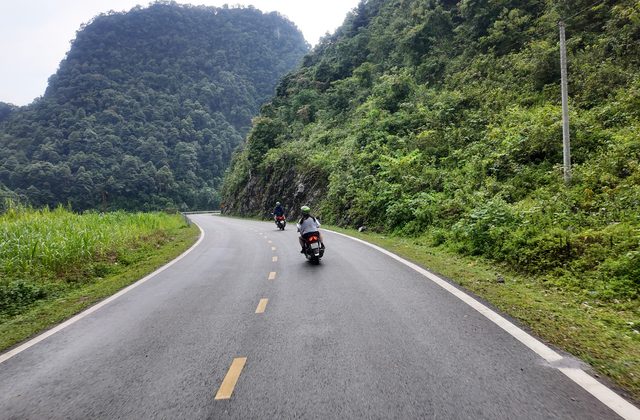
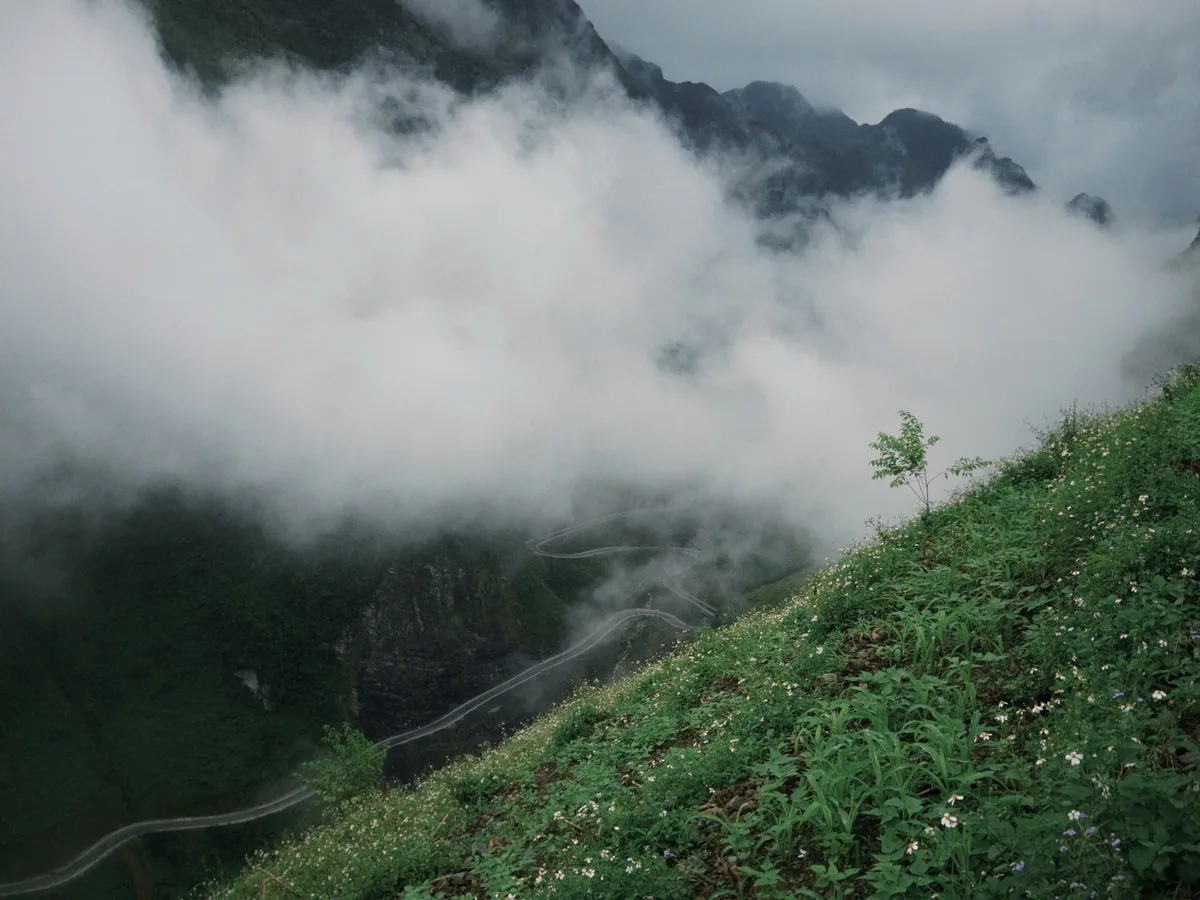
- Is it safe to ride motorbikes around the Cao Bang Loop during the July–August rainy season? Riding is possible but requires high caution. July and August receive over 220–250 mm of monthly rainfall. Heavy downpours create slick road surfaces and occasional flash landslides along mountain corridors like the 14-level Me Pia Pass and the remote border routes near Pac Bo. Self-riders must monitor daily local reports, avoid riding after dark, and check brake pad and tire tread wear.
- When is the best time to see the golden rice terraces in Cao Bang? The optimal window is late September to the first week of October. Unlike the tiered mountain terraces of Sapa or Hoang Su Phi, Cao Bang’s rice fields lie in flat limestone river basins, with the most breathtaking golden views located along the Phong Nam Valley and the banks of the Quay Son River in Trung Khanh district.
- Does Cao Bang have a buckwheat flower season like Ha Giang? Yes, but on a smaller, less commercialized scale. Buckwheat flowers (tam giác mạch) in Cao Bang bloom from November into December, planted in selected fields around Tra Linh, Ha Quang, and the foothills of Angel Eye Mountain, often coinciding with vibrant yellow wild sunflowers (hoa dã quỳ).
- Can I experience frost or snow in Cao Bang during the winter? While snow is extremely rare in the valleys, thick white hoarfrost and freezing rime ice frequently form on the summit of Phia Oac peak (1,931m) in Nguyen Binh district during intense cold fronts between late December and January, when sub-zero temperatures (below 0°C) are officially recorded.