

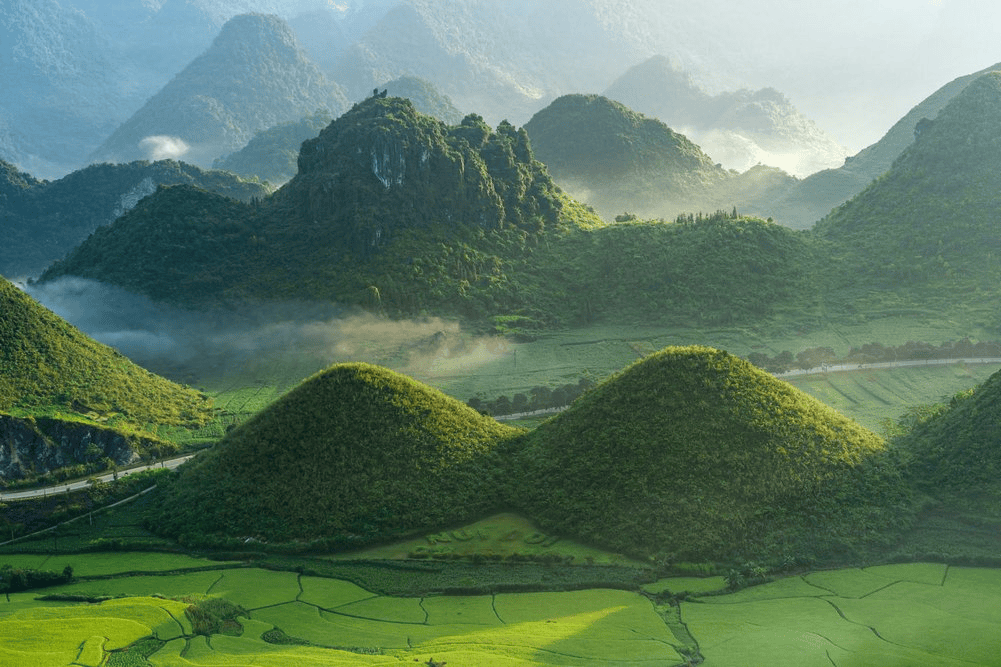
Quan Ba Twin Mountains – Ha Giang Travel Guide
Just 50 kilometres north of Ha Giang City lies one of the region’s most recognisable landmarks: the Quan Ba Twin Mountains. They are two perfectly symmetrical hills that rise out of the rice fields in Tam Son town, which have captivated travellers for generations. Their unusual shape has inspired local legends, while the surrounding mountain scenery makes them one of the first unforgettable stops on the famous Ha Giang Loop.
Whether you’re visiting for the panoramic views, the fascinating folklore, or simply a break from the winding mountain roads, the Quan Ba Twin Mountains deserve a place on every Ha Giang itinerary.
In this guide, you’ll learn what makes this natural wonder special, how to visit, nearby attractions, and practical travel tips for your journey
Key Takeaways
- What they are: Two round, symmetrical limestone hills in Tam Son town, formed from dolomite rock and shaped by weathering over a long geological timescale.
- Where to view them: Quan Ba Heaven Gate, a free public viewpoint on Highway 4C at around 1,500m elevation, roughly 3-4 km before Tam Son.
- Entry cost: No entrance fee for the viewpoint itself – only a small parking charge if you arrive by vehicle.
- Best season: October to December for buckwheat flowers and clear skies; August to September for golden ripening rice terraces.
- Loop position: The first major stop heading north from Ha Giang City, typically reached 1.5-2.5 hours after departure.
Introduction to Quan Ba
- Location: Quan Ba District marks the southern gateway to the Dong Van Karst Plateau Geopark, and the Twin Mountains are its most recognizable landmark.
- Setting: They sit in the valley below Tam Son town, visible from the road well before you reach the town itself.
- Temperature: Located at an altitude of around 1,000-1,200 metres, Quan Ba enjoys a cooler climate than the lowlands, making it a pleasant destination throughout much of the year.
- People: The area is home to several ethnic minority communities, including H’mong, Dao, Tay, and Nung households, who farm the terraced rice fields that surround the mountains.
- Why it’s worth the stop: This mix of dramatic geology and everyday highland life is part of what makes Quan Ba worth a real stop rather than a five-minute photo break.

The Quan Ba Twin Mountains in Ha Giang
What are the Twin Mountains made of?
Geologists identify the hills as dolomite formations, a type of carbonate sedimentary rock. Their rounded, conical shape comes from long-term weathering rather than any single geological event – some sources estimate the process at around 1.6 to 2 million years, though this figure isn’t independently verified and should be treated as an approximation rather than fact.
Where does the Fairy Bosom legend come from?
Local folklore ties the mountains to a story about a H’mong flute player and a fairy named Hoa Dao who descended from heaven after hearing his music. They married and had a son, but the Jade Emperor discovered Hoa Dao had left heaven and ordered her return. To keep her child fed, she left her breasts behind – these became the two hills, which locals still credit with the fertility of the surrounding farmland and the clarity of the nearby Mien River.
This is why you’ll hear the site called by several names: Twin Mountains, Fairy Bosom Mountains, or Núi Đôi Cô Tiên (Fairy Bosom Mountains) – all referring to the same landmark.
How to Visit
Reaching the Quan Ba Twin Mountains is straightforward, making them one of the easiest attractions to include in your Ha Giang itinerary. To visit, you can choose one of these 3 options:
- By Motorbike: The Twin Mountains are located approximately 50 km from Ha Giang City via National Highway 4C (QL4C). The ride usually takes 1.5 to 2 hours, depending on the weather and photo stops.
- By Car: If you prefer not to ride a motorbike, private cars are widely available and provide a comfortable alternative, especially for families or travellers with limited riding experience.
- Join a Guided Tour: For first-time visitors, this is often the easiest option. You will free yourself from worrying about the route, the transportation, or finding the best viewpoints.
Each method brings you a distinctive experience to explore Ha Giang:
By Motorbike
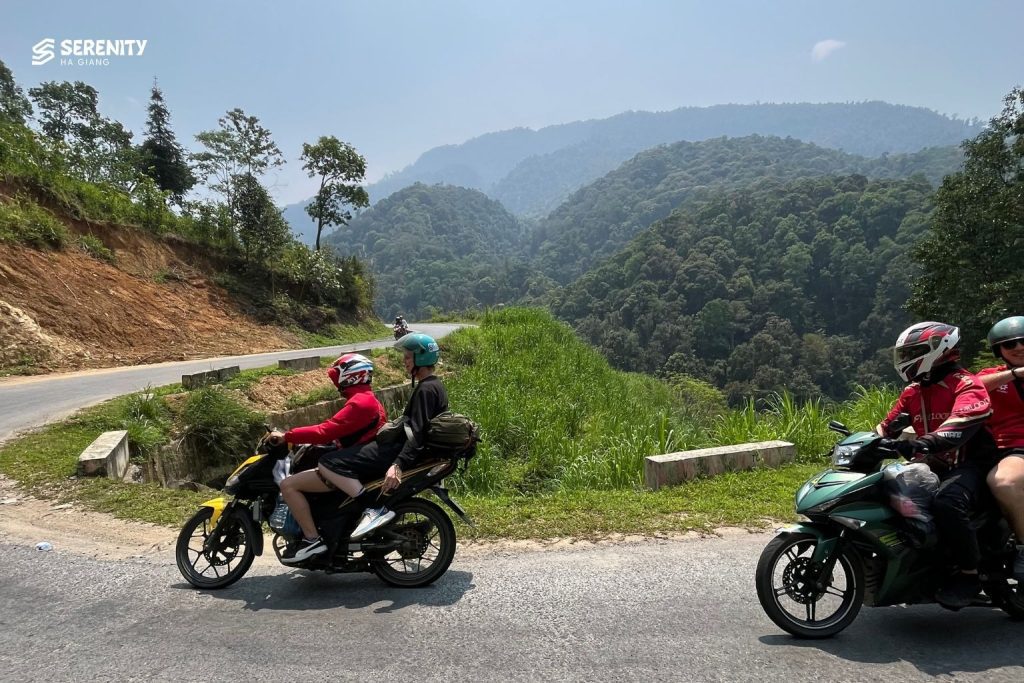
This is the most popular option for most of Ha Giang’s visitors. And there is a reason for that. When riding a motorbike, even on a pillion, you can experience the landscape with all your senses. Feel the cool mountain breeze. Smell the fresh air. Stop whenever a view catches your eye. The road to Quan Ba is part of the adventure, with winding bends and mountain scenery unfolding along the way. Just take it slow, especially if you are not used to riding on mountain roads.
By Car
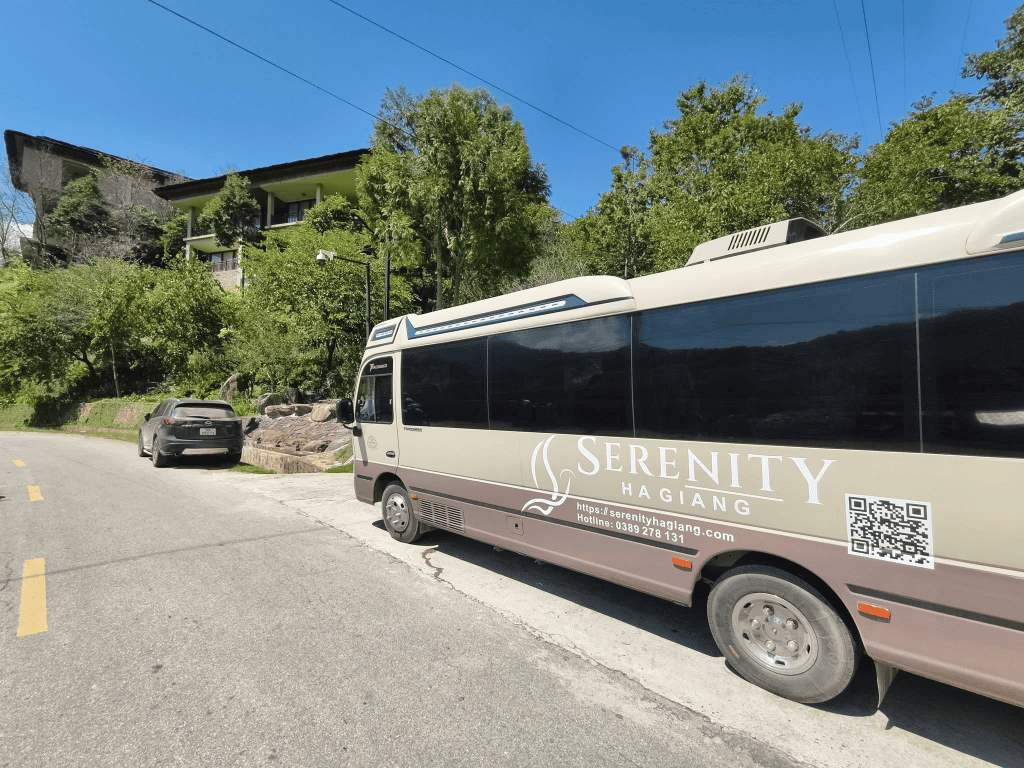
A private car is a more comfortable choice, especially for families, groups, or travellers who do not ride motorbikes. You can simply sit back and enjoy the views without worrying about the road. It also gives you more protection from rain and cooler weather. The downside? You may miss some of those spontaneous roadside stops that make a Ha Giang journey special.
Join a Guided Tour
For first-time visitors, a guided tour keeps things simple. You do not have to worry about navigation, parking, or choosing where to stop. A local guide can also share stories about Quan Ba and point out details you might otherwise miss. If you want the feeling of travelling by motorbike without having to ride yourself, an Easy Rider is a great option. You can enjoy the mountain roads while an experienced local rider takes care of the driving.
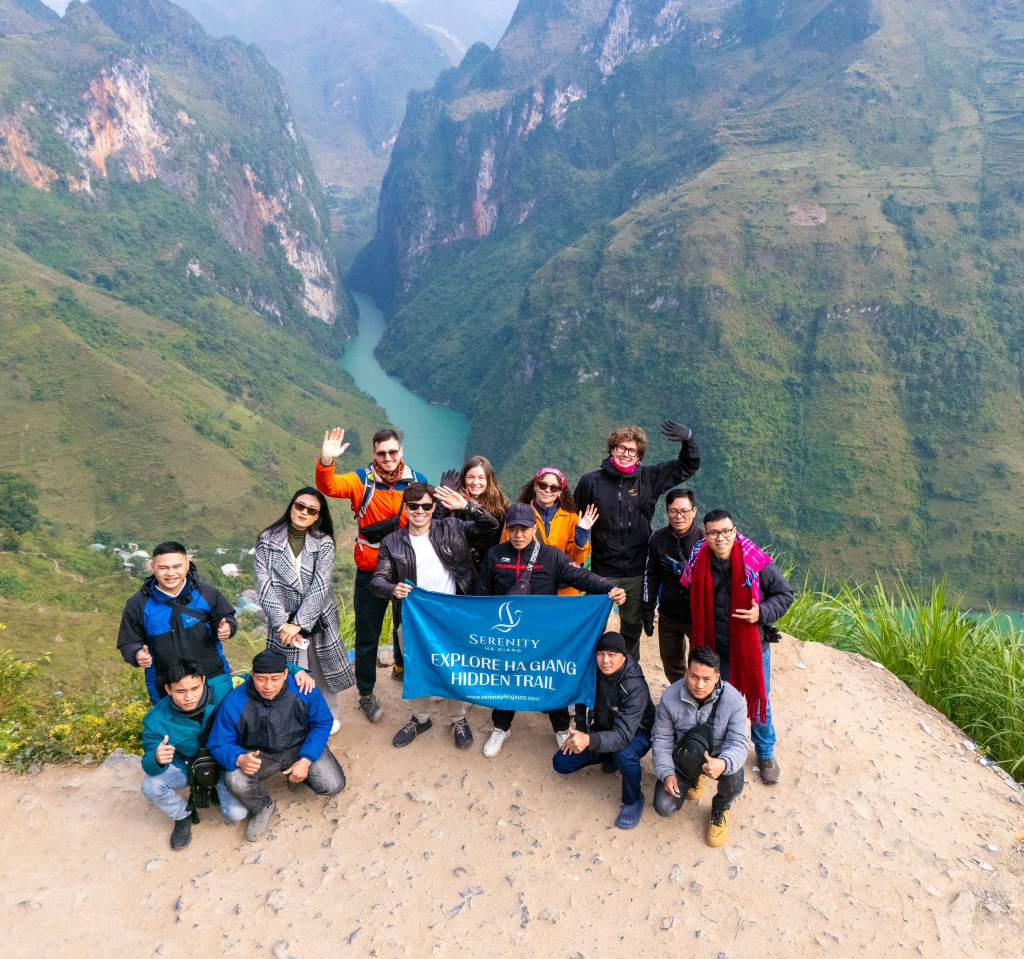
👉 At Serenity Ha Giang, our Easy Rider and private tours include a stop at the Quan Ba Heaven Gate, giving you plenty of time to admire the Twin Mountains while learning about the area’s history, geology, and local culture from experienced local guides.
It’s a stress-free way to experience one of Ha Giang’s most iconic landmarks without worrying about navigation or logistics.
Nearby Attractions
The Quan Ba Twin Mountains are just one highlight of the district. Several other attractions are located nearby, making it easy to spend half a day or more exploring the area.
| Attraction | Distance from Tam Son | Notes |
| Quan Ba Heaven Gate | Around 3 km | Located just before descending into Tam Son Valley, Quan Ba Heaven Gate offers the most famous panoramic view of the Twin Mountains. |
| Lung Khuy Cave | Roughly 5-10 km (sources vary) | Ha Giang’s first tourism-developed cave; one of Ha Giang’s most impressive limestone caves, small entrance and parking fees apply |
| Tam Son town | – | Local market, restaurants, guesthouses; a natural lunch or overnight stop |
| Lung Tam weaving village | Near Lung Khuy Cave (~10 km) | H’mong hemp-weaving community, known for indigo-dyed textiles |
| Nam Dam Village | Around 5 km | If you’d like to experience local culture, Nam Dam Village is well worth a visit. This traditional Dao village is known for: Earthen houses, community-based tourism, local herbal baths, and authentic homestay experiences |
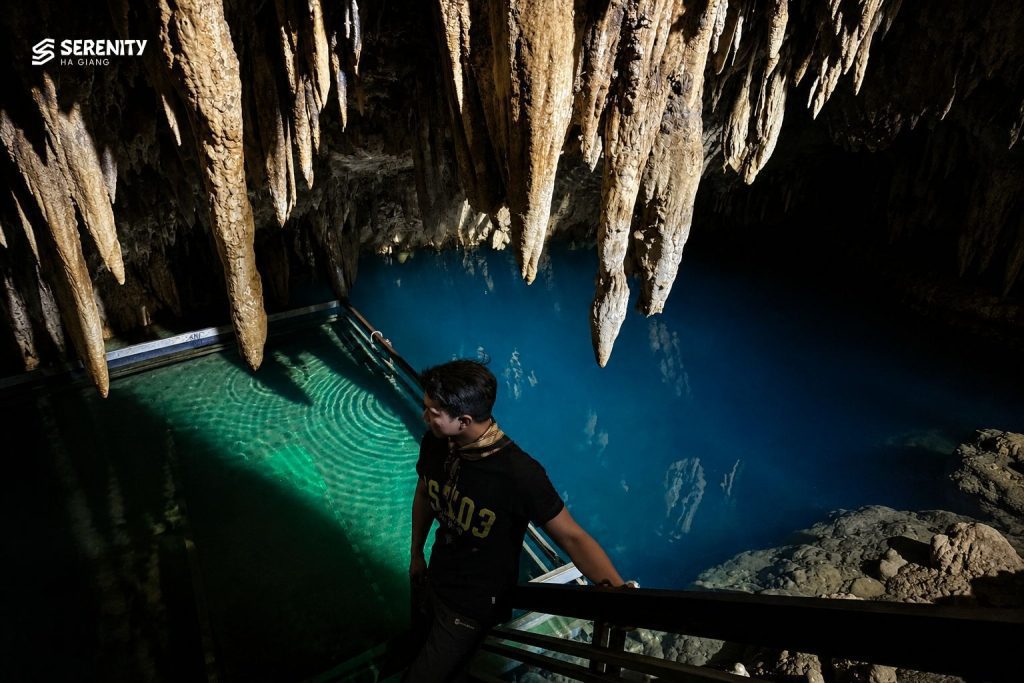
Lung Khuy Cave is the most popular add-on: a natural limestone cave with stalactite formations, reachable by a short walk from a village parking area near Tam Son.
Travel Tips
A little planning can help you enjoy your visit to Quan Ba even more.
- Time it for light, not just weather: Early morning often brings low cloud pooling in the valley – atmospheric, but it can also hide the mountains entirely. If clear views matter more to you than misty photos, aim for mid-morning. (Note: If you go there with a tour like the Serenity Ha Giang’s 4D3N, the operator will schedule and guarantee you visit the attraction at the most suitable time for the best view)
- Layer up: At around 1,500m, Quan Ba Heaven Gate runs noticeably cooler than Ha Giang City, especially in the early morning.
- Check the weather: Fog is common in the mountains and can occasionally reduce visibility from the viewpoint.
- Don’t rush it: Some riders push straight through toward Ma Pi Leng Pass to save time. The Twin Mountains and Heaven Gate don’t need hours, but they deserve more than a five-minute stop.
- Pair it with Lung Khuy Cave if you have an extra hour – it’s a natural detour from Tam Son and rarely crowded.
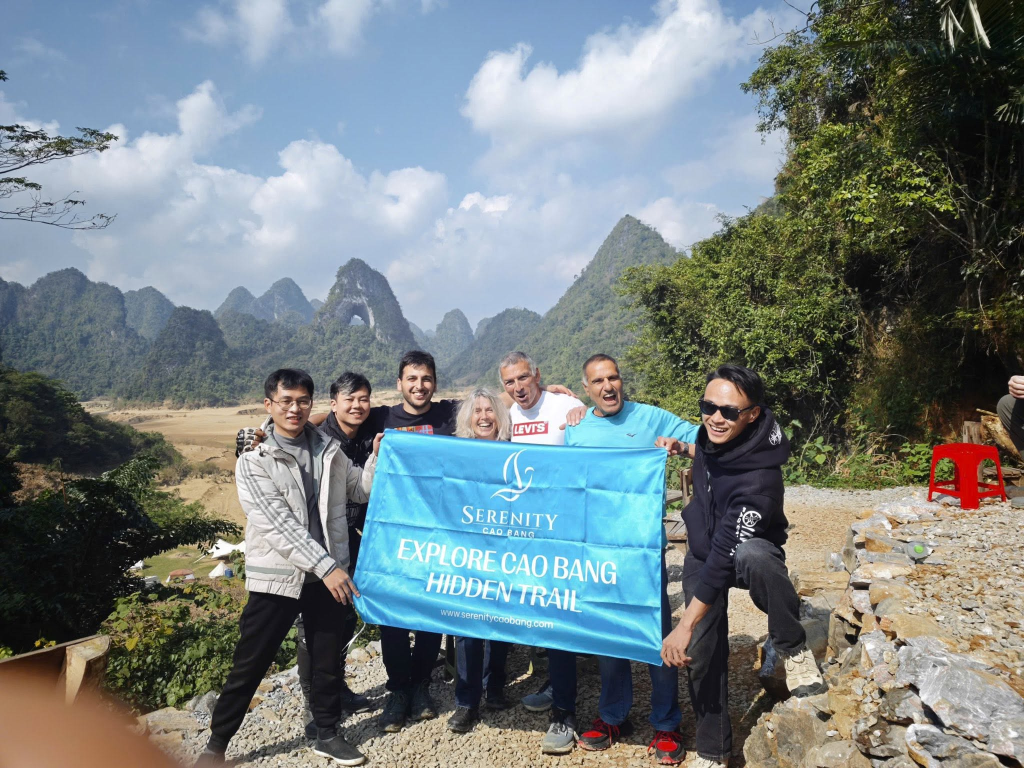
If you’d rather skip the route-planning and let someone else handle the logistics, Serenity Ha Giang builds Quan Ba into the first day of every Ha Giang Loop tour, with groups capped at 10 or fewer and private bungalow stops along the way – small enough that photo stops like Heaven Gate never turn into a scrum.
Ready to See Ha Giang’s Most Iconic Landmark?
The Quan Ba Twin Mountains are a free, easy stop that sets the tone for the rest of the Ha Giang Loop – dramatic limestone scenery, real highland culture, and a legend locals still tell with a straight face. Reach them via Quan Ba Heaven Gate on Highway 4C, roughly 1.5-2.5 hours north of Ha Giang City, and budget an hour or two if you want to add Lung Khuy Cave. Ready to see it for yourself? Book the Ha Giang Loop with Serenity Ha Giang and let a local guide handle the route.
FAQ
Q: Can I visit the Twin Mountains without doing the full Ha Giang Loop?
Yes, technically, as a day trip from Ha Giang City, but it’s a short round-trip with limited time at the top. Most travelers see it as day one of a multi-day loop rather than a standalone excursion.
Q: Do I need a permit to visit Quan Ba?
No special travel permit is required for Quan Ba itself. Permits become relevant further north in the Dong Van Karst Plateau border areas – check our permits guide before continuing past Yen Minh.
Q: Is the road to Quan Ba Heaven Gate safe for beginner riders?
The road is generally well-paved but includes steep sections and sharp curves. Riders new to mountain roads should go slowly and stay alert, especially on the descent into Tam Son.