


Ha Giang Travel Tips
Ha Giang Cao Bang Combined Itinerary: How to Link Both in One Trip
 Tristan Do
Co-founder & Marketing


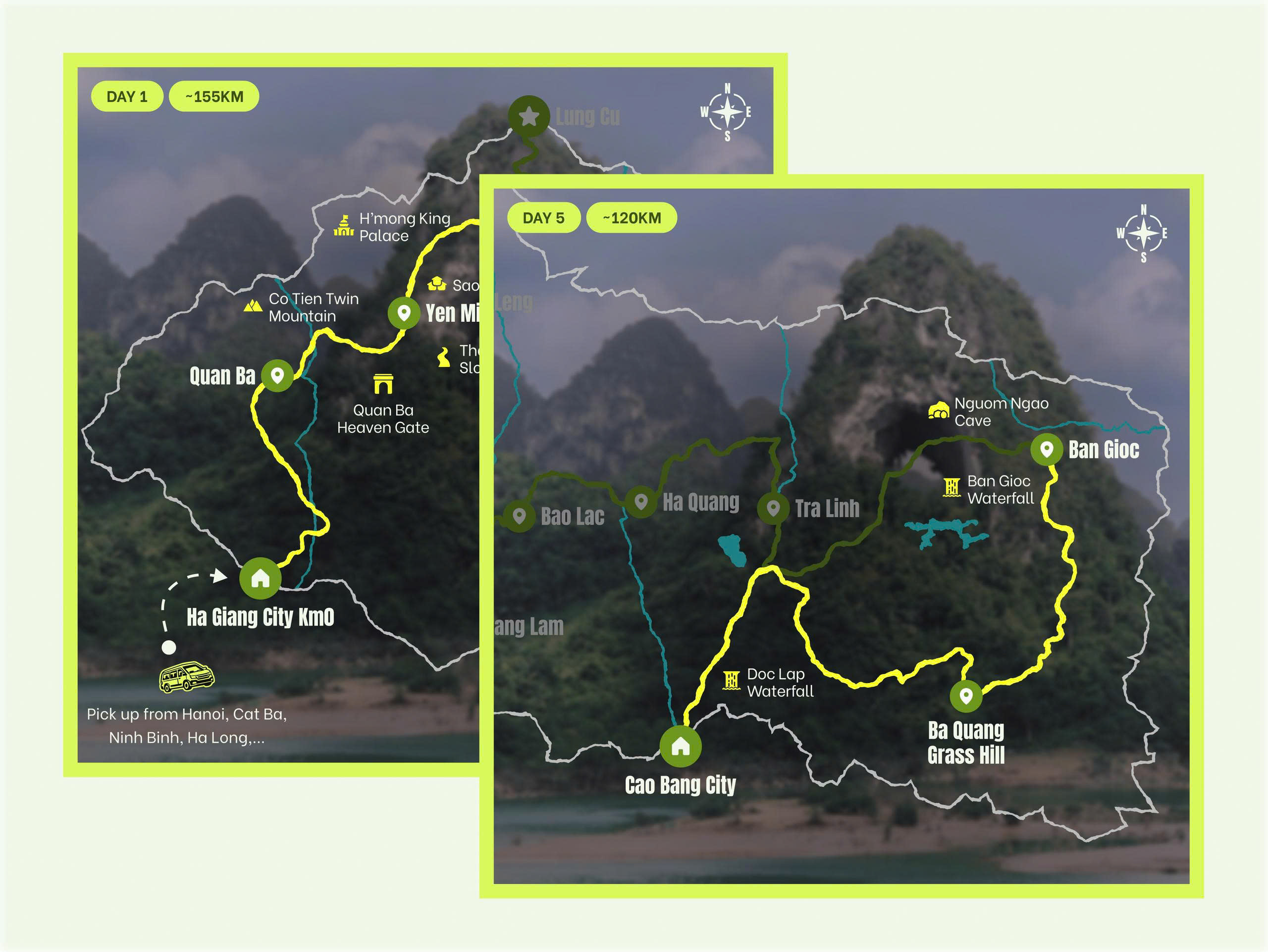
Ha Giang Loop and Cao Bang Loop are two popular must-try tours whenever we want to explore the highland area of Northern Vietnam. But the question is, is there a way to combine both the Ha Giang and Cao Bang loops into one trip?
Yes! And this guide is made for that. A Ha Giang Cao Bang combined itinerary works best as a one-way trip of 5-7 days: ride the Ha Giang Loop north to Dong Van and Meo Vac, cross east through Bao Lac into Cao Bang, finish at Ban Gioc Waterfall, then take a bus back to Hanoi from Cao Bang City. The key point most plans miss is that you do not close the loop. You leave it at Meo Vac and keep going east.
That’s a brief about the route; then what’s about the vehicle, the timing, the permits, and the cost? Let’s find out through today’s article.
AI Quick Summary: Ha Giang Cao Bang Combined Itinerary
A Ha Giang Cao Bang combined itinerary is a one-way trip of 5-7 days: ride the Ha Giang Loop north to Dong Van and Meo Vac over the Ma Pi Leng Pass, cross east through Bao Lac, and finish at Ban Gioc Waterfall in Cao Bang. It links two UNESCO Global Geoparks but skips the Loop’s southern return leg.
Key takeaways:
- Logistics: You do not return to Ha Giang City, so bags travel with you or stay in Hanoi, and the motorbike drop-off must be agreed with your rental vendor.
- Best season: September to November, when Ha Giang’s buckwheat flowers overlap with Ban Gioc’s clear blue water and golden rice.
- Paperwork: Carry your original passport throughout. Ha Giang requires a border-area permit (about 250,000 VND) – this is included in the tour package by default; the main Cao Bang sights need none.
- Time needed: At least 5 days; 6-7 days is recommended. If you travel by Jeep, then go with a 7-8 day itinerary for best comfort.
How does a Ha Giang Cao Bang trip work?
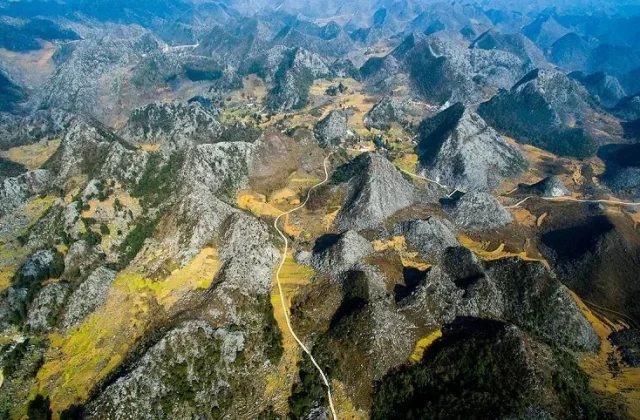
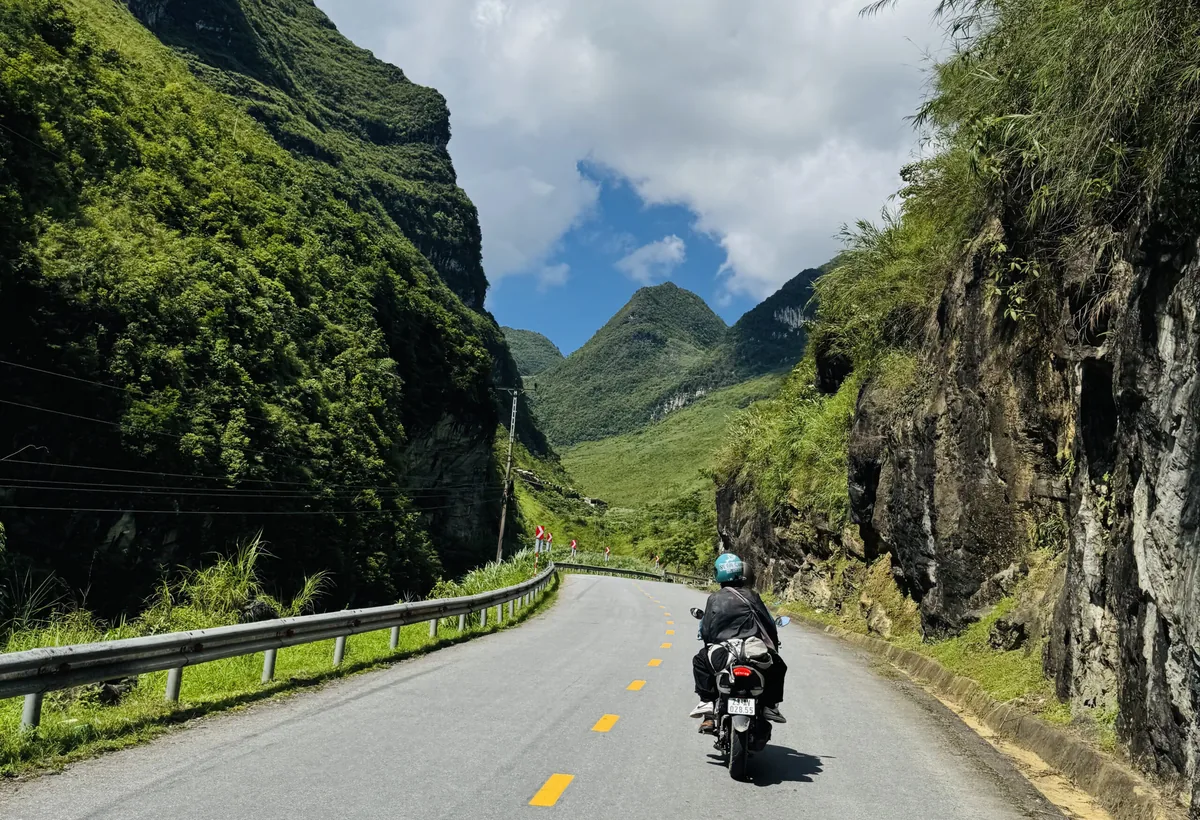
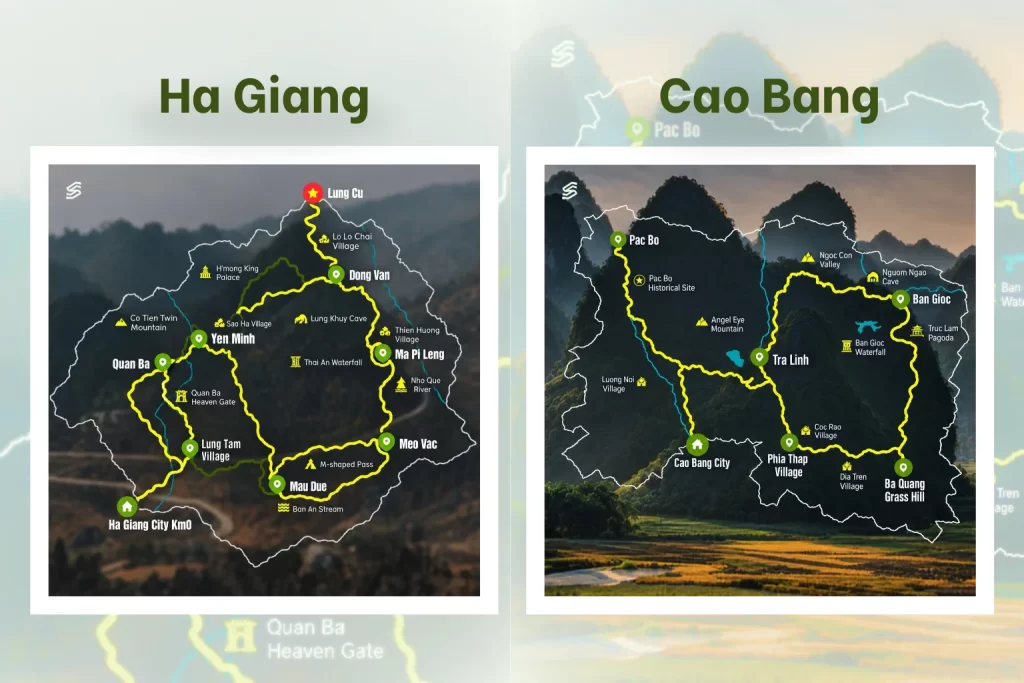
A Ha Giang Cao Bang trip turns the Ha Giang Loop into a one-way route. Instead of riding from Meo Vac back south to Ha Giang City, you head east to Bao Lac and into Cao Bang province. You see the Loop’s northern highlights, including Quan Ba, Yen Minh, Dong Van and the Ma Pi Leng Pass, but skip its southern return leg.
Note: Read this Ha Giang Loop itinerary, which shows what that return leg includes, so you can decide whether you mind missing it.
The one-way Ha Giang Cao Bang itinerary changes three practical things:
- Luggage: You do not pass back through Ha Giang City, so big bags either travel with you or stay in Hanoi.
- Bikes: Need to specify the motorbike rental vendors that offer intercity rentals with a different drop-off location. Be aware of additional fees.
- Buses: You arrive by bus in Ha Giang City and leave by bus from Cao Bang City.
More commonly, people choose itineraries that run Ha Giang first and Cao Bang second, but the reverse also works. Direct limousine vans run between Ha Giang City and Cao Bang City in both directions.
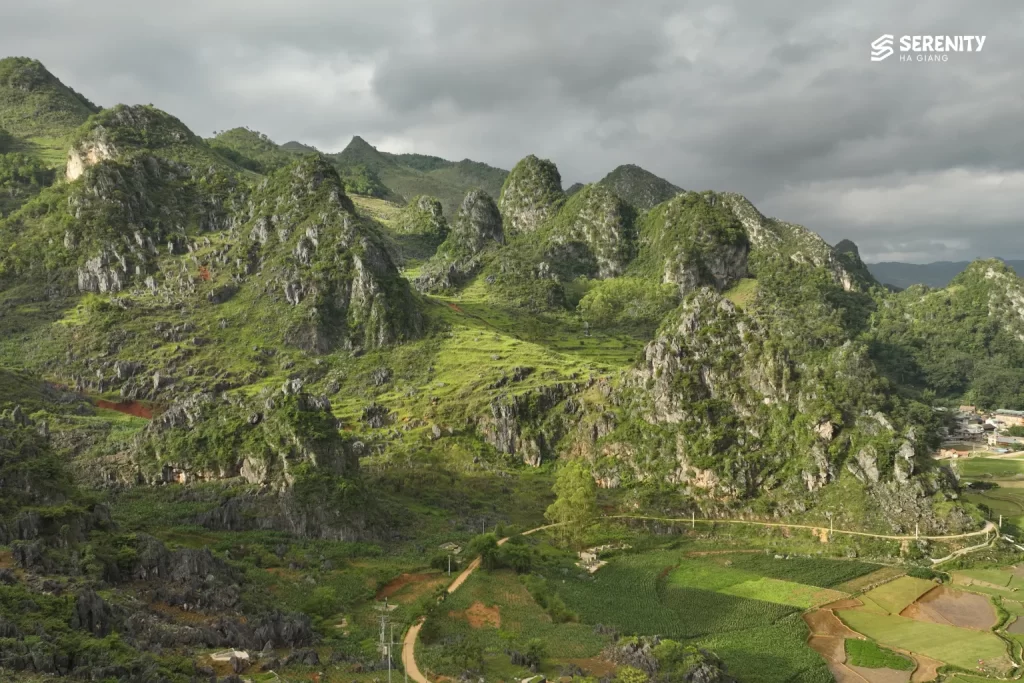
Which route connects Ha Giang and Cao Bang?
Three roads link the two regions, and the choice decides what you see between them.
| Route | Approx. distance (Ha Giang City to Cao Bang City) | Via | What you see | Notes |
| Direct road | ~250 km | Bac Me, Bao Lam, Bao Lac | Rural valleys, no Loop highlights | Used by direct buses; 6.5-10 hours |
| Classic route | ~360-375 km | Dong Van, Meo Vac, Bao Lac, National Highway 34 | Northern Ha Giang Loop, Ma Pi Leng Pass | The usual combined itinerary |
| Border route | ~370 km | Meo Vac, Bao Lac, Me Pia Pass, Pac Bo | Loop highlights plus Me Pia Pass and Pac Bo | Rougher, more remote; Vietnam Coracle’s mapping dates from 2019 |
| Ba Be Lake Route | ~310 km | Da Vi, Ba Be Lake | The pretty Gam River Valley and the green Ba Be Lakes | Some road conditions are harder to get through. |
Route distances are estimated numbers. Road conditions change after rainy seasons, so check the latest state of the border route locally.
A note on the pass names: Me Pia Pass (Deo Me Pia) and Khau Coc Cha Pass are two names for the same climb near Bao Lac, about 2.5 km long with 14 hairpin bends stacked up a single slope. Some pages call it “14-level” and others “15-level”, depending on whether they count the bends or the levels between them. It was widened between 2009 and 2011.
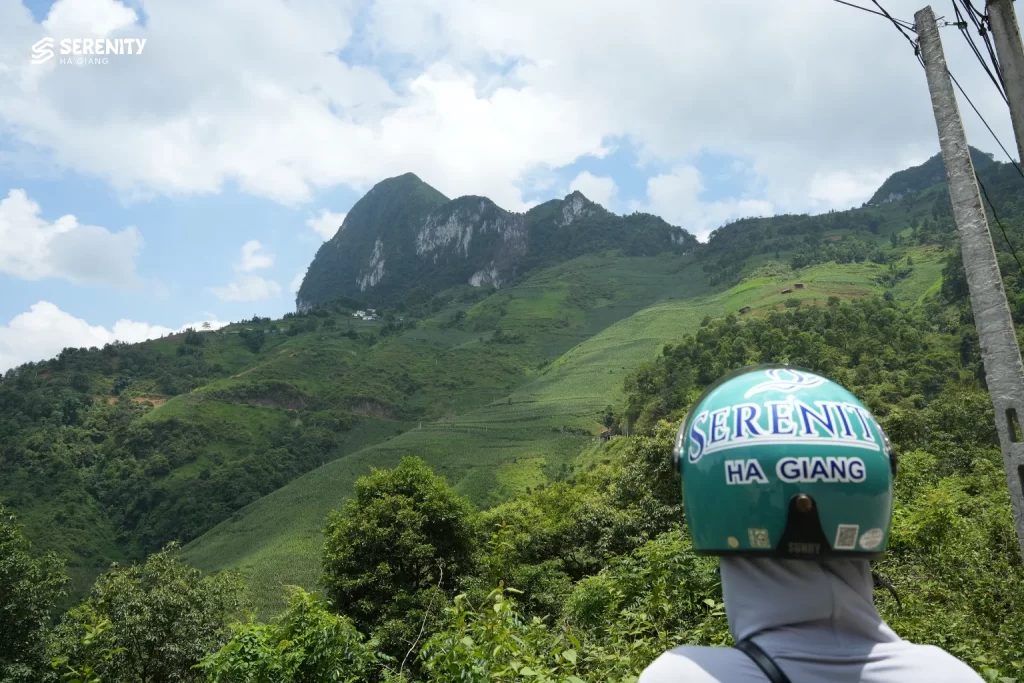
A 6-Day Ha Giang Cao Bang Combined Itinerary
This plan follows the classic route to Bao Lac, then the border road to Pac Bo. Days start in Ha Giang City after the overnight or morning bus from Hanoi, which takes about 6-7 hours.
| Day | Route | Est. distance | Key highlights |
| Day 1 | Ha Giang City ➔ Yen Minh | ~100 km | Climb Bac Sum Pass to Quan Ba Heaven Gate, then continue through the karst valleys to Yen Minh. |
| Day 2 | Yen Minh ➔ Dong Van | ~60 km | Ride Tham Ma Pass, stop at the Hmong King’s Palace, and spend the evening in Dong Van Old Quarter. Lung Cu Flag Tower is an optional detour north. |
| Day 3 | Dong Van ➔ Bao Lac | ~100 km | Cross the Ma Pi Leng Pass above the Nho Que River to Meo Vac. Then, continue the QL4C path to Ly Bon. Continue to National Highway 34, and you will meet Bao Lac. |
| Day 4 | Bao Lac ➔ Pac Bo ➔ Cao Bang | ~170 km | Climb Me Pia Pass, then follow the border road to the Pac Bo historical site, about 50 km north of Cao Bang City, where Ho Chi Minh set up his revolutionary base in 1941. |
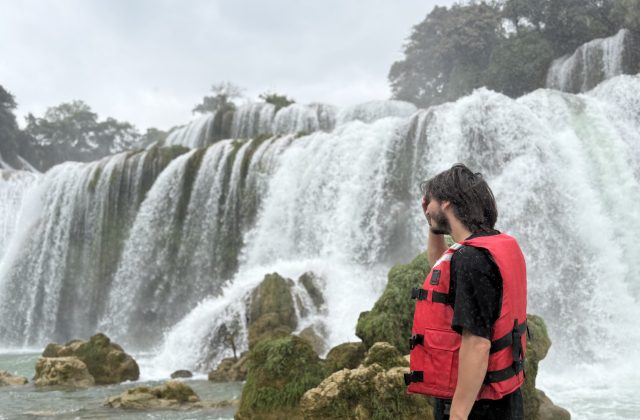
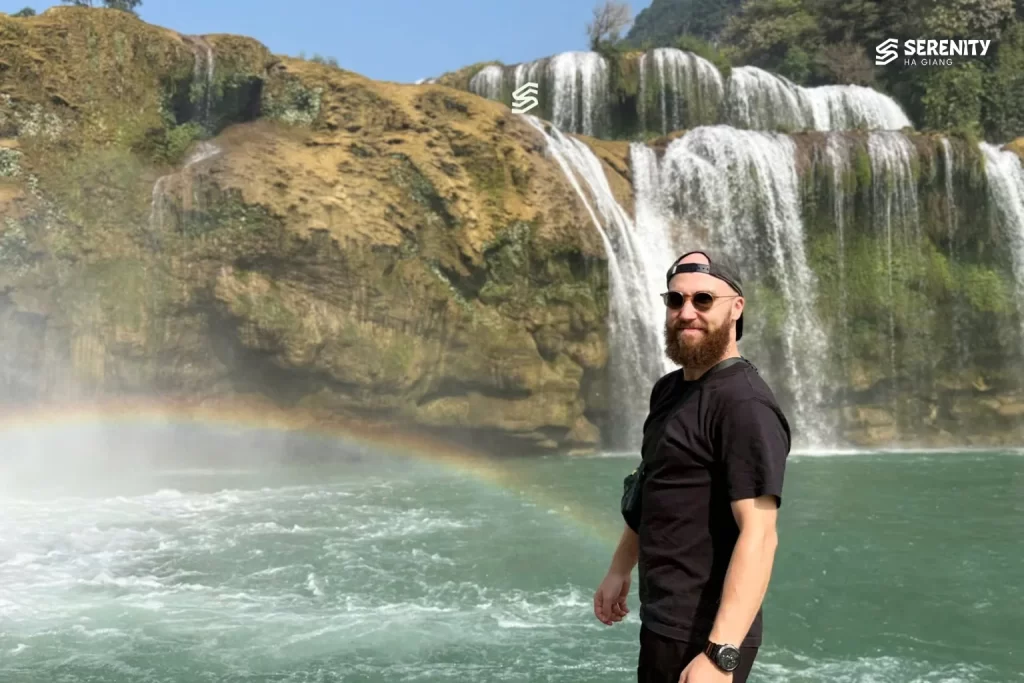
| Day 5 | Cao Bang ➔ Ban Gio | ~90 km | Ride to Angel Eye Mountain (Mat Than), about 50 km from Cao Bang City, where a hole through the summit frames the sky. The last stretch into the valley is narrow and easiest by motorbike. Continue to Ban Gioc Waterfall and Nguom Ngao Cave, and stay nearby. |
| Day 6 | Ban Gioc ➔ Cao Bang ➔ Hanoi | ~360 km | Return about 85 km to Cao Bang City, then take a bus about 275 km to Hanoi. The bus often starts at 16:00 – 17:00 (4 PM – 5 PM) |
How to adjust the Ha Giang Cao Bang itinerary if you have more or less than 6 days?
It is recommended to have a 5-Day or 7-day variation, which makes the itinerary most fulfilling. Here are some suggestions for each case:
If you have less time (4 to 5 Days):
With fewer than 6 days, you must cut out the deep geographic loops (like the northernmost tip of Ha Giang or the historical border tracks) and rely on a private car or a high-efficiency night bus strategy to eliminate dead transit days.
You can combine Days 1 and 2 by sleeping in Dong Van on the first night, as several operators do. In this case, you should prepare yourself for long riding hours.
If you have more time (7 Days):
Extra days allow you to slow down the breakneck pace, spend nights in traditional ethnic homestays rather than generic transit towns, and add highly rewarding detours.
Add a slower day around Dong Van, or split Day 5 so you reach Ban Gioc fresh. Both help in the rainy season, when delays are more likely.
💡Tips: You can also adjust the timeline depending on your travel mode:
| Mode of Travel | Recommended Timeline | Why? |
| Self-Driven Motorbike | 7 to 8 Days | Gives you buffer time for rain, flat tires, and physical fatigue from long hours on a bike saddle. |
| Easy Rider (Local Driver) | 6 Days (Original) | Highly efficient. Local drivers know the shortcuts, don’t get lost, and maintain a steady pace even in bad weather. |
| Private 4×4 / Jeep Tour | 5 to 6 Days | Cars move faster on flat stretches but slower on tight mountain passes. Eliminates the logistics of waiting for local buses. |

When is the best Time for a Ha Giang Cao Bang trip?
September to November is the only window that suits both regions, with good road conditions and comfortable weather for motorbike travel.
Below is a quick breakdown of each place’s weather conditions in the same period of time:
| Months | Ha Giang | Cao Bang |
| June-August | Wet season, slick roads and landslide risk | Strongest flow but muddy water and afternoon storms |
| September-October | Buckwheat flowers begin in late September | Blue water, golden rice, strong flow |
| Late October-mid November | Peak buckwheat colour | Blue water, drier weather |
| December-February | Cold, with fog on the passes | Moderate to low flow |
| March-April | Mostly dry riding | Lowest flow in March, rising in April |
For more in-depth Ha Giang weather, see Best time to visit Ha Giang.
Permits and Border Rules when visiting Ha Giang and Cao Bang
Both regions sit along the China border, so carry your original passport the whole trip.
- Ha Giang side: Since June 1, 2026, police are checking a foreigner permit for border areas, at around 250,000 VND ($10). Read this Ha Giang Permits and Travel Regulations guide to understand the details before starting your trip.
- Cao Bang side: Cao Bang City, Ban Gioc, Nguom Ngao, Pac Bo, and the main loop roads need no permit. Restricted trails near the border and approaches to border markers do require one, such as the Ban Gioc Waterfall.
Note: Ha Giang province merged into Tuyen Quang province on 1 July 2025, while Cao Bang was one of the provinces left unchanged by the 2025 reorganisation. Town and attraction names stay the same.
How much does a Ha Giang Cao Bang combo tour cost?
A combined Ha Giang and Cao Bang combo tour typically costs between $340 and $675 USD (8,500,000 to 16,500,000 VND) per person for a standard 4-to-5-day all-inclusive package.
Combo tour prices vary more by transport type, itinerary length, and whether you choose a group or private tour.
Estimated costs by transport type
Most combo tours span 5 days and 4 nights, typically starting in Hanoi or Ha Giang City and wrapping up in Cao Bang. Average per-person rates based on transport styles include:
- Self-Ride Motorbike: $300 to $410 USD (approx. 7,500,000 to 10,290,000 VND). You drive your own semi-automatic or manual bike following a local guide.
- Easy Rider (Motorbike Passenger): $310 to $440 USD (approx. 7,750,000 to 11,000,000 VND). An experienced local guide drives you, making this the most popular option for non-riders.
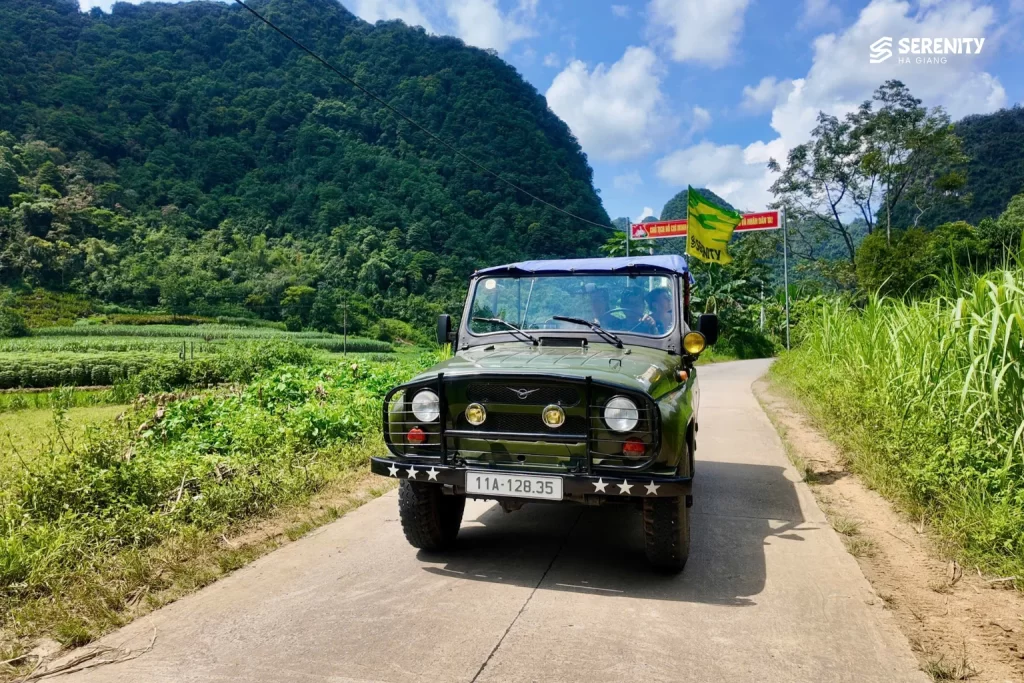
- Jeep Tour: $550 to $700 USD (approx. 13,500,000 to 18,500,000 VND). An open-air, rugged adventure package that carries a premium price tag.
What is typically included?
Most of the Ha Giang Cao Bang combo tour packages cover these things:
- Transport: Round-trip limousine or sleeper buses from Hanoi, plus local transport vehicles (motorbikes, fuel, or cars).
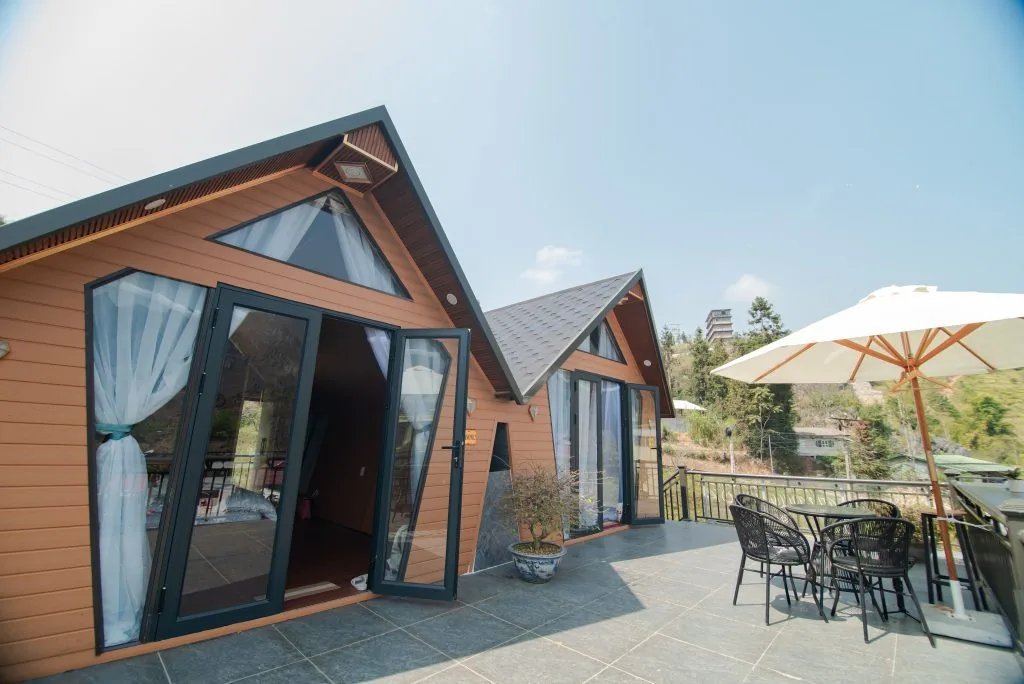
- Accommodation: A mix of local homestays and hotels (private or dormitory style).
- Meals: Depending on the operator, but commonly having full breakfast, lunch, and dinner options across the span of the trip.
- Activities: Depending on the operator, but commonly include boat rides on the Nho Que River (Ha Giang), admission tickets to Lung Cu Flag Tower (Ha Giang) or Ban Gioc Waterfall or Nguom Ngao Cave (Cao Bang).
What is typically not included?
Not all vendors offer the same services in one package; however, these listed things most commonly come with an extra charge:
- Private room upgrades
- Traditional cuisine, souvenirs, extra snacks, and drinks.
- Travel insurance
- For some operators, overnight sleeper buses to transit from Hanoi to Ha Giang, or Cao Bang to Hanoi might be out of the tour package.
Booking tips: Ask what each price includes. The biggest differences are the Hanoi bus transfers, private rooms versus shared homestays, entrance fees, and whether the guide is a separate person from your driver. There is a possibility of some hidden/extra fees for foreigner permits, room upgrades, etc., so try to be clear before paying.
What if I travel by myself without booking a tour?
If you plan to self-drive the Ha Giang Cao Bang combined trip, a 5- 6-day trip typically costs $120 – $285 (between 2.8 million and 6.6 million VND).
We prepared this expense breakdown to make it easier for you to plan and prepare the budget for the upcoming independent self-drive journey:
| Item | USD | VND |
| Bus, Hanoi → Ha Giang City | $10-17 | 250,000-450,000 |
| Motorbike rental, 6 days | $46-87 | 1,200,000-2,250,000 |
| One-way drop-off fee (for motorbike) | $25-40 | 600,000-1,000,000 |
| Rental deposit (refundable) | $190-580 | 5,000,000-15,000,000 |
| Fuel | $17-31 | 440,000-790,000 |
| Accommodation, 5 nights | $24-72$48-145 | Shared bed: 625,000-1,875,000Private room: 1,250,000-3,750,000 |
| Food and drinks | $28-93 | 720,000-2,400,000 |
| Ha Giang border permit | ~$10 | ~250,000 |
| Entry fees and parking | $9-12 | 240,000-320,000 |
| Bus, Cao Bang City → Hanoi | $10-19 | 250,000-500,000 |
| Travel insurance | Varies | Varies |
| Rain gear and phone mount | $3-8 | 80,000-200,000 |
| Cash withdrawal fees (2-3 withdrawals) | $2-12 | 50,000-300,000 |
| Contingency | Suggested 10-15% | Suggested 10-15% |
Note: The price is an estimated amount as of 2026.
How different are Ha Giang and Cao Bang?
Cao Bang and Ha Giang are both stunning northern Vietnamese border provinces; that’s why travellers often consider travelling to only one or both provinces. But in fact, they offer completely different landscapes, vibes, and travel experiences.
| Features | Ha Giang | Cao Bang |
| Scenery and highlights | Famous for dramatic, towering limestone karsts, deep canyons, and extreme mountain passes. Key highlights: Ma Pi Leng Pass, Nho Que River, Dong Van and Meo Vac. | Known for lush green rolling hills, peaceful turquoise rivers, and wide-open valleys. Key highlights: Ban Gioc Waterfall (on the China border), Nguom Ngao Cave, God’s Eye Mountain, and the historic Pac Bo Cave |
| Riding and driving difficulty | Ha Giang Loop is high-energy and technical – steep roads, narrow cliff-edge hairpin turns. | Cao Bang Loop is generally smoother, wider, and more beginner-friendly with flowing valley roads. |
| Atmosphere and crowds | A high-energy, social backpacker hub. It features lively homestays, large tour groups, and a booming party/campfire culture. | Quieter, more relaxed, and deeply off the beaten path once you leave the main tourist spots. It feels more like a slow-paced nature and culture escape |
| Local culture and communities | Dominated by the Hmong people, alongside Dao, Tay, and Lo Lo groups | Predominantly home to Tay and Nung communities (plus Hmong) |

Conclusion: Is a Ha Giang Cao Bang combined itinerary worth it?
A Ha Giang Cao Bang combined itinerary trades the Loop’s southern return leg for Me Pia Pass, Pac Bo, Angel Eye Mountain, and Ban Gioc Waterfall. It works as a one-way trip of 5-7 days, best between September and November, with buses at both ends and your passport always on hand. The main costs of combining are extra days and the logistics of a one-way route.
If you are ready and have 5 days to go explore the natural beauty on the road of Ha Giang & Cao Bang, then our Ha Giang – Cao Bang Legend Journey 5D4N is made for you! Travel in a small group with a carefully planned itinerary to ensure you get an in-depth experience of each location. Plus, you can leave all the stress behind, since the tour already covers transportation, accommodation, meals, and easy rider; all you need to do is stay healthy and start touring!
FAQ
Q: Can I fly a drone at Ban Gioc Waterfall?
No. The Vietnam Tourism portal states that drones are prohibited at the falls, and drone use anywhere near the frontier needs clearance in advance. Photographing military installations and border posts is also not allowed.
Q: Should I do Ha Giang first or Cao Bang first on a combined trip??
Riding Ha Giang first and finishing in Cao Bang is the superior direction. Ha Giang involves the most technically demanding mountain passes (Bac Sum, Tham Ma, Ma Pi Leng), which are best tackled early when your energy and concentration are highest. Finishing in Cao Bang provides a relaxing, scenic wind-down through gentle valleys, waterfalls, and caves before returning to Hanoi.
Q: How long should I spend at Pac Bo?
Plan about 2-3 hours to walk the main area at a relaxed pace, including Coc Bo Cave, Lenin Stream, and Karl Marx Mountain. North-Vietnam.com reports the site opens daily at 8 AM.
Q: How do I manage large luggage on a one-way Ha Giang to Cao Bang trip?
You have two practical options:
1. Leave large bags in Hanoi: Store suitcases at your Hanoi hotel or hostel, carrying only a 20–25L backpack on the motorbike for the 6-day loop.
2. Luggage Forwarding Service: Ask your Ha Giang tour operator or bus provider to ship your large suitcase directly to your final hotel in Cao Bang City via inter-provincial bus (usually costing 100,000-150,000 VND (~$ 3.5- $ 6 USD) per bag).
Q: Can I rent a motorbike in Ha Giang and drop it off in Cao Bang?
Yes, but only through specialized cross-provincial rental operators (such as QT Motorbikes or Style Motorbikes). You must arrange this in advance and pay a one-way drop-off fee of roughly $25 to $40 USD (600,000-1,000,000 VND), which covers shipping the bike back to Ha Giang by local bus.