
Cao Bang
Ban Gioc Waterfall Guide: How to Get There, When to Go, and What Else to See
 Tristan Do
Co-founder & Marketing


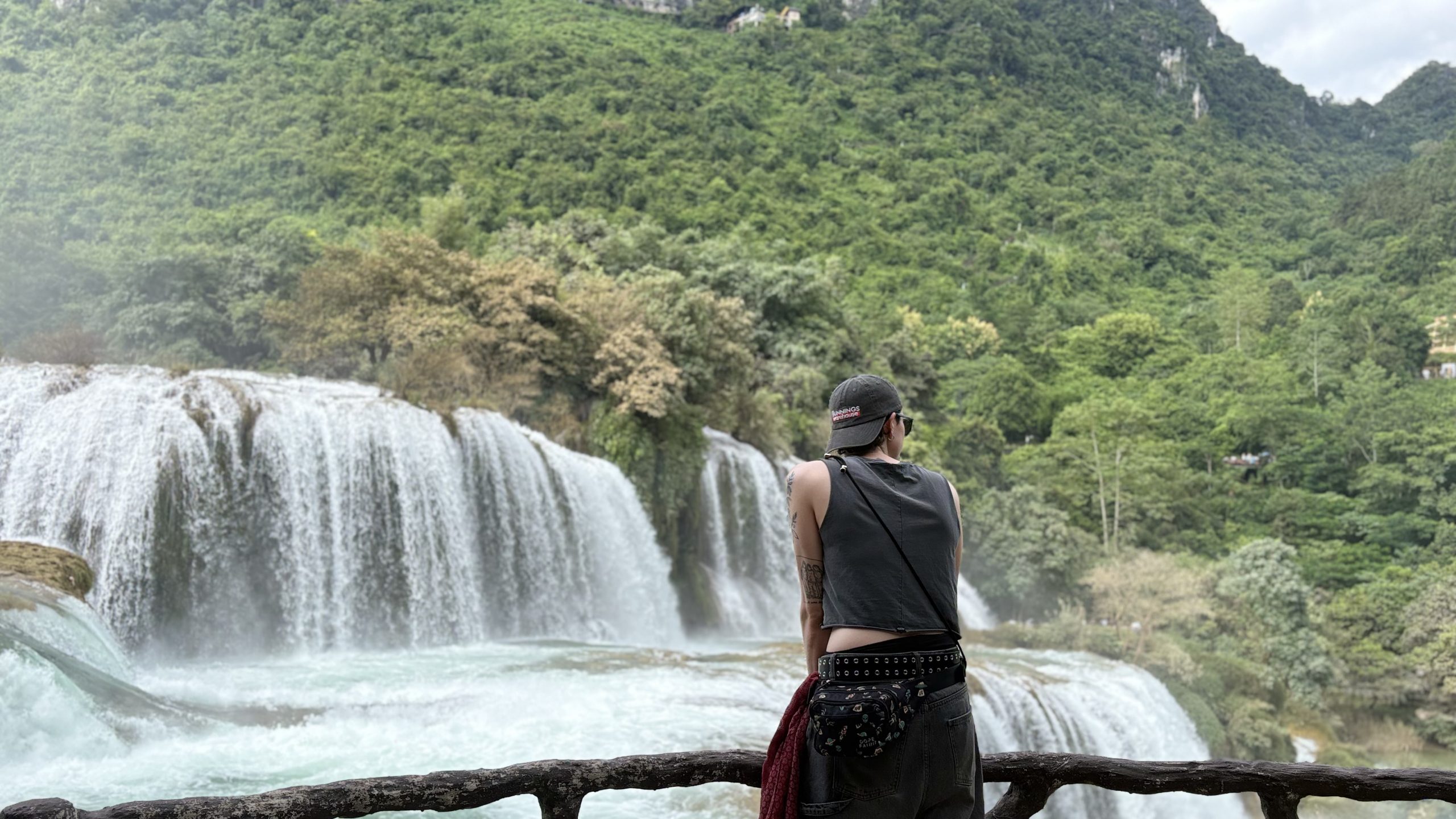
You’ve seen the photos. Now you’re staring at a map of northern Vietnam, wondering how on earth you actually get there, and whether it’s worth the trek.
We reckon it is. But Ban Gioc sits a good 340 km from Hanoi, and that’s where most first-time plans come unstuck. Do you squeeze it into a day trip? Will the falls be thundering or a trickle when you arrive? And what do you do once you’re up there?
We’re a local team who’ve been guiding travellers through Ha Giang and Cao Bang for years, so we’re no strangers to these questions. This Ban Gioc waterfall guide covers everything we’d tell a friend: how to get there, when to go, what it costs, and the hidden gems most visitors drive straight past.
Ban Gioc at a glance
- Where: On the Quay Son River, right on the Vietnam–China border in Cao Bang province, about 340 km north of Hanoi.
- Size: Roughly 30 metres tall and 300 metres wide. Vietnam’s official tourism site calls it the world’s fourth-largest waterfall on a national border.
- Time needed: At least one night nearby. Two to three days is the sweet spot.
- Best months: September and October, for full falls and golden rice fields.
- Entry: 45,000 VND per adult. The bamboo raft costs extra.
Is Ban Gioc the largest waterfall in Vietnam?
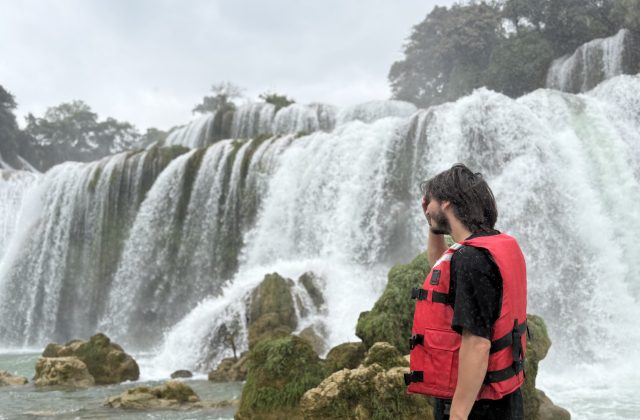
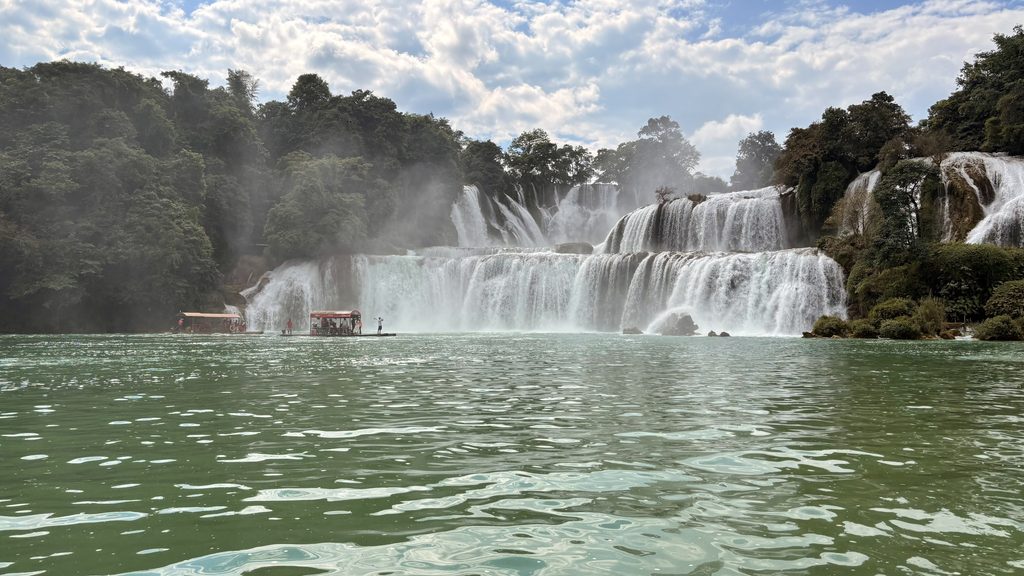
You’ll often see Ban Gioc billed as the largest waterfall in Vietnam, and in terms of sheer width, we reckon nothing else in the country comes close. It’s famous for how wide it is rather than how tall: the water splits into several tiers and spreads across roughly 300 metres of rock, like a white curtain draped over the jungle.
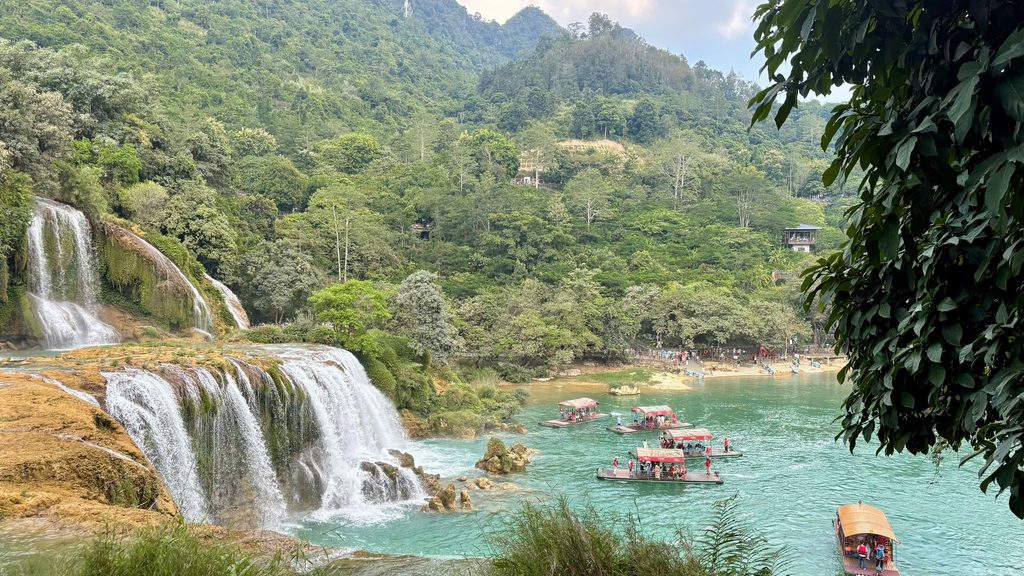
Measurements vary wildly from site to site, so take exact figures with a pinch of salt. The most reliable claim comes from Vietnam’s official tourism site, which describes Ban Gioc as the world’s fourth-largest waterfall on a national border. In other words, only three border waterfalls on the planet are bigger. It also sits inside the UNESCO-listed Non Nuoc Cao Bang Global Geopark, so the caves, karst valleys and rivers around it are every bit as photogenic.
How long should you spend at Ban Gioc?
We advise at least one night in the area, and ideally a 2–3 day trip.
You can do Ban Gioc as a day trip from Hanoi, but you’ll spend around 12 hours on the road for an hour or two at the falls. That’s a lot of motorway for one view, and you’ll miss everything that makes the area special.
- Hanoi Old Quarter to Cao Bang city: Roughly 270 km, 6–8 hours by sleeper bus from My Dinh station. Most travellers take the night bus, which saves a day and a night’s accommodation.
- Cao Bang city to Ban Gioc: About 85 km, 2–3 hours by car or motorbike, with local buses too.
Got 2 days? Take the night bus up, spend day one cruising down to the falls through the valleys, sleep near the border and catch Ban Gioc early the next morning before the crowds arrive.
Got 3 days? Add Nguom Ngao Cave, Phong Nam Valley and Angel Eye Mountain, and you’ve ticked off the classic Cao Bang Loop at your own pace.
Got 4–5 days? Combine Ban Gioc with the Ha Giang Loop. Ride Ha Giang first, head east into Cao Bang and finish at the falls, without doubling back to Hanoi.
When is the best time to visit Ban Gioc?
The falls run all year, but they change a lot with the seasons:
| Months | What the falls look like | Good for |
| September – October ⭐ | Still full and powerful, with golden rice fields all around | Pretty much everyone. This is the sweet spot |
| June – August | The most water: a thundering wall of white, very green valleys | Seeing the falls at full power. Pack rain gear |
| November – February | Calmer and clearer, cool and misty mornings | Quieter visits and moody photos |
| March – May | Lower water, warm weather, good roads | Riders and budget-friendly travel |
Good to know for the dry months: the flow is partly controlled by an upstream dam and is usually strongest from late morning into early afternoon. If you’re visiting between November and May, ask your guide or homestay what time the water is running that day.
Beat the crowds: tour buses from Hanoi tend to roll in around midday. Get there before 9 am or after 3 pm, and you’ll have the viewing platform pretty much to yourself.
How to get to Ban Gioc Waterfall
By sleeper bus and local transport. The most budget-friendly option. Sleeper buses from Hanoi to Cao Bang cost roughly 200,000–400,000 VND. From Cao Bang city, local buses to Ban Gioc cost around 80,000 VND and run from early morning to mid-afternoon, or a private car costs roughly 800,000–1,200,000 VND one way.
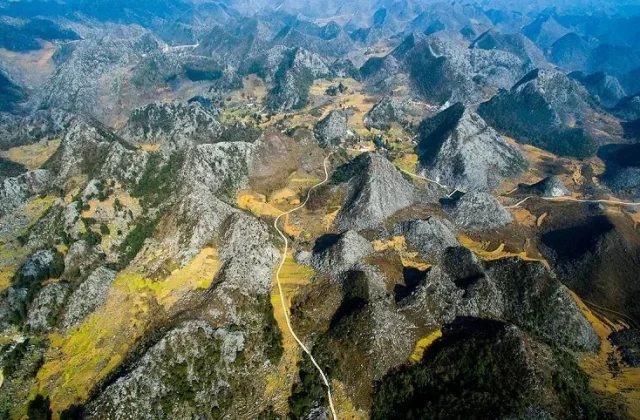
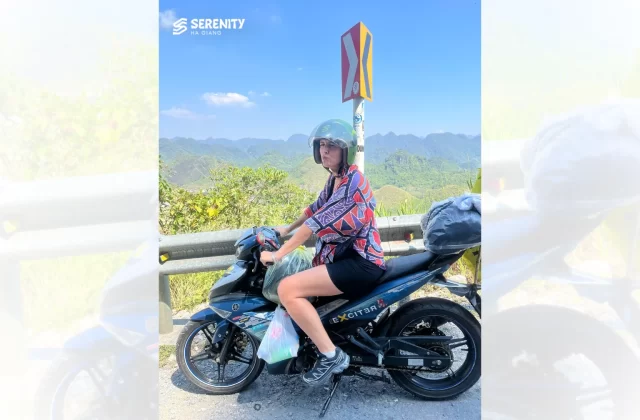
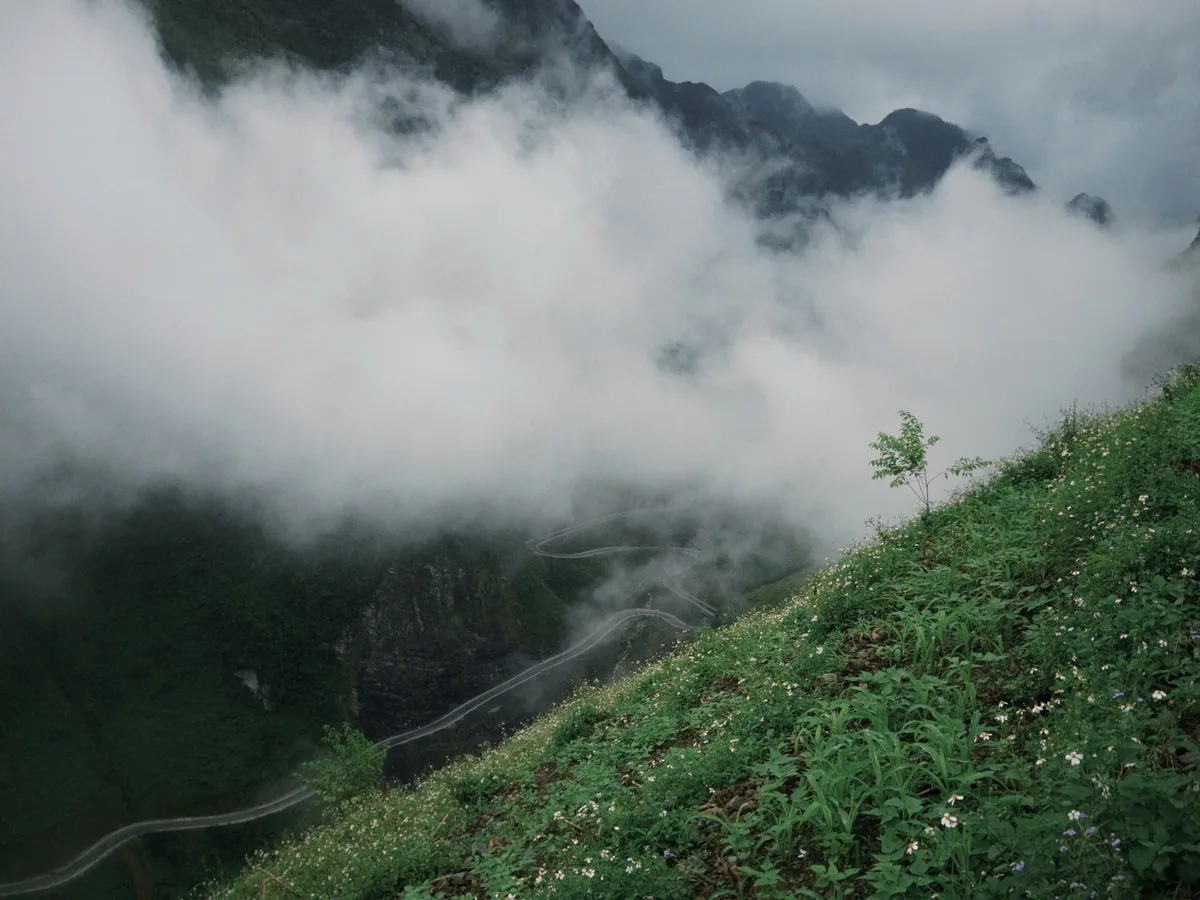
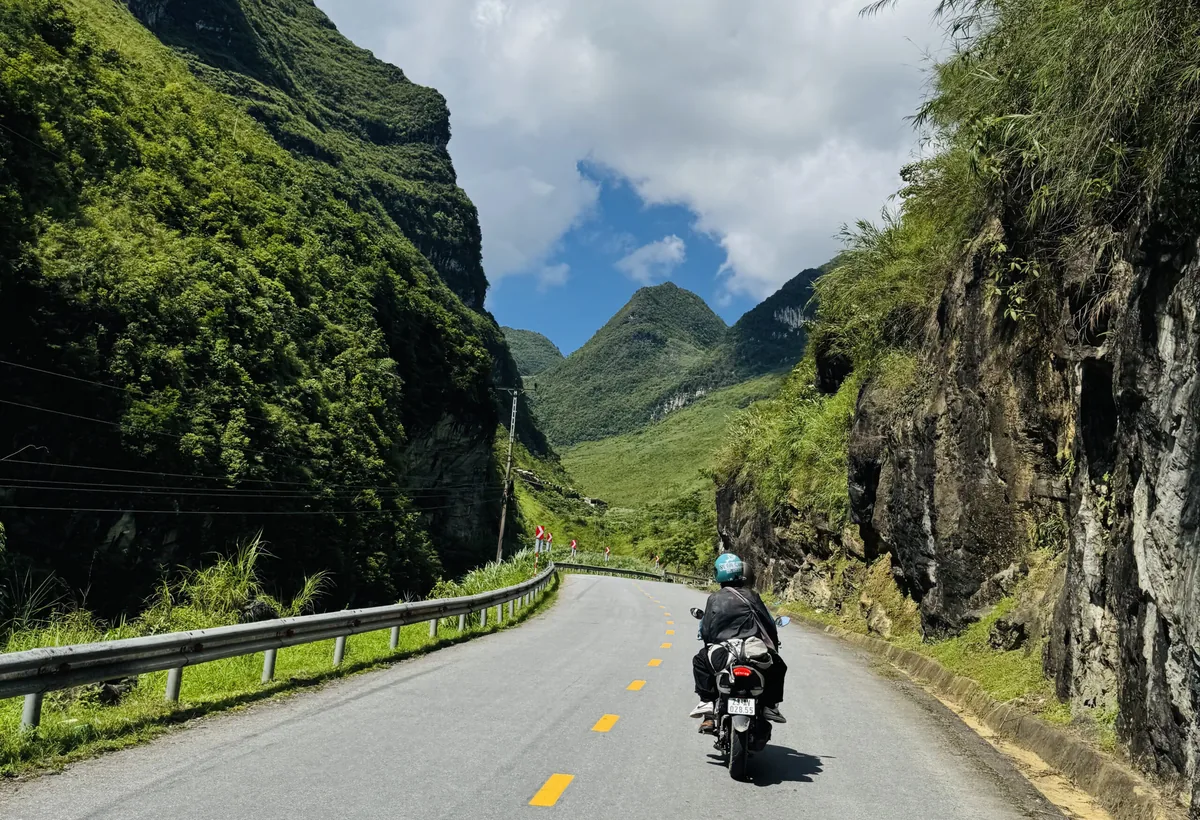
By motorbike. The ride to Ban Gioc is a scenic road trip in its own right, over Ma Phuc and Khau Coc Cha passes, with hairpin bends winding through karst peaks and river valleys dotted with bamboo water wheels. The roads are paved, and a 125cc semi-automatic is ideal. Plan to arrive before dark, and add about 50% to whatever Google Maps tells you, because you’ll want to stop for photos around every corner.
By guided tour. If you’d rather soak up the views than read the map, a guided tour or Easy Rider (a local rides, you sit back as passenger) takes care of transport, homestays and timings. More on that in our tips below.
What to do at Ban Gioc
1. Ride a bamboo raft to the foot of the falls
This is the must-do. Local bamboo rafts take you across the Quay Son River right up to the base of the falls, close enough to feel the spray on your face. It’s the closest legal view you can get, because the far side of the water belongs to China. Rides last about 10–20 minutes and cost around 50,000–100,000 VND per person. Pop your phone in a dry bag and enjoy getting a little soggy.
2. Get a bird’s-eye view from Truc Lam Phat Tich Pagoda
Perched on Phia Nham Mountain around 500 metres from the falls, the pagoda is a short climb up and gives you a view of every tier, plus the river and border hills behind. If you only take one photo of Ban Gioc, take it from here.
3. Explore Nguom Ngao Cave
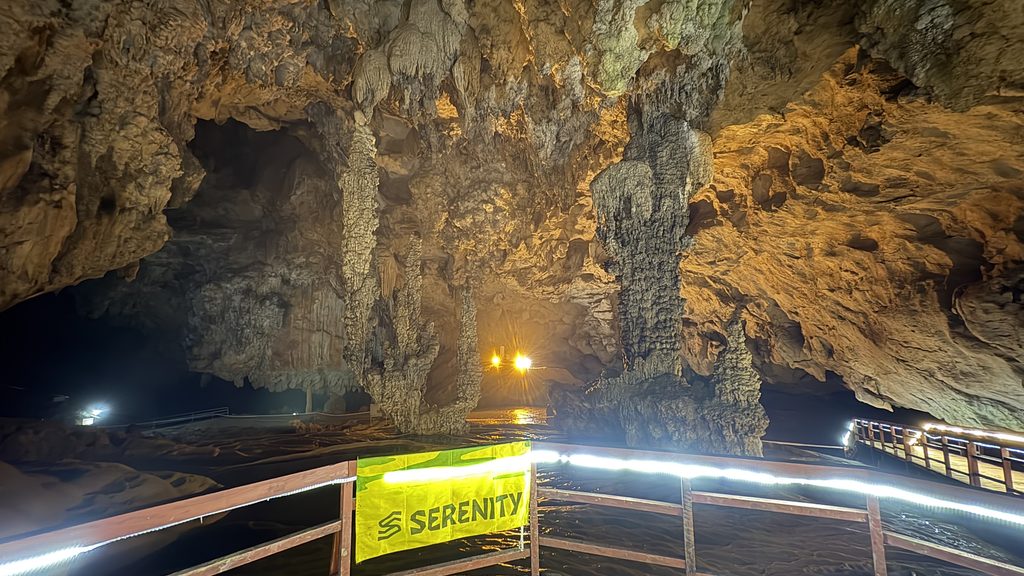
Around 10 km from the falls, Nguom Ngao is a limestone cave packed with stalactites and stalagmites. The lit route runs about a kilometre and takes 45–60 minutes, with entry at 45,000 VND. It’s a brilliant dry-weather backup if the rain rolls in.
4. Stay over in Khuoi Ky Stone Village
This Tay village of stone stilt houses sits within walking distance of the falls. Homestays cost around 150,000–300,000 VND a night and put you in the perfect spot to see Ban Gioc at sunrise, before anyone else is up.
What to eat around Ban Gioc
Cao Bang’s food scene is a hidden gem in its own right:
- Trung Khanh chestnuts: Ban Gioc’s home district is famous for them. Grab a bag roasted at the roadside in autumn and winter, and stuff your case with a few more to take home.
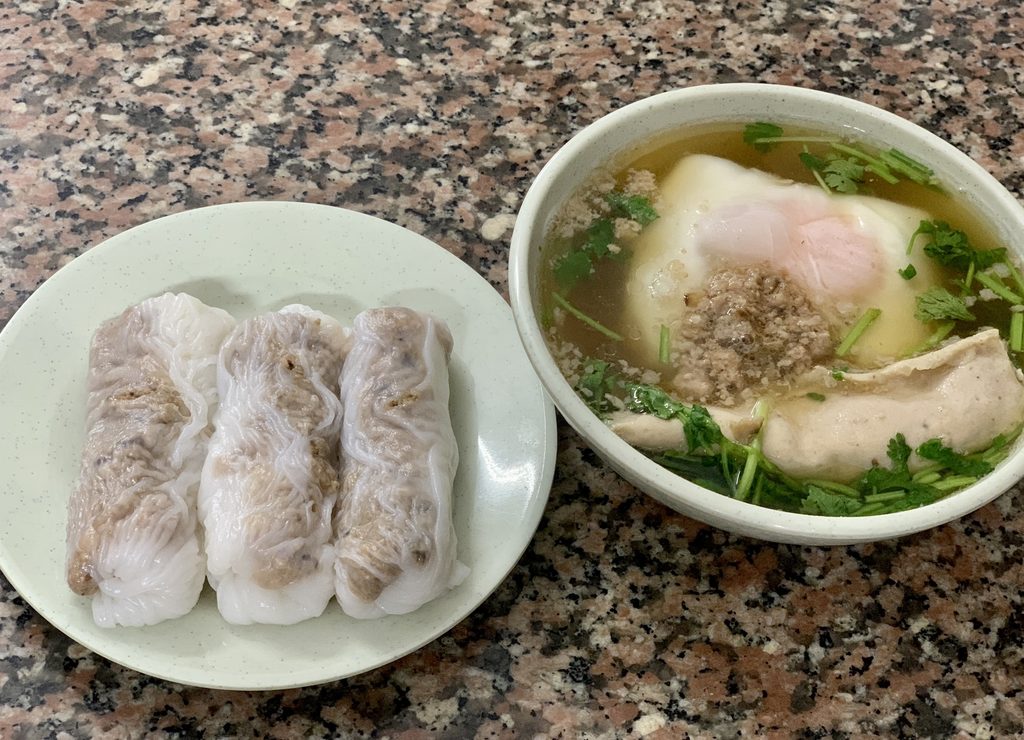
- Banh cuon with bone broth: Cao Bang’s take on steamed rice rolls, served in hot broth rather than with a dipping sauce. Head out early, as the best stalls sell out by 8 am.
- Seven-flavour roast duck: Crispy, fragrant and stuffed with mac mat leaves. This is the dish locals big up the most.
- Pho chua (sour pho): Cold noodles with roast pork and a tangy sauce, perfect after a hot morning on the road.
If you can, ask your homestay host to cook dinner. A home-cooked Tay meal beats anything you’ll find in a restaurant.
Ban Gioc for every type of traveller
For nature lovers, head to Phong Nam Valley early in the morning, when mist rises off the Quay Son River and the bamboo water wheels are turning. Come in September or October for golden rice fields and the falls at full power.
For adventure seekers and bikers, take on Ma Phuc and Khau Coc Cha passes on a 125cc semi-automatic, then stretch your ride into the full 3–4 day Cao Bang Loop. The roads are quieter than Ha Giang’s and just as breathtaking. Plan to arrive before dark.
For families, go by car rather than motorbike, ride the gentle bamboo raft and add Nguom Ngao Cave, which is great if it rains. Children under 1 metre tall get in free, and those between 1 and 1.3 metres pay 20,000 VND.
For photographers, shoot sunrise from Khuoi Ky and the bird’s-eye view from Truc Lam Pagoda. Arrive before 9 am to beat the tour buses, and come in early autumn for golden rice or in winter for mist.
For culture lovers, stay with a Tay family in Khuoi Ky and ask your host about an evening of their singing with the tinh lute, a tradition UNESCO recognised in 2019. On market day, swing by Trung Khanh market in the morning, and if you’re visiting early in the year, look out for the Nang Hai festival in Quang Hoa district, which is held every two years.
What to pack for Ban Gioc
First things first: leave the drone at home. The falls sit right on the border, and flying one here isn’t allowed. Here’s what you should pack:
- A dry bag, so your phone and camera stay safe on the raft.
- Cash in dong. The ticket kiosk, rafts, and most homestays only take cash, so withdraw money in Cao Bang city before you set off.
- Your passport. You’re in a border area, and you may be asked for ID.
- A light rain jacket, even in the dry season, because mountain weather changes fast.
- Layers for winter. From December to February, mornings on the passes can drop below 10°C.
- Comfy shoes with grip for the pagoda steps and slippery riverbanks.
Our top tips for planning your Ban Gioc trip
1. Don’t rush it: build Ban Gioc into a multi-day route.
The falls are the headline act, but the valleys, caves and villages around them are what make a Cao Bang trip unforgettable. Our 2-day Cao Bang Hidden Trail gets you to Ban Gioc at 8:30 am on the second morning, after a night nearby, so you’re on the raft before the crowds, and the bamboo raft is included.
2. Combine Cao Bang with Ha Giang.
If you’ve come all this way north, why not see both? Our Ha Giang to Cao Bang Legend Journey covers the Ha Giang Loop’s mountain passes and finishes at Ban Gioc in five days, with no return trip to Hanoi in the middle. It’s the ultimate northern Vietnam road trip.
3. Check conditions after heavy rain.
Storms can cause landslides on mountain roads from June to August. If one has just passed, have a quick chat with someone local before you set off. Our team is always happy to help.
Ready to see Ban Gioc for yourself?
From thundering white tiers and bamboo rafts to roast duck and sunrise over stone villages, Ban Gioc delivers far more than a single photo stop. Give it a couple of days, and you’ll see why it’s the crown jewel of Cao Bang.
Explore our Cao Bang tours, or ask a local on WhatsApp, and we’ll help you plan the perfect trip.
FAQ
How long should I spend at Ban Gioc Waterfall?
At least one night in the area, so you have time for the raft, the pagoda and Nguom Ngao Cave without rushing.
How much does it cost to visit Ban Gioc?
Entry is 45,000 VND per adult. The bamboo raft costs around 50,000–100,000 VND per person, and Nguom Ngao Cave is 45,000 VND.
Can I swim at Ban Gioc?
No, swimming at the falls isn’t allowed, but the raft gets you wonderfully close.
Is Ban Gioc worth visiting in the dry season?
Yes. The water is calmer and clearer, and the falls are still wide and beautiful. Aim for late morning, when the flow is usually strongest.