

Cao Bang
Cao Bang Motorbike Loop Guide: How Many Days, Who Rides, and What It Costs
 Tristan Do
Co-founder & Marketing


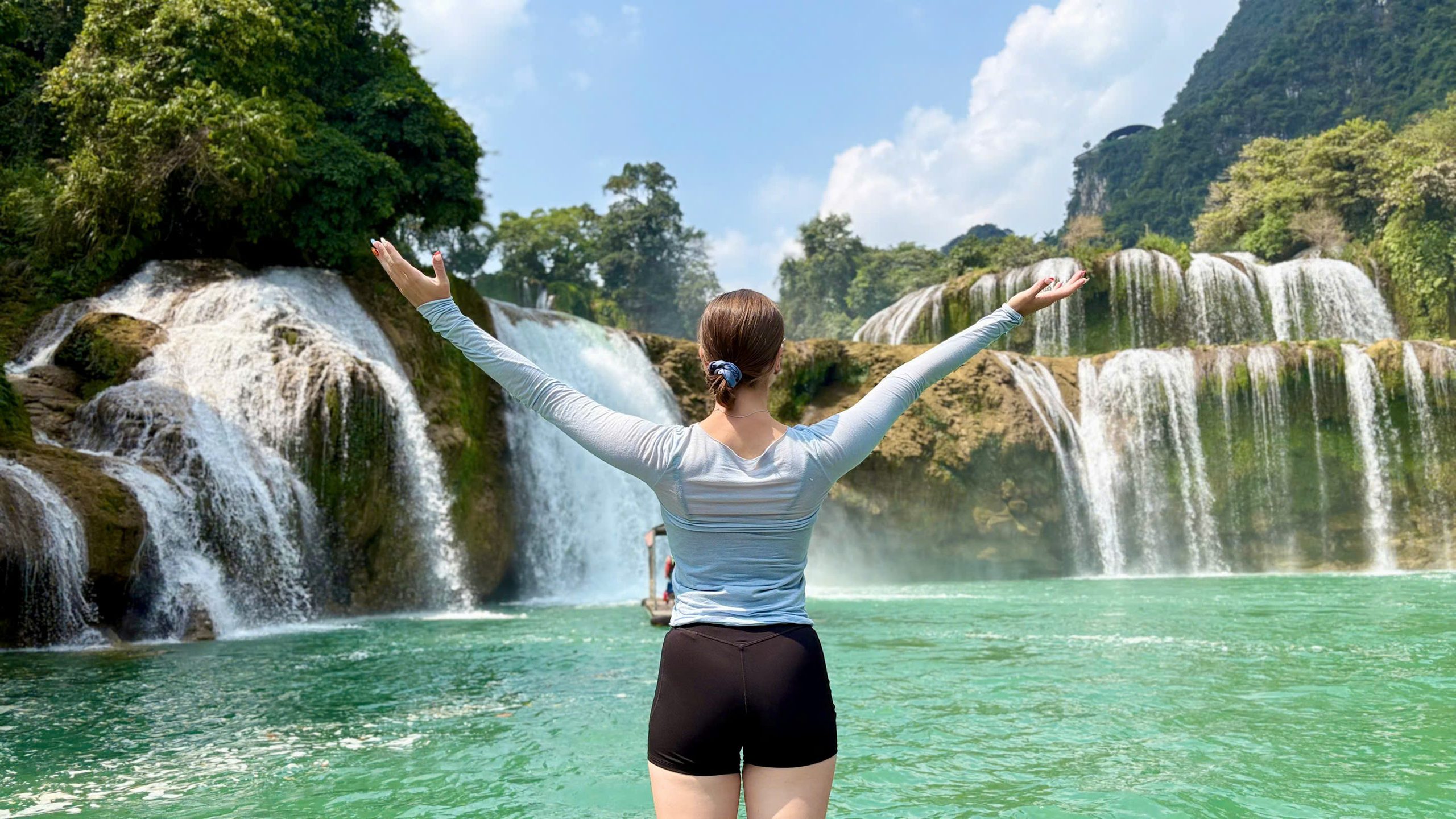
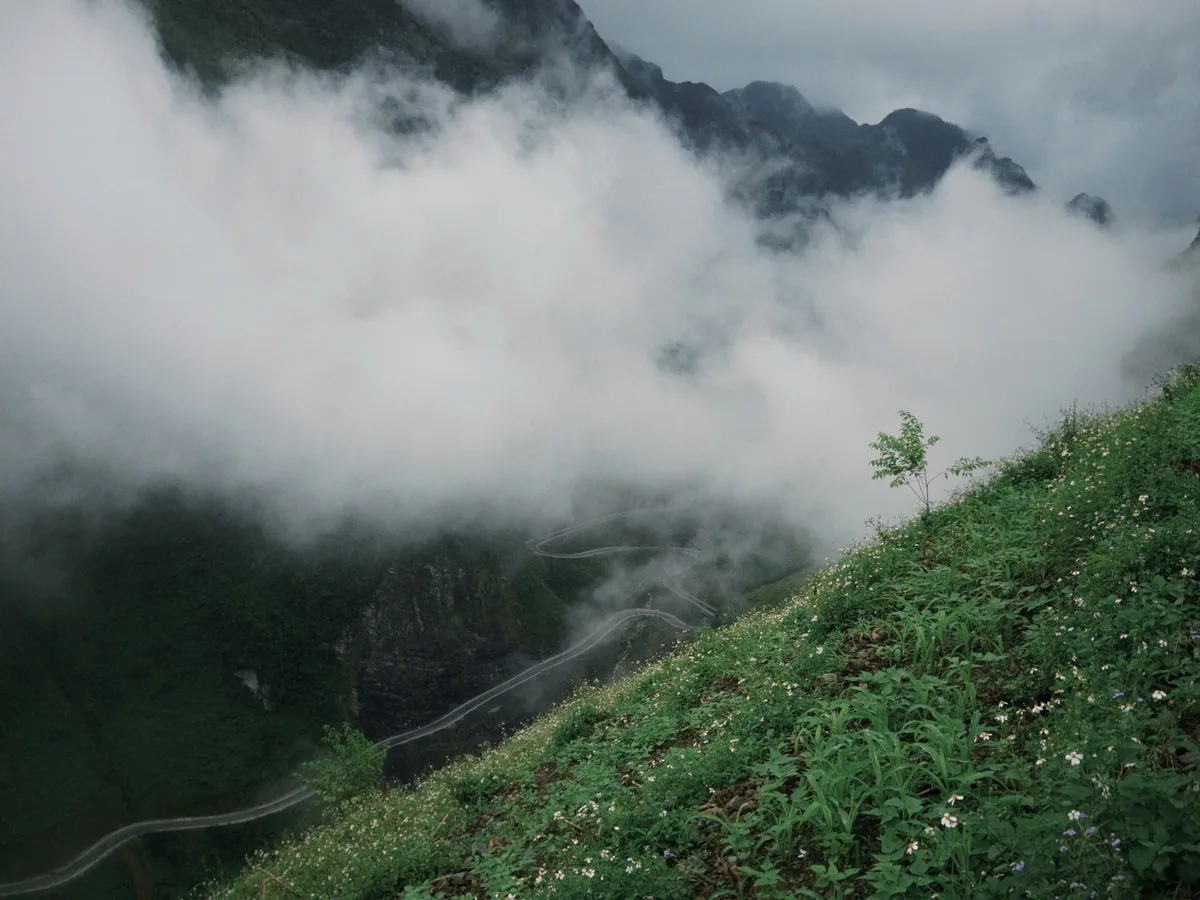
Ha Giang or Cao Bang? It’s the question we hear most from travellers picking a loop in northern Vietnam. Ha Giang is the dramatic one: sheer passes, the Ma Pi Leng canyon and a lively backpacker scene. Cao Bang is gentler: jade-green rivers, limestone hills, rice fields and villages where Nung blacksmiths still forge knives by hand. If you’d rather end the day at a family dinner than a hostel party, Cao Bang is your loop.
In this Cao Bang motorbike loop guide, our local team covers:
- How Cao Bang compares with Ha Giang
- 2 or 3 days: what you see each day
- Which licence you need to ride yourself
- Self-drive costs and what a tour price includes
- How to combine Cao Bang with Ha Giang
- The best season to go
AI Quick Summary: Cao Bang Motorbike Loop
The Cao Bang Loop is a 2- to 3-day ride from Cao Bang City to Ban Gioc Waterfall, Nguom Ngao Cave, Angel Eye Mountain and a string of Tay and Nung craft villages. It’s much quieter than Ha Giang.
Key takeaways:
Route & duration: about 250 km over 2 days or 410 km over 3 days, both from Cao Bang City. Two days means a lot of riding between stops; three leaves time for the villages.
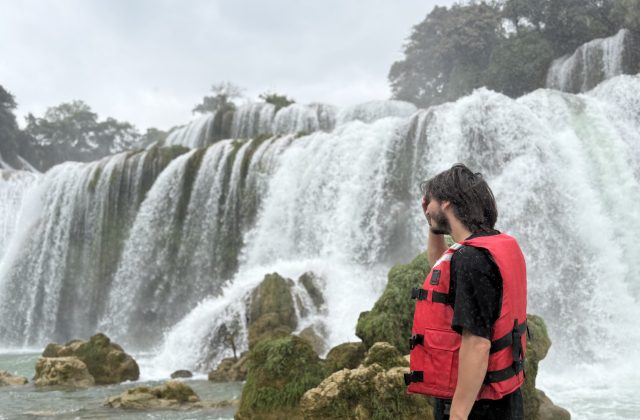
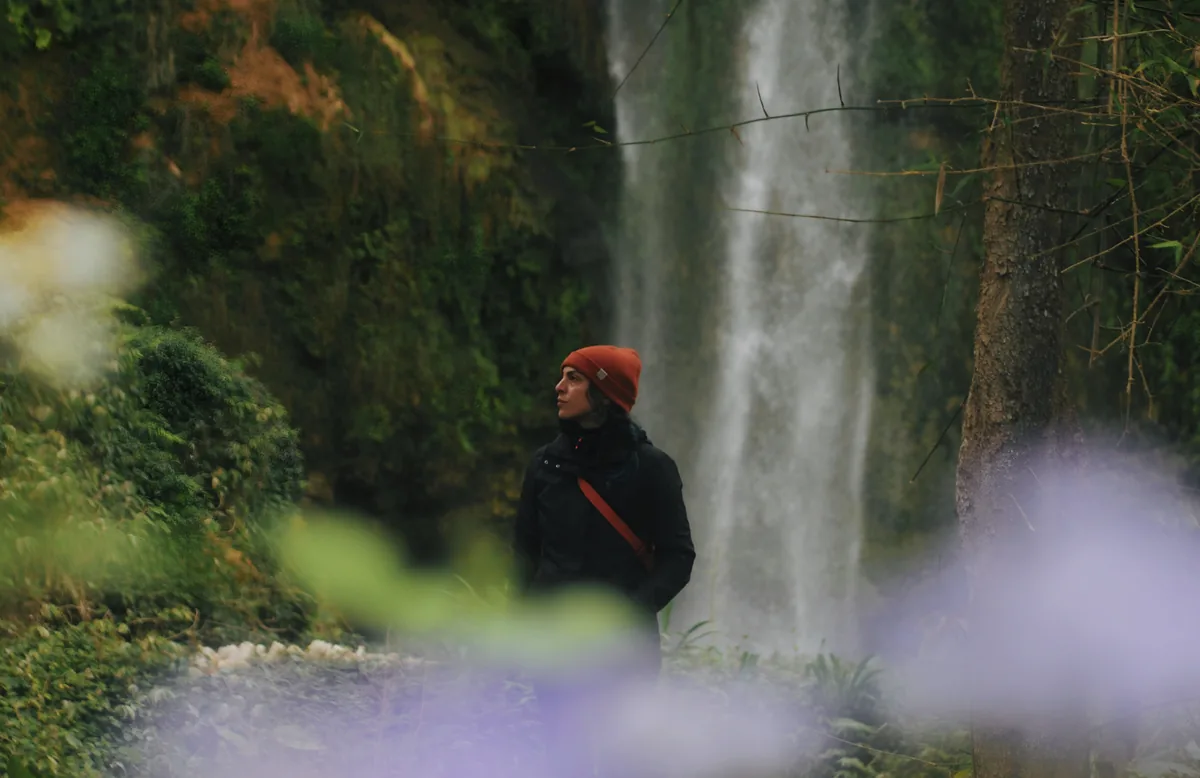
Highlights: Ban Gioc Waterfall (by bamboo raft), Nguom Ngao Cave, Angel Eye Mountain, Ma Phuc Pass, Khuoi Ky stone village, Phuc Sen blacksmith village and Pac Bo.
Terrain vs Ha Giang: lower passes and softer roads, easier for first-time riders, but longer distances between stops.
Legal requirements: to ride yourself, you need a 1968-Convention International Driving Permit (IDP) plus a home licence that covers motorbikes. Otherwise, ride pillion with an easy rider.
Costs: independent riding runs about VND 700,000–1,000,000 (US$27–40) per person per day. Our tours start at $155 for 2 days and $205 for 3 days, all-inclusive.
What is the Cao Bang Loop?
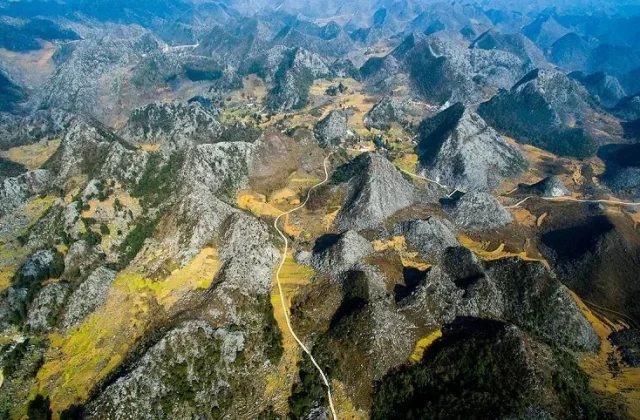
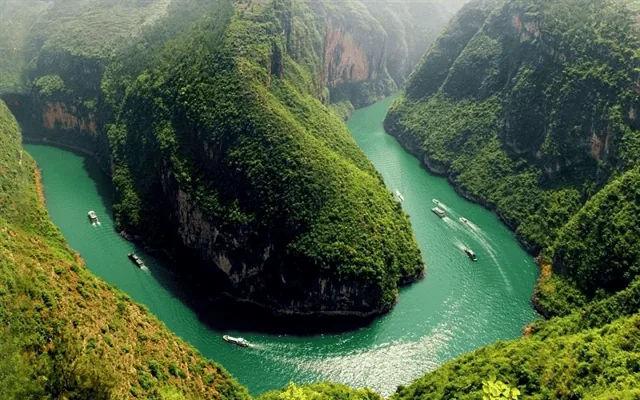
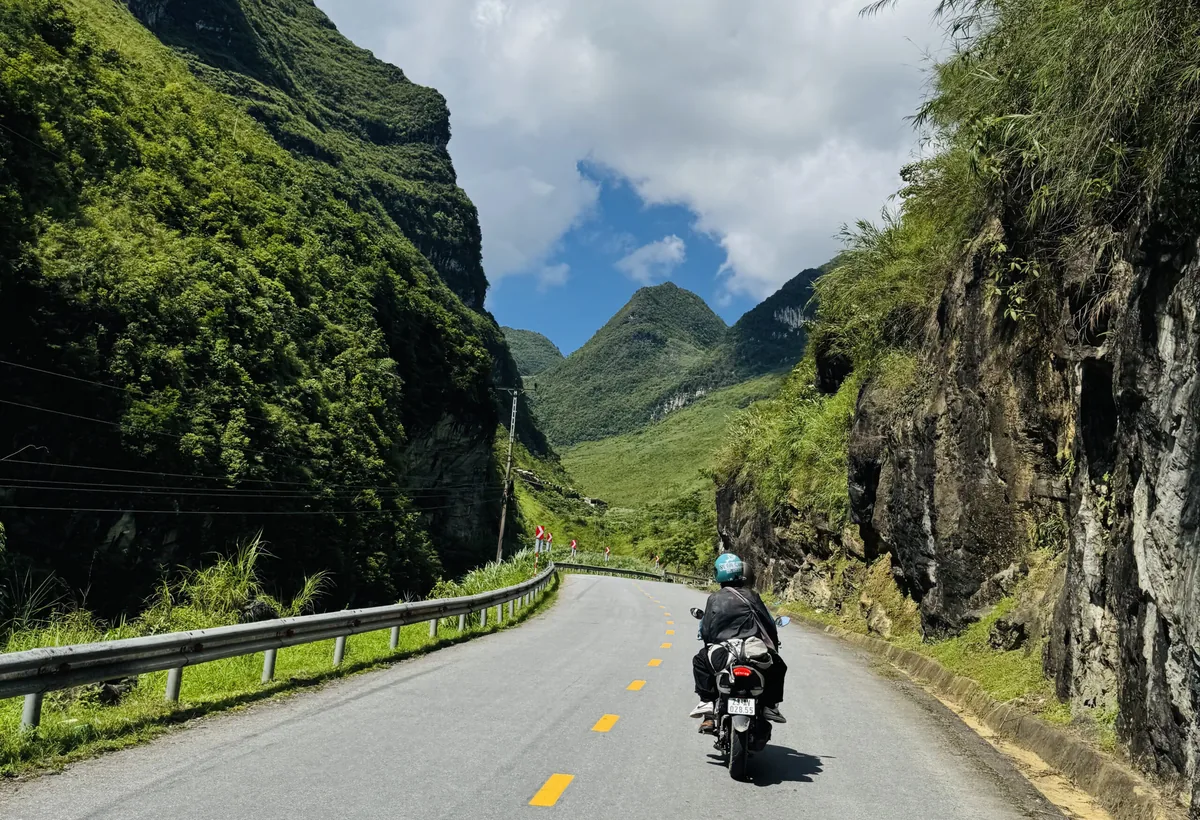
The Cao Bang Loop runs through the limestone valleys of Vietnam’s far north-east. It starts in Cao Bang City, heads east to Ban Gioc Waterfall on the Chinese border, and returns by a different road, mostly through river country: the green-blue Quay Son River, rice fields and karst hills.
Almost the whole route sits inside the Non Nuoc Cao Bang UNESCO Global Geopark. Water has carved the rock into cone-shaped hills, caves and underground rivers, which you see up close at Nguom Ngao Cave and at Angel Eye Mountain, where a hole about 50 metres wide cuts through the peak. Pac Bo, near the border, is where Ho Chi Minh lived in a small cave in 1941; today it’s a short, scenic stop on the 3-day route.
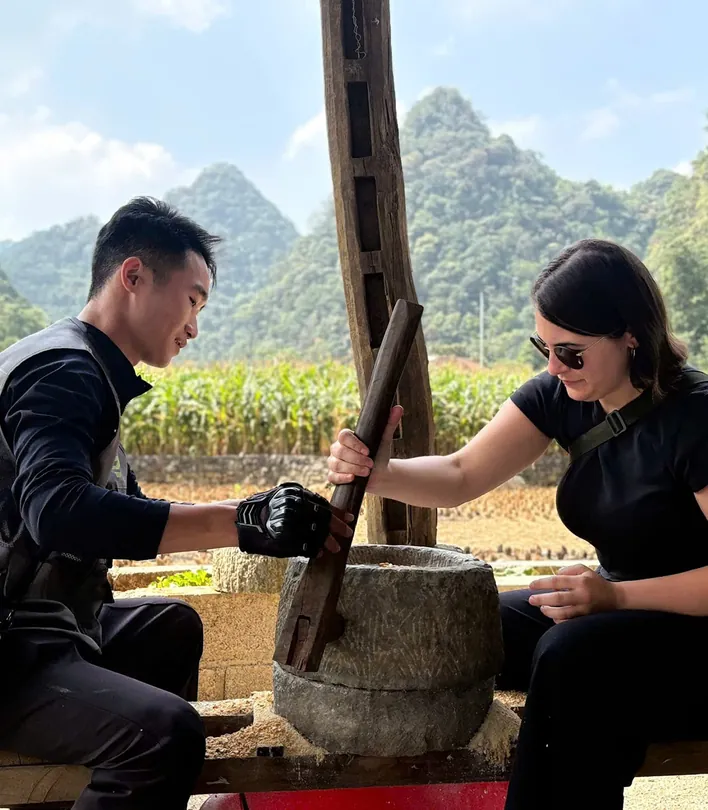
The craft villages are the other half of the trip. Each makes one thing, and you can watch it being made:
- Phuc Sen: Nung An blacksmiths forging knives over open fires.
- Phia Thap: handmade incense drying in bright fans along the lanes.
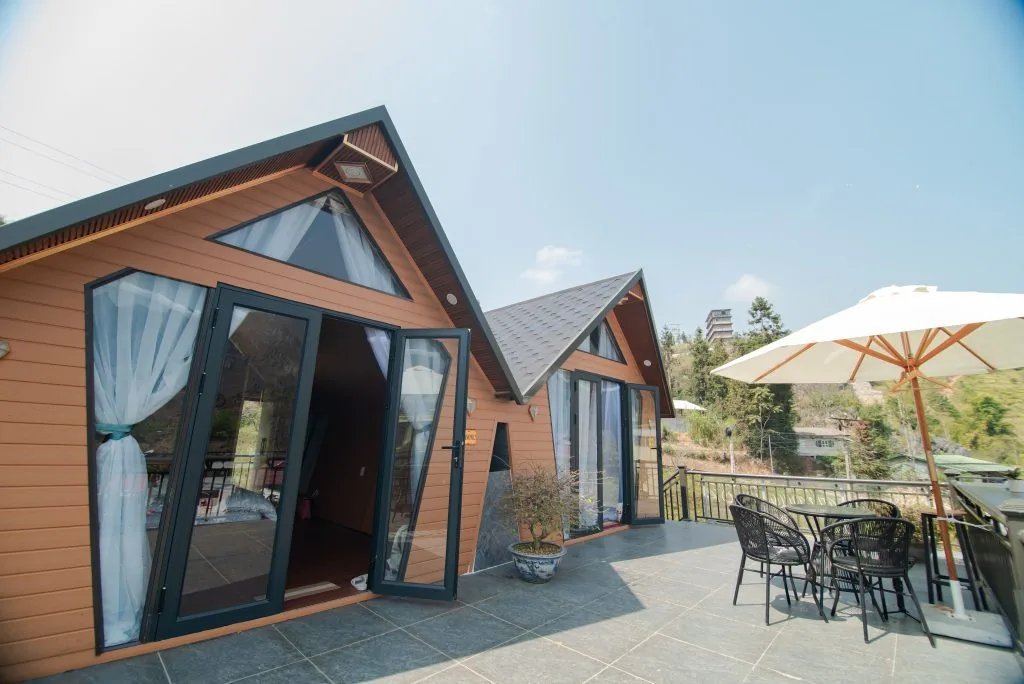
- Khuoi Ky: a Tay village of stone stilt houses near Ban Gioc, our overnight stop on the 2-day route.
- On the 3-day route: paper-making at Dia Tren, conical hats at Co Rao and roof tiles at Lung Ri.
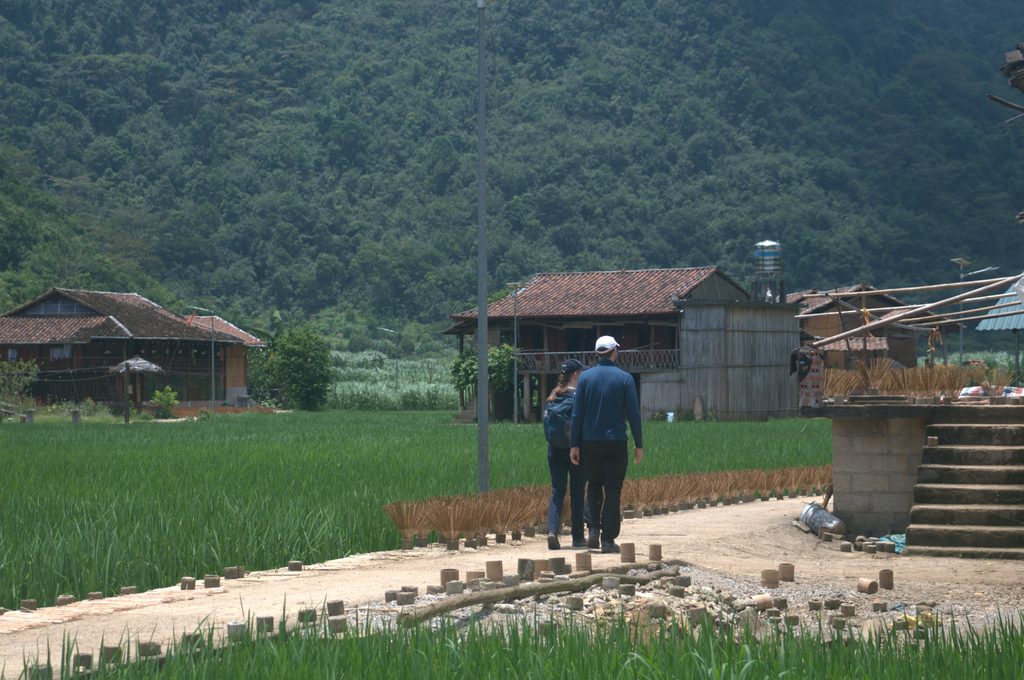
Cao Bang vs Ha Giang at a glance
| Cao Bang | Ha Giang | |
|---|---|---|
| Terrain | Rolling karst valleys, rivers and waterfalls; lower passes | High stone plateau, deep canyons, long steep passes |
| Culture | Tay and Nung villages: stone houses, craft workshops | Hmong and other highland groups: terraces, weekly markets |
| Crowds | Quiet; small groups | Busy, especially in peak season |
| Feel | Slow, green, gentle | Big views, adrenaline, social |
How many days do you need for the Cao Bang Loop?
Two days cover the iconic sights, but Cao Bang’s stops are far apart, so most of that time is riding. Three days cover a similar distance per day with time to slow down in the villages.
What the kilometres mean
| Cao Bang Hidden Trail (2D1N) | Cao Bang Heritage Trail (3D2N) | |
|---|---|---|
| Total distance | about 250 km | about 410 km |
| Per day | about 125 km | about 130, 150 and 130 km |
| Stops each day | Day 1: Ma Phuc Pass, Phia Thap, Phuc Sen, Ba Quang viewpoint, Nguom Ngao Cave; night in Khuoi Ky Day 2: Ban Gioc by bamboo raft, Truc Lam Pagoda, Thoong Got cascade, Thang Hen Lake, sunset at Angel Eye; back to Cao Bang City | Day 1: Brocade village, Pac Bo, karst valley stops, Angel Eye; night in Phia Thap Day 2: Phia Thap walk, Dia Tren, Co Rao, Lung Ri, Ba Quang grass hills Day 3: Nguom Ngao Cave, Truc Lam Pagoda, Ban Gioc by bamboo raft, Ngoc Con Valley trek; back to Cao Bang City |
| Rest breaks | About six a day, lunch included | At least 5 to 6 a day |
| Best for | The headline sights in two full days on the road | A slower, craft-focused trip with everything from the 2-day route |
💡Tip: When comparing operators, ask how many kilometres a day and how many stops. 130 km with six breaks feels very different from 130 km in one go.
Getting to Cao Bang
Most guests take the overnight sleeper bus from Hanoi (6 to 8 hours) and start riding the next morning. If you’d rather skip night buses, as many families and older travellers do, take a day bus and spend your first night in Cao Bang City.
Can you self-drive the Cao Bang Loop?
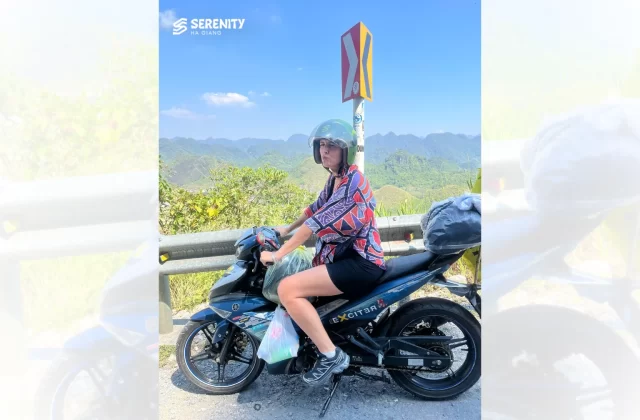
Yes, if you hold a 1968-Convention International Driving Permit (IDP) plus a home licence that covers motorbikes. If not, ride with an easy rider: a local driver handles the bike, and you sit behind.
The licence rule
Vietnam’s Law on Road Traffic Order and Safety (in force since 1 January 2025) recognises Vietnamese licences and those from 1968 Vienna Convention countries (Vietnam Law Magazine). The UK government gives the same advice (GOV.UK). Check that your IDP says “1968 Convention” and your home licence covers motorbikes.
The bigger risk is your travel insurance.
Police rarely stop riders in Cao Bang, but the real risk is your insurance. Many policies won’t cover a motorbike accident if you rode without a valid licence (World Nomads), and many cap engine size at 125 cc. Ask your insurer to confirm your cover in writing.
On our tours, self-drivers must hold the licences Vietnamese law requires. If a guest can’t show them, we may switch them to an easy rider, with the guest paying any price difference.
Which fits you
- Self-drive: you have the right papers, and you’re confident on mountain roads.
- Easy rider: you have no motorbike licence, a 1949-only IDP or little mountain experience, or you’d rather watch the view than the road. Our post on easy rider vs self-drive goes into more detail.
How much does a Cao Bang motorbike trip cost?
Riding independently: what to budget
Typical Cao Bang prices (October 2026, treat as a guide):
- Motorbike hire: semi-automatic VND 150,000–250,000/day; manual clutch VND 300,000–500,000/day.
- Fuel: VND 50,000–100,000/day. Fill up in Cao Bang City, Quang Uyen or Trung Khanh.
- Accommodation: dorm VND 100,000–200,000; homestay VND 150,000–300,000; guesthouse room VND 200,000–500,000.
- Tickets: Ban Gioc VND 45,000, bamboo raft from VND 50,000, Nguom Ngao VND 45,000, Pac Bo VND 25,000; smaller sights VND 20,000–30,000.
- Food: VND 150,000–300,000/day. Try banh cuon in pork-bone broth, sour pho (pho chua) and Cao Bang roast duck.
- Sleeper bus from Hanoi: VND 250,000–400,000 each way.
All in, roughly VND 700,000–1,000,000 (US$27–40) per person per day, plus the bus.
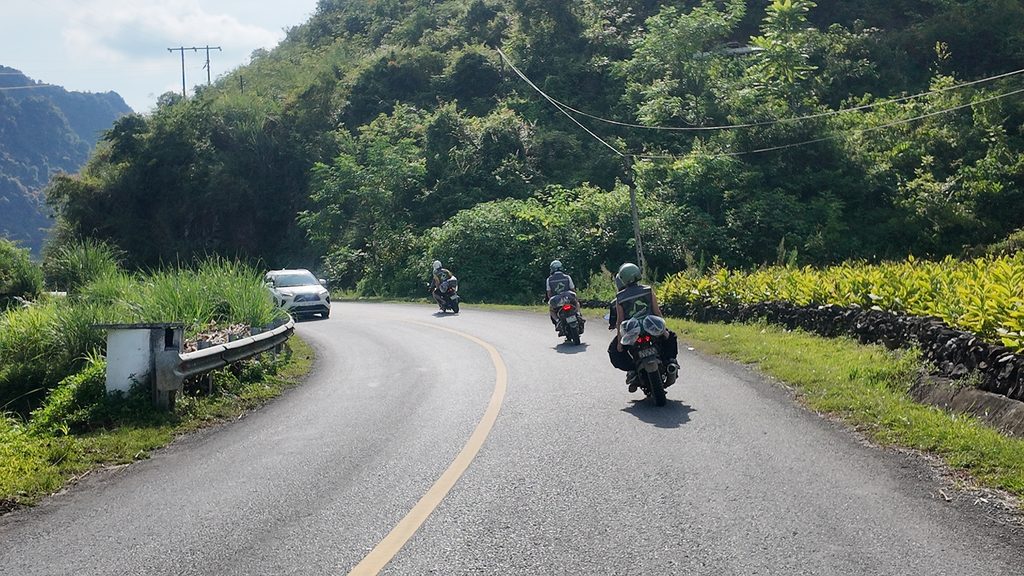
What a tour price should include
Tour prices vary mainly because inclusions do. Here’s what ours include (2026):
| Included | Not included | |
|---|---|---|
| Hidden Trail 2D1N: $155 dorm / $165 private room | Stays and meals, easy rider on a 110cc bike, English-speaking guide, entrance fees, bamboo raft at Ban Gioc, Hanoi pick-up and drop-off, border permits, travel insurance | Tips, 10% VAT, single-room supplement, private car or jeep, extra drinks, personal spending |
| Heritage Trail 3D2N: $205 dorm / $225 private room | Same as above | Same as above |
💡Booking tip: If you ride independently, buy a policy that covers riding or sitting on a motorbike. It’s the item people forget most.
Can you combine the Ha Giang and Cao Bang loops?
Yes, without returning to Hanoi in between. Ride Ha Giang first, head east into Cao Bang, then bus back to Hanoi (6 to 8 hours).
Our Ha Giang to Cao Bang Legend Journey does this in five days and four nights, from 340inadorm(380 private room). The Cao Bang leg climbs Khau Coc Cha Pass, passes Angel Eye and Phong Nam Valley, and ends at Ban Gioc and Nguom Ngao Cave.
When should you ride the Cao Bang Loop?
You can ride year-round, but each season changes the trip, especially at Ban Gioc:
- September to November (best): Ban Gioc runs full and turquoise, rice turns gold in September and early October, and days are dry and mild (18–26°C).
- December to February: dry and clear but cold on the passes (5–15°C), with foggy mornings and less water at the falls.
- March to May: green fields and spring blossom; Ban Gioc is at its lowest, flowing best around 10:30–13:00.
- June to August: Ban Gioc is at its most powerful but often muddy, and landslide risk peaks in July and August.
Avoid 30 April–1 May and 2 September, when domestic crowds fill Ban Gioc.
FAQ
Q: Is the Cao Bang Loop harder or easier than the Ha Giang Loop?
Easier. The roads are flatter and the passes shorter, but expect 125–150 km a day. You trade Ha Giang’s canyon views for rivers, rice fields and village life.
Q: Do I need a border permit for Cao Bang?
Not for the main sights; Ban Gioc and Nguom Ngao only need entrance tickets. Only the border patrol road needs permission. Carry your passport for police checks. On our tours, any permits are arranged for you.
Q: Can I visit Ban Gioc as a day trip from Cao Bang City?
Yes. Our Cao Bang Majestic Ride covers about 220 km in a day, including Ma Phuc Pass, Nguom Ngao, Ban Gioc and Angel Eye, from $48 all-inclusive. From Hanoi, a day trip isn’t realistic.
Q: Where can I rent a reliable motorbike in Cao Bang City?
From shops in the city centre or your hostel. Choose at least a semi-automatic, check brakes, lights, chain and tyres, and photograph existing damage.
Q: Can I ride an automatic scooter on the loop?
We don’t recommend it. Passes like Ma Phuc and Khau Coc Cha have long, steep descents, and without engine braking, the brakes overheat. A semi-automatic or manual bike is safer.
Is the Cao Bang Loop worth it?
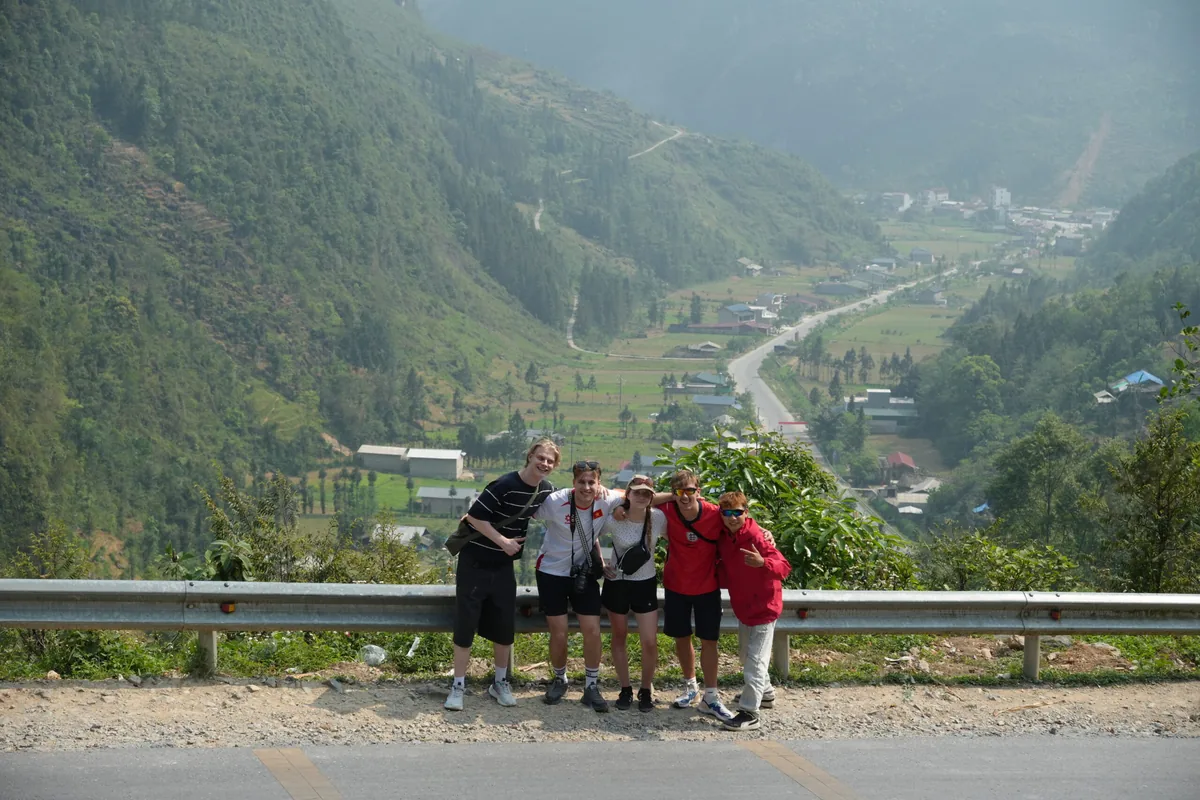
Yes, if you want a slower trip: rivers, caves and craft villages instead of high passes, with far fewer people around. Riding pillion, your eyes stay on the valley while your rider shares local stories, and evenings end with a family-style dinner and maybe a glass of corn wine at a homestay.
Two or three days works best, with the right papers if you ride yourself. Explore our Cao Bang tours to compare options, or message a local on WhatsApp with any questions.
Journey; VnExpress and VietnamPlus (Ban Gioc, Angel Eye); VTV (UNESCO Geopark 2018); junglebosstours.com (Ban Gioc tickets and seasons); vietnamtourism.com (Cao Bang loop budget 2026); localvietnam.com (Cao Bang motorbike rental); zinghomehagiang.com (Ha Giang permit).